Helping Reusable Care Brand Grow With Confidence

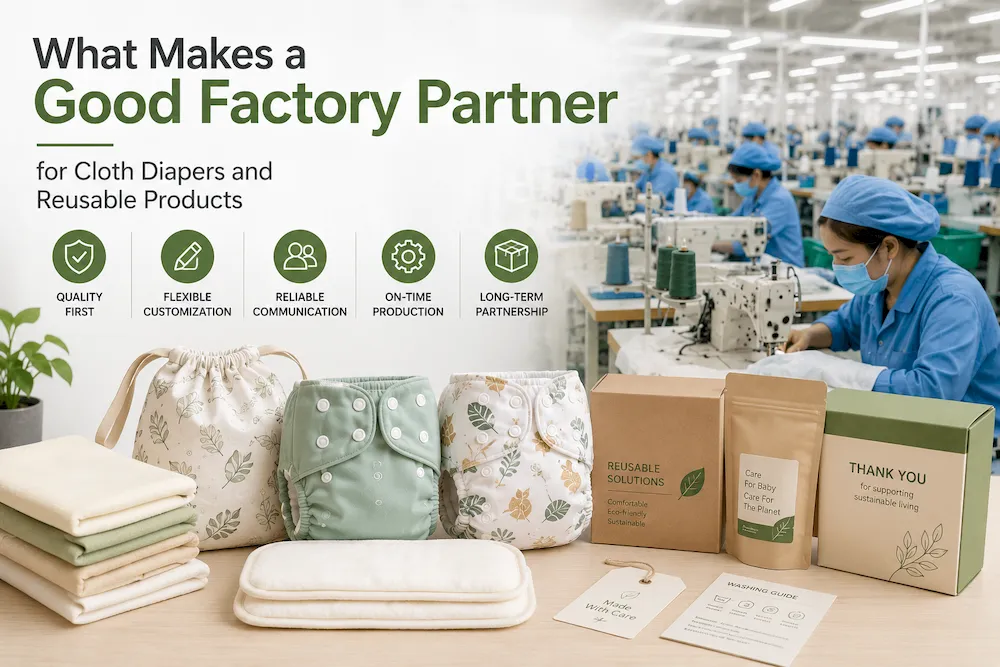
What Makes a Good Factory Partner for Cloth Diapers and Reusable Products

Choosing the right factory partner is one of the most important decisions for brands that sell cloth diapers and reusable products. A good product idea is important, but without a reliable factory, it can be difficult to turn that idea into stable products for the market.

For baby care brands, eco-friendly stores, online sellers, and private label businesses, the factory is not only a supplier. The factory can also be a long-term partner that supports product development, customization, quality control, packaging, and delivery.

In this article, we will explain what makes a good factory partner for cloth diapers and reusable products, and what brands should pay attention to before starting cooperation.

Why the Right Factory Partner Matters

Cloth diapers and reusable products are not simple products. They need comfortable materials, stable sewing, good absorbency, safe use, and reliable quality. If the factory does not understand these details, the final product may not meet customer expectations.

A good factory partner helps brands reduce risks. It can give practical suggestions, make samples, improve product details, and control production quality. This is especially important for new brands and growing brands that may not have much manufacturing experience.

A Good Factory Can Help Brands With:

  • Product design and development
  • Material selection
  • Sample making
  • OEM and ODM customization
  • Private label production
  • Packaging solutions
  • Quality control
  • Mass production and delivery support

Experience in Cloth Diapers and Reusable Products

The first thing to check is factory experience. A good factory partner should understand cloth diapers and reusable care products. These products need specific knowledge about fabric, waterproof layers, absorbent inserts, stitching, size, and comfort.

For example, a cloth diaper usually includes an outer waterproof layer, a soft inner layer, and absorbent inserts. Different materials can create different results. Some materials are softer. Some absorb faster. Some are more suitable for printing. An experienced factory can explain these differences clearly.

Why Product Experience Is Important

  • It helps the factory recommend suitable materials.
  • It helps avoid common production mistakes.
  • It makes sample development faster and more accurate.
  • It helps improve product comfort and function.
  • It supports better quality control during mass production.

If a factory has experience with similar products, it can usually provide better support from the beginning of the project.

Clear Communication and Fast Response

Good communication is very important in custom manufacturing. Many problems happen because details are not explained clearly. A good factory partner should respond in a clear and timely way.

For international brands, communication may include product details, materials, artwork files, samples, packaging, production schedule, and shipping. If the factory does not reply clearly, the project may become slow and confusing.

Good Communication Should Include:

  • Clear answers to product questions
  • Simple explanations of material options
  • Realistic production timelines
  • Regular updates during sampling and production
  • Fast feedback when problems appear
  • Careful confirmation before mass production

A factory that communicates well can help the brand save time and reduce mistakes.

Flexible Customization Support

Many brands want products that match their own market and brand style. This means the factory should support customization. For cloth diapers and reusable products, customization can include color, print, size, structure, labels, and packaging.

A good factory partner should not only say “yes” to every idea. It should also explain what is possible, what may be difficult, and what may increase cost. This helps the brand make better decisions.

Common Customization Options

  • Custom fabric colors
  • Printed patterns
  • Logo labels
  • Private label packaging
  • Different insert materials
  • Product sets and bundle options
  • Instruction cards and washing guides

Flexible customization is useful for brands that want to stand out in the market. It also helps brands create products that better fit their customers.

Reliable Sample Development

Before mass production, brands should always check samples. A sample shows the real product quality, size, color, fabric feel, print effect, stitching, and packaging. It is an important step before placing a large order.

A good factory partner should be able to make samples based on confirmed details. It should also help the brand understand what can be improved after sample checking.

What Brands Should Check in Samples

  • Fabric softness and thickness
  • Product size and shape
  • Stitching quality
  • Snap button or closure quality
  • Print color and clarity
  • Absorbency and function
  • Logo and label position
  • Packaging appearance

Sampling can help avoid bigger problems in mass production. It is better to find and fix problems early than after the full order is finished.

Strong Quality Control System

Quality control is one of the most important parts of choosing a factory partner. Cloth diapers and reusable products are used many times, so customers expect them to be durable, comfortable, and safe.

If the product has broken stitching, weak snaps, poor absorbency, wrong size, or dirty marks, it can affect customer trust. For baby products, quality problems can also lead to serious complaints.

Important Quality Control Points

  • Material checking before production
  • Correct cutting and sewing
  • Stable product size
  • Strong stitching
  • Good elastic quality
  • Correct label and logo
  • Clean product appearance
  • Proper packing before shipment

A good factory should check products during production and before shipment. This helps reduce defects and protect the brand’s reputation.

Stable Production Capacity

For growing brands, production capacity is also important. When sales increase, the factory should be able to support larger orders. If the factory cannot keep up with demand, the brand may face delays and stock problems.

Stable production does not only mean making many products. It also means keeping quality stable when the order quantity grows. A good factory partner should have organized production management and a reliable team.

Brands Should Ask About:

  • Monthly production capacity
  • Normal production lead time
  • Peak season schedule
  • Material preparation time
  • Quality inspection process
  • Ability to support repeat orders

Understanding production capacity helps brands plan inventory, marketing, and sales more safely.

Reasonable MOQ and Cost Control

MOQ means minimum order quantity. For new brands, MOQ is often a big concern. A good factory partner should explain MOQ clearly and help the brand find a suitable starting plan.

Very low MOQ may sound attractive, but it may also mean higher unit cost or limited customization. Very high MOQ may create inventory pressure. The best choice depends on the brand’s stage, budget, and market plan.

A Good Factory Should Explain:

  • MOQ for different product types
  • MOQ for custom colors or prints
  • MOQ for private label packaging
  • How quantity affects unit cost
  • How to start with a practical order plan

Clear cost communication helps brands avoid hidden costs and make better business decisions.

Packaging and Branding Support

For reusable products, packaging is part of the customer experience. Good packaging can protect the product and make the brand look more professional.

A good factory partner can support different packaging needs, such as simple packing, custom bags, boxes, labels, instruction cards, and product sets. For online sellers, packaging should also be suitable for shipping.

Good Packaging Can Help Brands:

  • Show product features clearly
  • Improve brand image
  • Make products easier to sell online or offline
  • Protect products during storage and shipping
  • Create a better unboxing experience

Packaging should be planned early because it may affect cost, production time, and shipping volume.

Long-Term Cooperation Mindset

A good factory partner should not only focus on one order. For brands, long-term cooperation is more valuable. Over time, the factory can understand the brand’s products, quality standards, packaging style, and market needs better.

Long-term cooperation can make communication easier and production more efficient. It can also help brands develop new products faster in the future.

Benefits of Long-Term Factory Cooperation

  • Better understanding of brand requirements
  • More stable product quality
  • Faster sample development
  • Improved production planning
  • More support for new product ideas
  • Lower communication cost over time

For growing brands, a long-term factory partner can become an important part of the supply chain.

Conclusion

A good factory partner for cloth diapers and reusable products should have product experience, clear communication, flexible customization, reliable sampling, strong quality control, stable production capacity, and packaging support.

For brands, choosing the right factory is not only about finding the lowest price. It is about finding a partner that can support product development, protect quality, and grow with the brand.

If your brand is planning to develop cloth diapers, reusable care products, or private label sustainable products, working with an experienced factory partner can help you reduce risks and build better products for your customers.
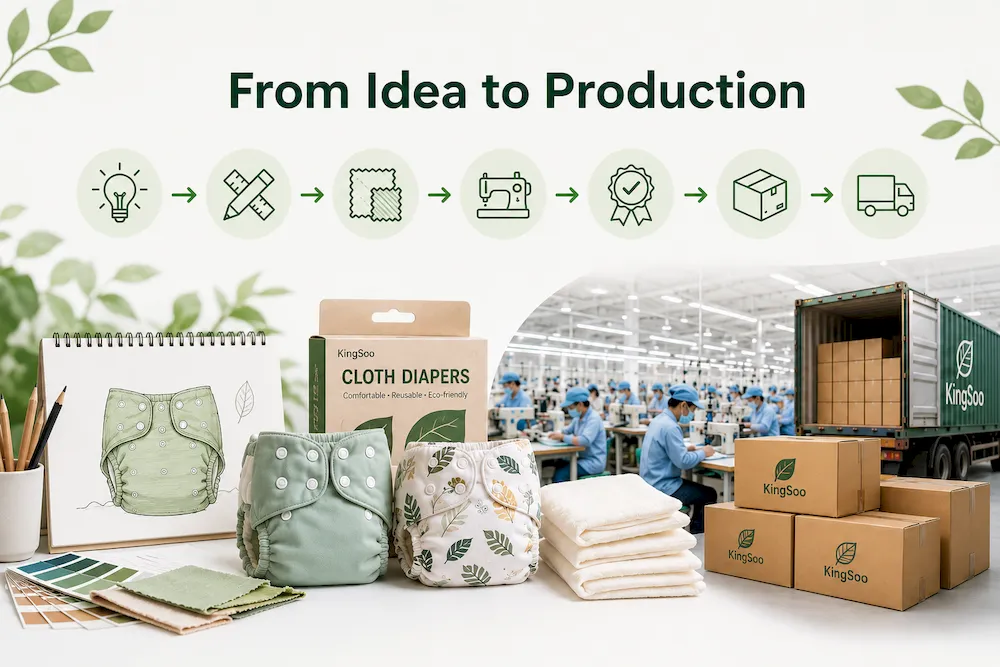
From Product Idea to Mass Production: How KingSoo Supports Growing Brands

For many growing brands, a good product often starts with a simple idea. Maybe you see a market need. Maybe your customers ask for a better reusable product. Maybe you want to add cloth diapers, reusable care products, or eco-friendly daily-use items to your product line. But turning an idea into a real product is not always easy.

From product idea to mass production, there are many steps. Brands need to think about product design, materials, samples, packaging, quality control, production schedule, and delivery. If there is no clear plan, the project may take more time and cost more money.

KingSoo supports growing brands through the full product development process. We help clients move from an early idea to a ready-to-sell product with practical manufacturing support, flexible customization, and clear communication.

Why Growing Brands Need Factory Support

Growing brands often have good ideas, but they may not have enough production experience. They may know their customers well, but they may not know which fabric is better, how to improve product structure, or how to control production quality.

This is where a reliable factory partner becomes important. A factory does not only make products. A good factory can help brands understand what is possible, what needs improvement, and how to make the final product more stable for the market.

Common Challenges for Growing Brands

  • The product idea is clear, but the technical details are not complete.
  • The brand wants custom design, but does not know the best material options.
  • The team needs samples, but the sample process takes too long.
  • The product looks good, but quality is not stable during production.
  • The brand wants better packaging, but does not know how to prepare artwork files.
  • The order quantity grows, but the supply chain is not ready.

KingSoo helps solve these problems step by step, so brands can focus more on sales, marketing, and customer growth.

Step 1: Understanding the Product Idea

Every project starts with communication. Before production, KingSoo first tries to understand the client’s product idea. This includes the product type, target market, design direction, usage needs, budget, and order quantity.

For example, if a client wants to develop custom cloth diapers, we need to understand whether the product is for newborns, toddlers, or general baby care. We also need to know if the brand wants simple colors, printed designs, private labels, or full packaging customization.

Important Information to Prepare

  • Product type
  • Target customer group
  • Target market or country
  • Expected order quantity
  • Preferred materials
  • Size and function requirements
  • Logo, label, or packaging needs
  • Budget and timeline

The more information the brand provides, the easier it is for the factory to give suitable suggestions.

Step 2: Product Structure and Material Suggestions

After understanding the idea, KingSoo can help brands choose a suitable product structure and materials. This step is very important because material choice affects comfort, durability, cost, appearance, and user experience.

For reusable products, different materials can create very different results. Some materials are soft and comfortable. Some are more absorbent. Some are better for printing. Some are more cost-effective for large orders.

How KingSoo Helps with Material Selection

  • Recommend suitable fabric based on product use.
  • Compare different material options for cost and performance.
  • Suggest absorbent layers, waterproof layers, or soft inner materials when needed.
  • Help brands choose materials that match their product positioning.
  • Support custom colors, prints, and fabric combinations.

For growing brands, this support can reduce trial-and-error costs. Instead of guessing, brands can make decisions based on real production experience.

Step 3: Custom Design Development

Design is a key part of brand identity. A product should not only be useful. It should also match the brand style and attract the right customers. KingSoo supports custom design for products, prints, colors, labels, and packaging.

Some clients already have complete design files. Some clients only have a simple idea. In both cases, KingSoo can help check if the design is suitable for production and explain what needs to be adjusted before sampling.

Common Custom Design Options

  • Custom product color
  • Printed patterns
  • Logo label
  • Woven label or printed label
  • Custom packaging bag or box
  • Instruction card
  • Product set combination

Good design helps the product look more professional. It also helps customers remember the brand more easily.

Step 4: Sample Development

Before mass production, sampling is necessary. A sample allows the brand to see and test the real product. It helps confirm size, material, color, print quality, stitching, function, and packaging.

KingSoo supports sample development based on confirmed product details. After the sample is finished, the client can check it carefully and give feedback. If changes are needed, the factory can adjust the details before mass production.

What Brands Should Check in Samples

  • Product size and shape
  • Fabric feel and thickness
  • Color accuracy
  • Print clarity
  • Sewing quality
  • Function and comfort
  • Logo and label position
  • Packaging appearance

Sample approval is an important step. It helps avoid bigger problems later in mass production.

Step 5: Confirming Production Details

After the sample is approved, the next step is to confirm production details. This includes order quantity, final material, color, size, packaging, production time, and shipping needs.

Clear confirmation helps both the brand and the factory stay aligned. It also reduces mistakes during production. For custom products, small details can make a big difference, so everything should be checked before production starts.

Details to Confirm Before Production

  • Final product specification
  • Approved sample version
  • Order quantity
  • Material and color
  • Print or logo file
  • Packaging method
  • Carton details
  • Production timeline
  • Delivery arrangement

KingSoo helps clients organize these details, so the production process can be more efficient.

Step 6: Mass Production Management

Mass production is the stage where the product idea becomes a real product in larger quantities. During this stage, stable management is very important. The factory needs to control materials, production process, worker operation, quality inspection, and packing.

KingSoo follows production requirements and checks important details during the process. This helps make sure the final products are close to the approved sample and meet the client’s expectations.

Key Points During Mass Production

  • Material checking before production
  • Correct cutting and sewing process
  • Consistent color and print quality
  • Stable product size
  • Strong stitching and accessories
  • Proper packaging and carton packing

For growing brands, stable production is very important because it affects customer reviews, repeat orders, and long-term brand trust.

Step 7: Quality Control Before Shipment

Quality control is one of the most important parts of the production process. If products are shipped with quality problems, it may damage the brand’s reputation. This is especially important for baby care products and reusable products, because customers care about safety, comfort, and durability.

KingSoo checks products before shipment to reduce quality risks. The inspection may include appearance, stitching, size, function, packing, and quantity checking.

Common Quality Control Points

  • No dirty marks or obvious defects
  • Correct size and shape
  • Good sewing quality
  • Correct logo and label
  • Good print quality
  • Complete packaging
  • Correct quantity in each carton

Good quality control helps brands deliver better products to customers and reduce after-sales problems.

Step 8: Packaging and Delivery Support

Packaging is also part of the product experience. Good packaging protects the product and improves brand image. For online sellers, packaging should also be suitable for shipping and storage.

KingSoo can support different packaging options based on the client’s needs. This may include simple packaging, private label packaging, custom bags, custom boxes, or product sets.

Packaging Can Help Brands

  • Show product information clearly
  • Improve brand image
  • Protect products during shipping
  • Make products easier to sell online or in stores
  • Create a more professional customer experience

After packaging is finished, KingSoo can also help with delivery arrangement and provide basic shipment support based on the client’s order needs.

Why KingSoo Is Suitable for Growing Brands

Growing brands need more than simple production. They need a factory partner that can understand their product goals, support customization, control quality, and respond clearly during the project.

KingSoo focuses on customized reusable product solutions. We support brands from product idea to sample development, production, packaging, and delivery. Our goal is to help clients create products that are practical, stable, and suitable for their target market.

KingSoo Can Support Growing Brands With:

  • Product development suggestions
  • OEM and ODM customization
  • Material and structure advice
  • Sample making
  • Custom colors, prints, labels, and packaging
  • Mass production management
  • Quality control support
  • Long-term manufacturing cooperation

Conclusion

Turning a product idea into mass production takes planning, communication, and factory experience. For growing brands, the process can feel difficult at the beginning. There are many details to confirm, and every decision can affect the final product.

KingSoo helps make this process easier. From understanding the product idea to choosing materials, making samples, managing production, checking quality, and arranging packaging, we support brands step by step.

If your brand is ready to develop reusable products, cloth diapers, or customized care products, working with an experienced factory partner can help you move faster, reduce mistakes, and build a stronger product line for your market.

Custom Cloth Diapers: What Brands Should Know Before Starting Production

Custom cloth diapers are becoming a popular product for baby care brands, eco-friendly stores, and private label businesses. More parents are looking for reusable, washable, and comfortable diaper solutions. For brands, this is a good chance to build a product line that is practical and sustainable.

However, starting a custom cloth diaper project is not only about choosing a design and placing an order. Before production begins, brands need to understand materials, sizing, absorbency, printing, packaging, quality control, and factory communication. A clear plan can help reduce mistakes, save time, and make the final product more suitable for the target market.

In this article, we will explain what brands should know before starting custom cloth diaper production.

Why Custom Cloth Diapers Are a Good Product for Brands

Cloth diapers are reusable products. Unlike disposable diapers, they can be washed and used many times. This makes them attractive to families who care about reducing waste and saving money over time.

For brands, custom cloth diapers also offer strong branding opportunities. You can customize colors, prints, packaging, labels, and product details to match your brand style. Whether you are a new baby care brand or an existing retailer, cloth diapers can become an important part of your reusable product line.

Main Benefits of Custom Cloth Diapers

  • They support an eco-friendly product position.
  • They can be customized with unique prints and colors.
  • They are suitable for private label, OEM, and ODM projects.
  • They can help brands build long-term customer loyalty.
  • They can be sold together with inserts, wet bags, liners, and other baby care products.

Understand Your Target Market First

Before starting production, brands should know who they are selling to. Different markets may have different needs. Some customers care most about price. Some care more about softness, absorbency, or eco-friendly materials. Some markets prefer simple solid colors, while others like colorful printed designs.

If your target customers are first-time parents, they may need easy-to-use diaper styles. If your customers are experienced cloth diaper users, they may care more about details such as insert layers, waterproof fabric, and fit.

Questions to Ask Before Production

  • Who is the target customer?
  • Which country or region will the product be sold in?
  • What price range is suitable for this market?
  • Do customers prefer simple designs or printed designs?
  • Will the product be sold online, in stores, or through distributors?

Clear answers to these questions will help the factory recommend better materials, structures, and packaging solutions.

Choose the Right Cloth Diaper Style

There are different types of cloth diapers. Each type has its own features. Before production, brands should choose the style that best fits their market.

Pocket Cloth Diapers

Pocket cloth diapers are one of the most common styles. They usually have a waterproof outer layer and a soft inner layer. There is a pocket opening where inserts can be placed. This style is popular because it is easy to use and flexible in absorbency.

All-in-One Cloth Diapers

All-in-one diapers have absorbent layers sewn into the diaper. Parents do not need to add separate inserts. This style is convenient, but it may take longer to dry after washing.

Cover Diapers

Cover diapers are waterproof covers used with inserts, prefolds, or fitted diapers. They are simple and often more cost-effective. Some customers like them because the cover can be reused several times before washing if it is not dirty.

Training Pants

Training pants are designed for toddlers during potty training. They are not the same as regular diapers, but they can be a good related product for baby care brands.

Select Suitable Materials

Material choice is very important for custom cloth diapers. It affects comfort, absorbency, durability, drying time, and cost. A good material plan can make the product easier to sell and more comfortable to use.

Outer Layer

The outer layer is often made from waterproof PUL fabric. This material helps prevent leaks while keeping the diaper flexible and comfortable. Brands can usually customize the outer layer with solid colors or printed patterns.

Inner Layer

The inner layer touches the baby’s skin, so it should be soft and comfortable. Common options include suede cloth, microfleece, bamboo fabric, or other soft materials. Some materials feel dry against the skin, while others focus more on a natural touch.

Absorbent Inserts

Inserts are used to absorb liquid. Common insert materials include microfiber, bamboo, charcoal bamboo, hemp, and cotton. Each material has different absorbency, thickness, drying speed, and cost.

For example, microfiber absorbs quickly, but it should not touch the baby’s skin directly. Bamboo and hemp are often valued for better absorbency, but they may cost more. The right choice depends on your product positioning.

Pay Attention to Size and Fit

A good cloth diaper should fit well. If the size is not suitable, the diaper may leak or feel uncomfortable. Many brands choose adjustable one-size diapers because they can fit babies at different growth stages.

Adjustable diapers usually use snap buttons. Parents can change the waist and rise settings as the baby grows. This makes the product more practical and easier to sell.

Important Fit Details

  • Waist adjustment
  • Leg opening comfort
  • Rise adjustment
  • Elastic quality
  • Overall diaper shape

Before mass production, brands should check samples carefully. The diaper should be easy to adjust and should not be too tight or too loose.

Plan Your Custom Design Carefully

Design is one of the most important parts of custom cloth diapers. Good design can help your product stand out in the market. Brands can customize prints, colors, logos, labels, and packaging.

Print Design

Printed cloth diapers are popular because they look cute and attractive. Brands can create patterns based on animals, nature, simple graphics, holiday themes, or brand style. However, the design should also match the target market. A design that sells well in one country may not work well in another.

Logo and Label

You can add your logo to the diaper label or packaging. A clear and professional label helps build brand recognition. It also makes the product look more reliable.

Packaging Design

Packaging is not only for protection. It also affects customer trust. Good packaging can show product features, washing instructions, size information, and brand story. For online sales, packaging should also be strong enough for shipping.

Confirm MOQ and Production Time

MOQ means minimum order quantity. Different factories have different MOQ requirements. The MOQ may also depend on fabric, print design, label, and packaging customization.

New brands should ask about MOQ early. If the order quantity is too small, the cost per piece may be higher. If the quantity is too large, inventory pressure may be high. A good factory can help you find a more suitable starting plan.

Production Time Usually Depends On:

  • Sample confirmation time
  • Fabric and material preparation
  • Print complexity
  • Order quantity
  • Packaging requirements
  • Factory production schedule

Brands should leave enough time for sampling, changes, production, quality inspection, and shipping.

Do Not Skip Sampling

Sampling is very important before mass production. A sample allows you to check the real product quality, size, fabric, color, stitching, absorbency, and packaging.

Sometimes a design looks good on a computer, but the real product may look different. Colors may change slightly after printing. Fabric may feel different from what you expected. This is why sample approval is a necessary step.

What to Check in a Sample

  • Fabric softness
  • Stitching quality
  • Button or snap strength
  • Elastic comfort
  • Print color and clarity
  • Insert thickness and absorbency
  • Packaging appearance

If something is not right, discuss it with the factory before mass production starts.

Quality Control Matters

For baby products, quality control is very important. Parents want safe, comfortable, and reliable products. A small quality issue may affect brand trust.

Brands should work with a factory that understands quality control. The factory should check materials, production details, stitching, snaps, waterproof performance, and final packaging.

Common Quality Points for Cloth Diapers

  • No broken stitching
  • No dirty marks on fabric
  • Strong snaps or hook-and-loop closure
  • Good elastic recovery
  • Correct size and shape
  • Clear print quality
  • Proper packing before shipment

Good quality control helps reduce customer complaints and improves repeat orders.

Work with an Experienced Factory Partner

Choosing the right factory is one of the most important decisions. An experienced cloth diaper manufacturer can help you avoid many problems. The factory can give suggestions on materials, diaper structure, inserts, printing, packaging, and production planning.

For new brands, this support is especially helpful. You may have a product idea, but you may not know all the technical details. A reliable factory can help turn your idea into a real product.

A Good Factory Should Help With:

  • Material selection
  • Product structure suggestions
  • Custom print and color options
  • Sample development
  • Packaging customization
  • Quality control
  • Mass production and delivery support

Conclusion

Custom cloth diapers can be a strong product choice for baby care brands, eco-friendly stores, and reusable product businesses. But before starting production, brands should prepare carefully. You need to understand your market, choose the right diaper style, select suitable materials, plan your design, confirm MOQ, check samples, and pay attention to quality control.

A clear plan and a reliable factory partner can make the whole process easier. With the right support, your brand can create cloth diapers that are comfortable, practical, attractive, and suitable for your customers.

If you are planning to start a custom cloth diaper project, working with an experienced manufacturer can help you move from idea to production with more confidence.