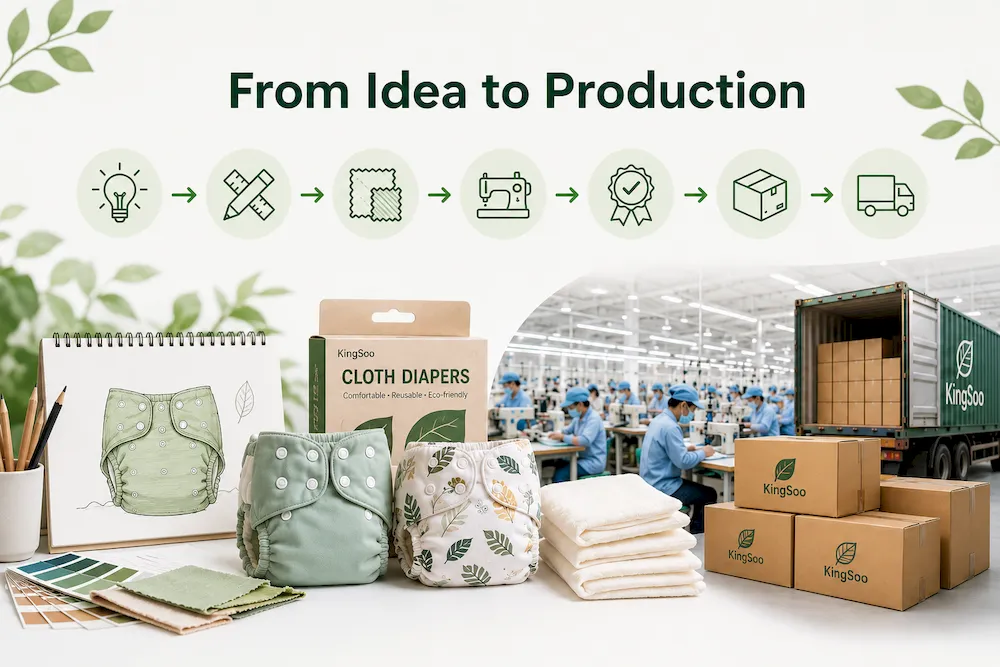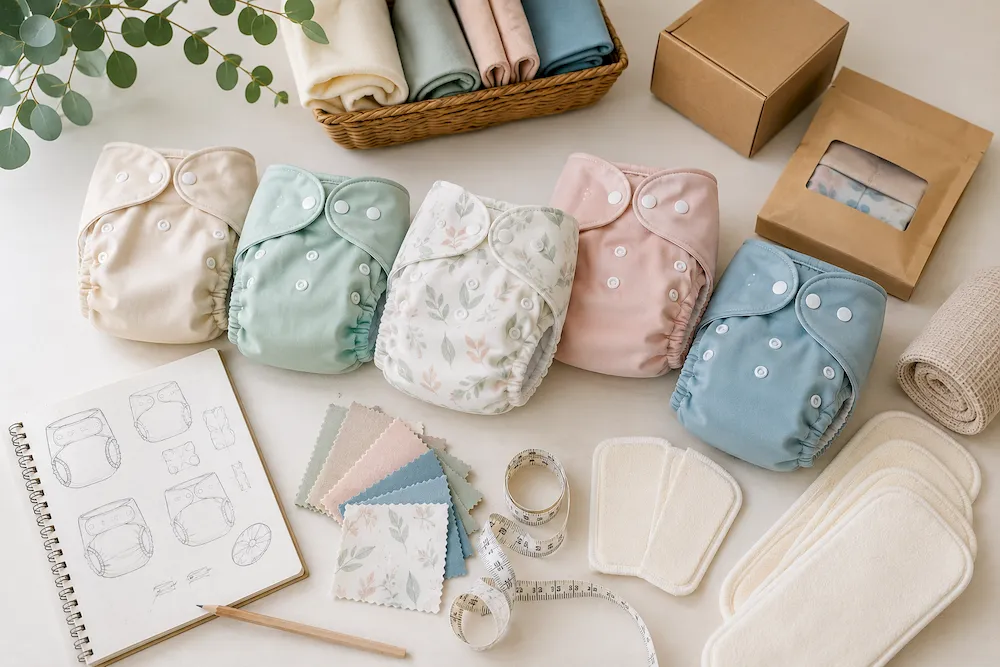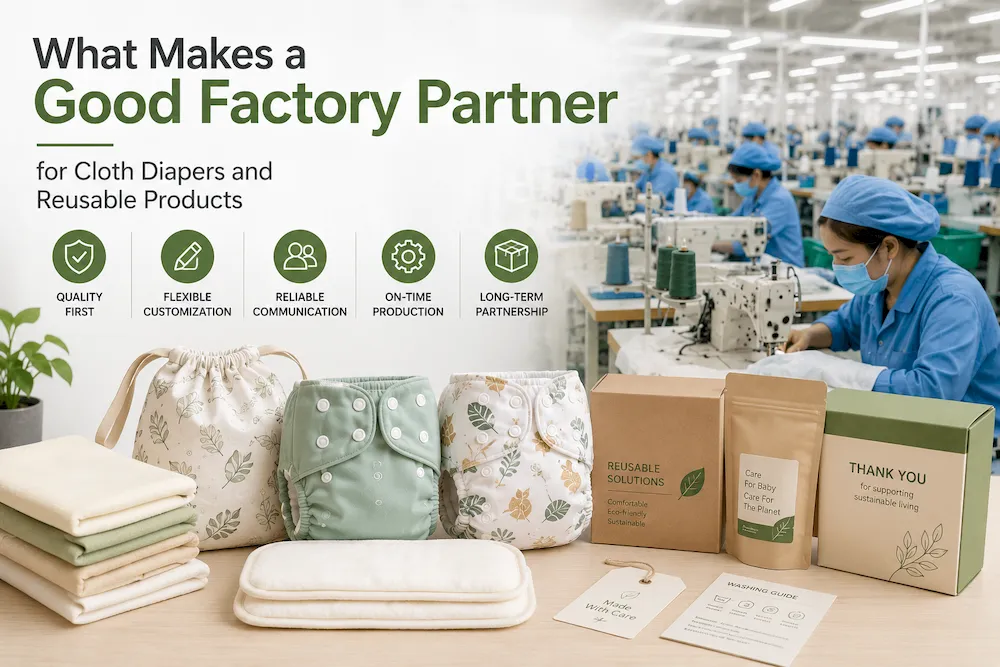
Choosing the right factory partner is one of the most important decisions for brands that sell cloth diapers and reusable products. A good product idea is important, but without a reliable factory, it can be difficult to turn that idea into stable products for the market.
For baby care brands, eco-friendly stores, online sellers, and private label businesses, the factory is not only a supplier. The factory can also be a long-term partner that supports product development, customization, quality control, packaging, and delivery.
In this article, we will explain what makes a good factory partner for cloth diapers and reusable products, and what brands should pay attention to before starting cooperation.
Why the Right Factory Partner Matters
Cloth diapers and reusable products are not simple products. They need comfortable materials, stable sewing, good absorbency, safe use, and reliable quality. If the factory does not understand these details, the final product may not meet customer expectations.
A good factory partner helps brands reduce risks. It can give practical suggestions, make samples, improve product details, and control production quality. This is especially important for new brands and growing brands that may not have much manufacturing experience.
A Good Factory Can Help Brands With:
- Product design and development
- Material selection
- Sample making
- OEM and ODM customization
- Private label production
- Packaging solutions
- Quality control
- Mass production and delivery support
Experience in Cloth Diapers and Reusable Products
The first thing to check is factory experience. A good factory partner should understand cloth diapers and reusable care products. These products need specific knowledge about fabric, waterproof layers, absorbent inserts, stitching, size, and comfort.
For example, a cloth diaper usually includes an outer waterproof layer, a soft inner layer, and absorbent inserts. Different materials can create different results. Some materials are softer. Some absorb faster. Some are more suitable for printing. An experienced factory can explain these differences clearly.
Why Product Experience Is Important
- It helps the factory recommend suitable materials.
- It helps avoid common production mistakes.
- It makes sample development faster and more accurate.
- It helps improve product comfort and function.
- It supports better quality control during mass production.
If a factory has experience with similar products, it can usually provide better support from the beginning of the project.
Clear Communication and Fast Response
Good communication is very important in custom manufacturing. Many problems happen because details are not explained clearly. A good factory partner should respond in a clear and timely way.
For international brands, communication may include product details, materials, artwork files, samples, packaging, production schedule, and shipping. If the factory does not reply clearly, the project may become slow and confusing.
Good Communication Should Include:
- Clear answers to product questions
- Simple explanations of material options
- Realistic production timelines
- Regular updates during sampling and production
- Fast feedback when problems appear
- Careful confirmation before mass production
A factory that communicates well can help the brand save time and reduce mistakes.
Flexible Customization Support
Many brands want products that match their own market and brand style. This means the factory should support customization. For cloth diapers and reusable products, customization can include color, print, size, structure, labels, and packaging.
A good factory partner should not only say “yes” to every idea. It should also explain what is possible, what may be difficult, and what may increase cost. This helps the brand make better decisions.
Common Customization Options
- Custom fabric colors
- Printed patterns
- Logo labels
- Private label packaging
- Different insert materials
- Product sets and bundle options
- Instruction cards and washing guides
Flexible customization is useful for brands that want to stand out in the market. It also helps brands create products that better fit their customers.
Reliable Sample Development
Before mass production, brands should always check samples. A sample shows the real product quality, size, color, fabric feel, print effect, stitching, and packaging. It is an important step before placing a large order.
A good factory partner should be able to make samples based on confirmed details. It should also help the brand understand what can be improved after sample checking.
What Brands Should Check in Samples
- Fabric softness and thickness
- Product size and shape
- Stitching quality
- Snap button or closure quality
- Print color and clarity
- Absorbency and function
- Logo and label position
- Packaging appearance
Sampling can help avoid bigger problems in mass production. It is better to find and fix problems early than after the full order is finished.
Strong Quality Control System
Quality control is one of the most important parts of choosing a factory partner. Cloth diapers and reusable products are used many times, so customers expect them to be durable, comfortable, and safe.
If the product has broken stitching, weak snaps, poor absorbency, wrong size, or dirty marks, it can affect customer trust. For baby products, quality problems can also lead to serious complaints.
Important Quality Control Points
- Material checking before production
- Correct cutting and sewing
- Stable product size
- Strong stitching
- Good elastic quality
- Correct label and logo
- Clean product appearance
- Proper packing before shipment
A good factory should check products during production and before shipment. This helps reduce defects and protect the brand’s reputation.
Stable Production Capacity
For growing brands, production capacity is also important. When sales increase, the factory should be able to support larger orders. If the factory cannot keep up with demand, the brand may face delays and stock problems.
Stable production does not only mean making many products. It also means keeping quality stable when the order quantity grows. A good factory partner should have organized production management and a reliable team.
Brands Should Ask About:
- Monthly production capacity
- Normal production lead time
- Peak season schedule
- Material preparation time
- Quality inspection process
- Ability to support repeat orders
Understanding production capacity helps brands plan inventory, marketing, and sales more safely.
Reasonable MOQ and Cost Control
MOQ means minimum order quantity. For new brands, MOQ is often a big concern. A good factory partner should explain MOQ clearly and help the brand find a suitable starting plan.
Very low MOQ may sound attractive, but it may also mean higher unit cost or limited customization. Very high MOQ may create inventory pressure. The best choice depends on the brand’s stage, budget, and market plan.
A Good Factory Should Explain:
- MOQ for different product types
- MOQ for custom colors or prints
- MOQ for private label packaging
- How quantity affects unit cost
- How to start with a practical order plan
Clear cost communication helps brands avoid hidden costs and make better business decisions.
Packaging and Branding Support
For reusable products, packaging is part of the customer experience. Good packaging can protect the product and make the brand look more professional.
A good factory partner can support different packaging needs, such as simple packing, custom bags, boxes, labels, instruction cards, and product sets. For online sellers, packaging should also be suitable for shipping.
Good Packaging Can Help Brands:
- Show product features clearly
- Improve brand image
- Make products easier to sell online or offline
- Protect products during storage and shipping
- Create a better unboxing experience
Packaging should be planned early because it may affect cost, production time, and shipping volume.
Long-Term Cooperation Mindset
A good factory partner should not only focus on one order. For brands, long-term cooperation is more valuable. Over time, the factory can understand the brand’s products, quality standards, packaging style, and market needs better.
Long-term cooperation can make communication easier and production more efficient. It can also help brands develop new products faster in the future.
Benefits of Long-Term Factory Cooperation
- Better understanding of brand requirements
- More stable product quality
- Faster sample development
- Improved production planning
- More support for new product ideas
- Lower communication cost over time
For growing brands, a long-term factory partner can become an important part of the supply chain.
Conclusion
A good factory partner for cloth diapers and reusable products should have product experience, clear communication, flexible customization, reliable sampling, strong quality control, stable production capacity, and packaging support.
For brands, choosing the right factory is not only about finding the lowest price. It is about finding a partner that can support product development, protect quality, and grow with the brand.
If your brand is planning to develop cloth diapers, reusable care products, or private label sustainable products, working with an experienced factory partner can help you reduce risks and build better products for your customers.