Helping Reusable Care Brand Grow With Confidence

Cloth Diaper Liners

Cloth Diaper Liners — The Thin Top Layer That Makes Cloth Easier

A Liner Is Not an Insert

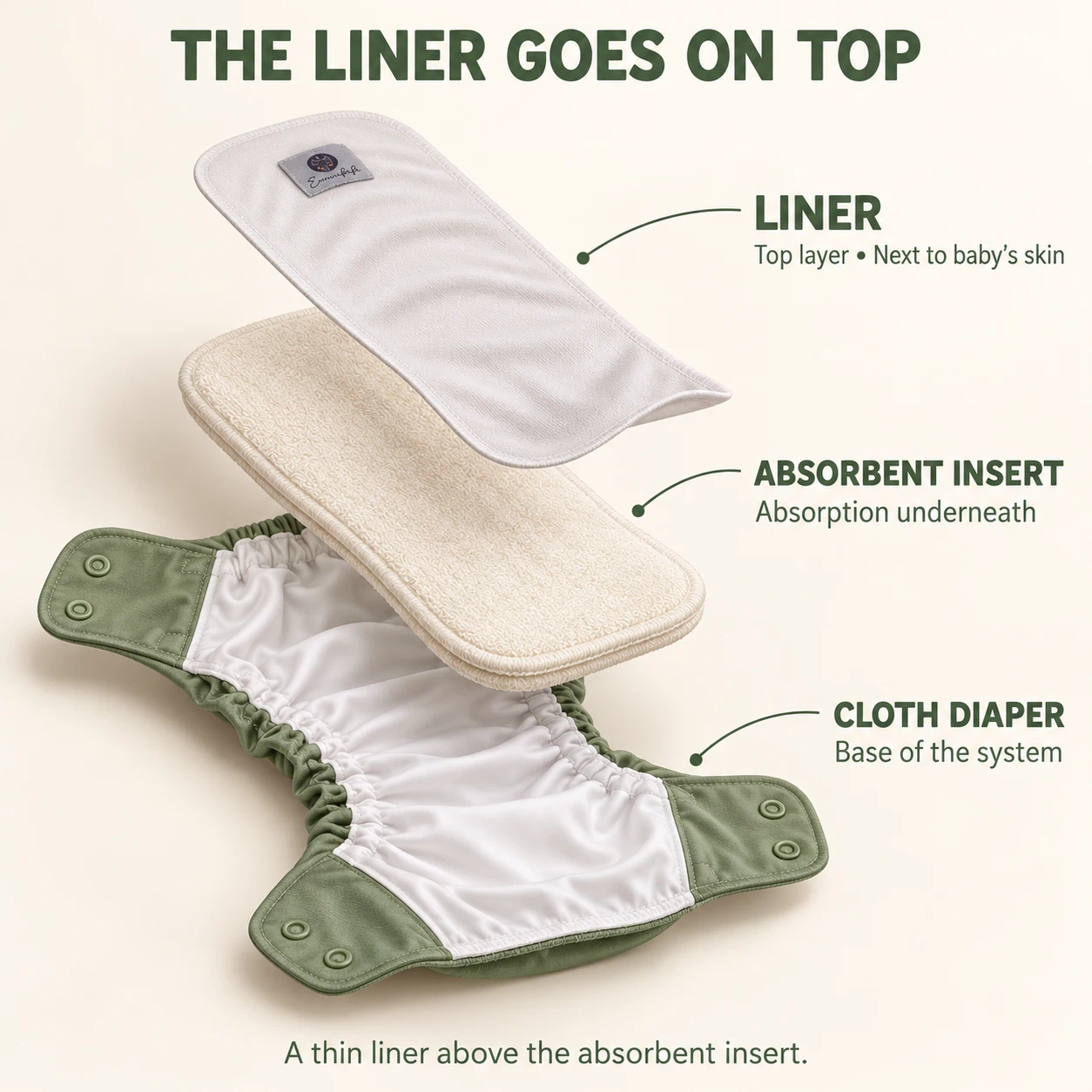
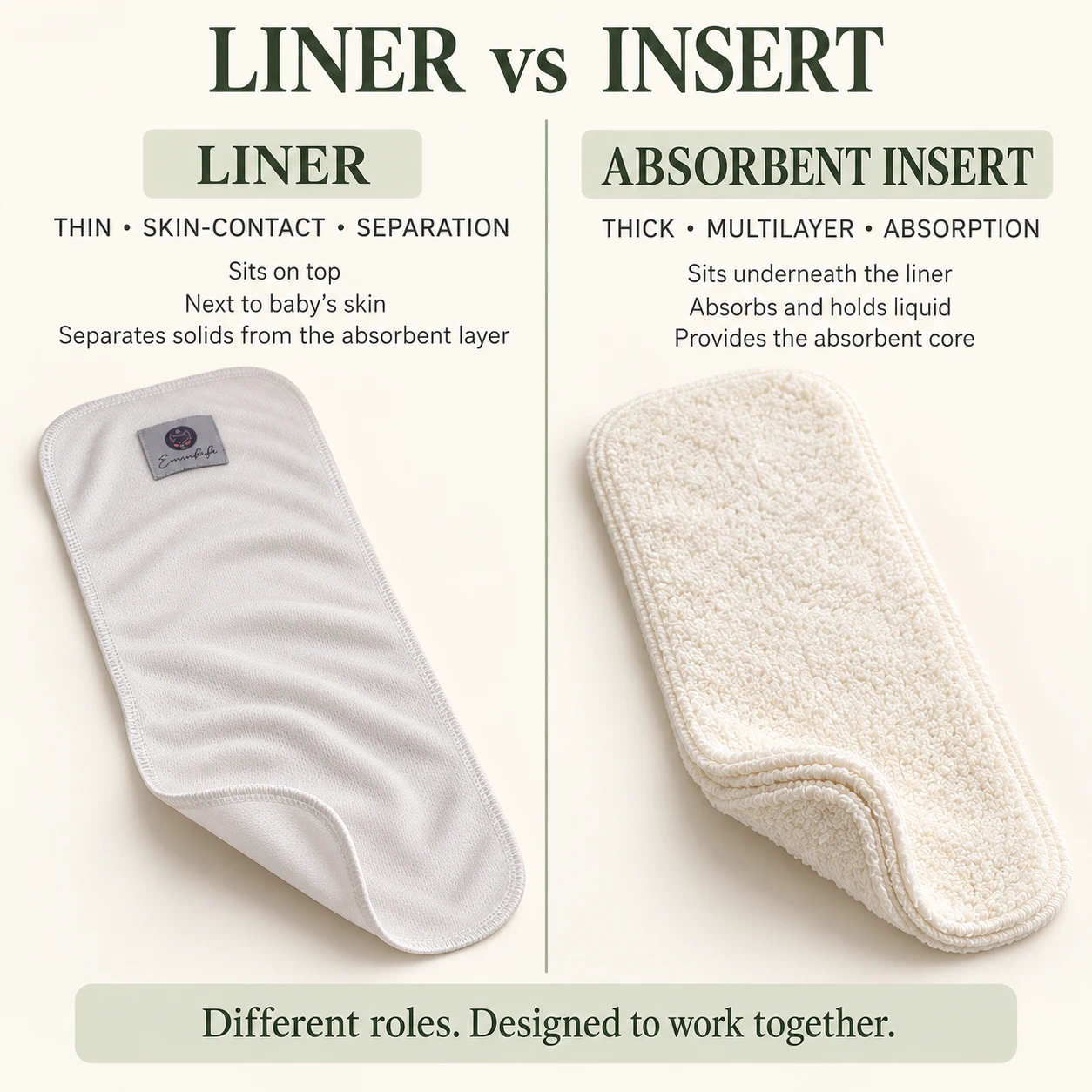
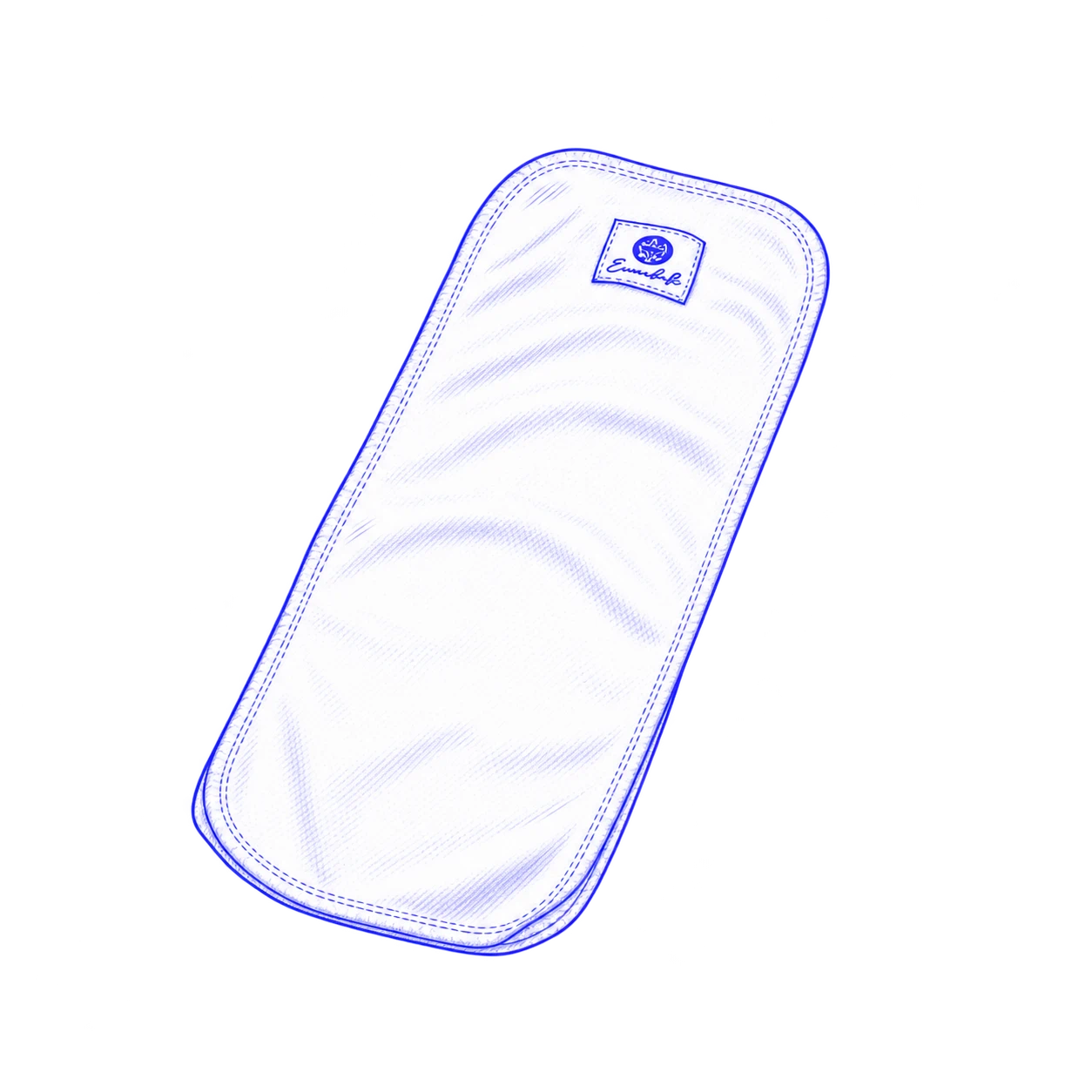
The most common confusion in cloth diapering is between a liner and an insert, and a brand that sells liners has to clear it up, because a customer who buys the wrong one is disappointed. The two sit in the same diaper but do opposite jobs. The insert is the absorbent core underneath; it soaks up the wetness and determines how long a baby stays dry. The liner is the thin layer on top of that insert, against the skin, and it absorbs almost nothing on purpose.

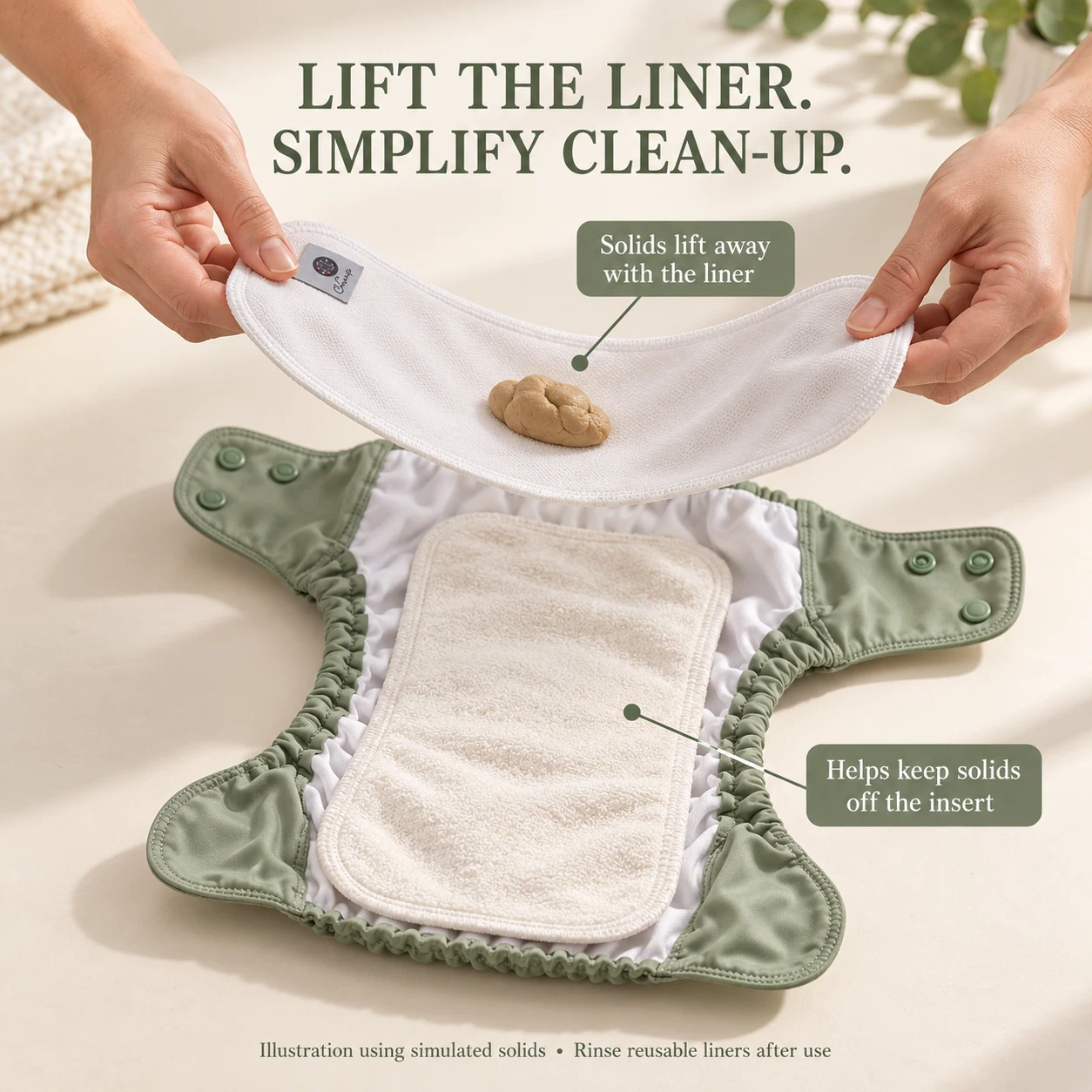
The liner’s job is separation and convenience, not capacity. It sits between the baby and the absorbent layers so the surface against the skin feels different, and so that solids land on the liner rather than soaking into the insert. Understanding this is the whole point of the product: a parent does not replace an insert with a liner, they use a liner with an insert. We help a brand state that distinction clearly on the listing, which turns a confusing add-on into a product customers buy with confidence.

Best fit for:

  • Cloth diaper and pocket brands
  • Mother-care accessory and eco baby brands
  • Private-label and e-commerce sellers

Material & Construction

  • Fabric:100% polyester microfleece fabric
  • Build: thin, single-layer liner with finished edges
  • Role:skin-contact separating layer, not the absorbent core

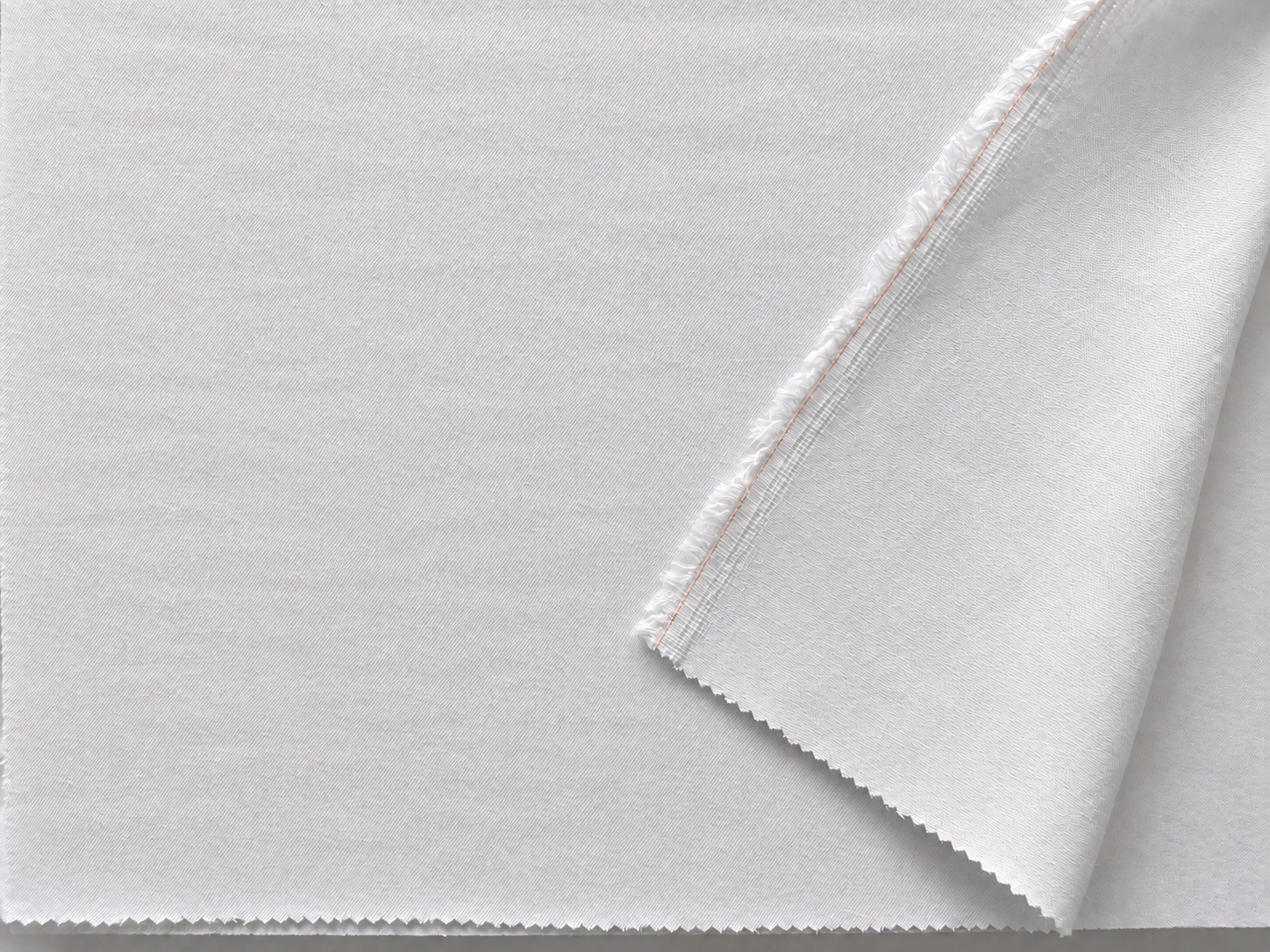
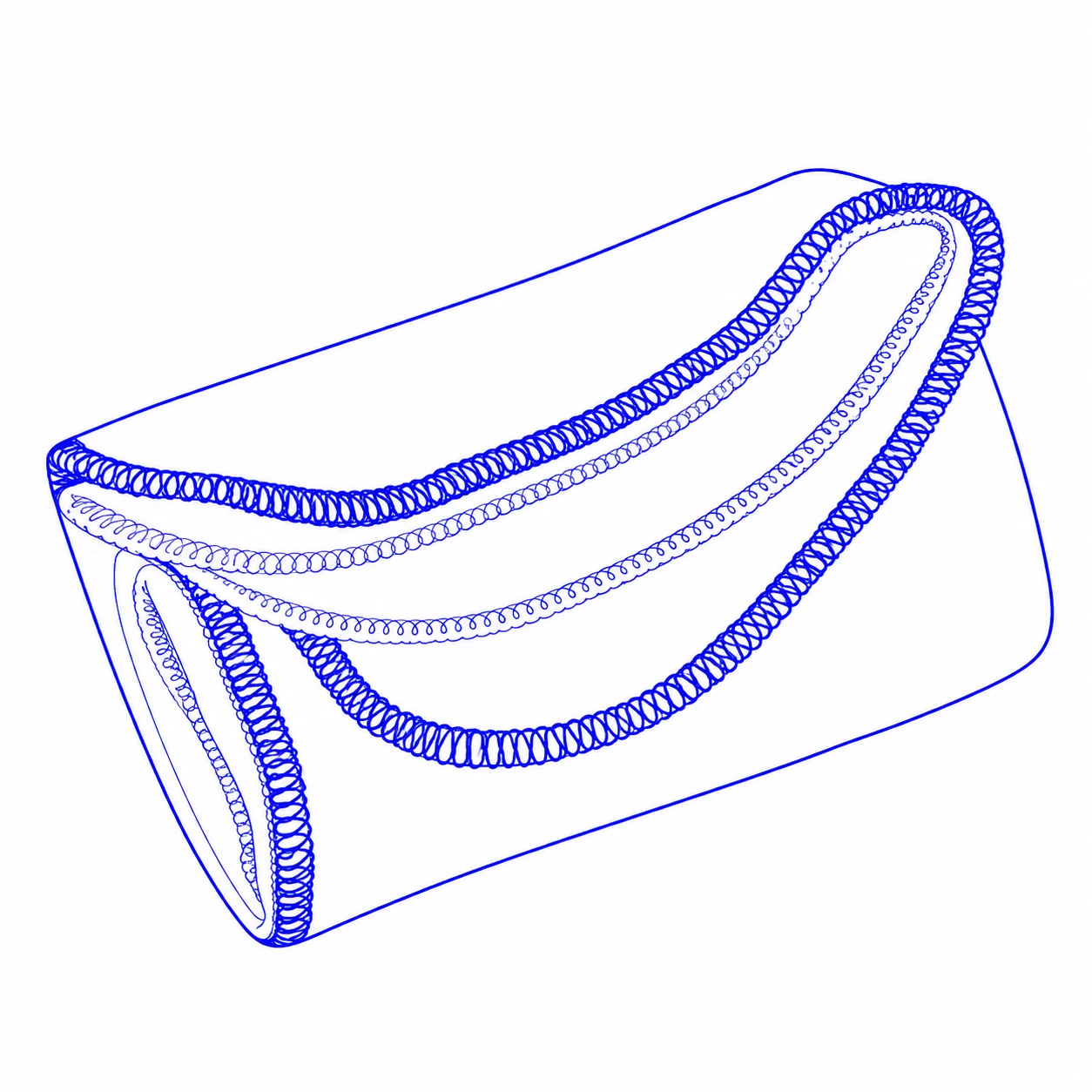
Built as a thin microfleece layer rather than a thick absorbent core, the liner stays soft against the skin and lies flat on the insert. The edges are finished so the liner holds its shape through washing rather than fraying, which matters for a thin product.

Customization Options

  • Size & shape— sized to your diaper and insert
  • Fabric— bamboo terry standard; alternatives on request
  • Edges— finished edges that hold up to washing
  • Packaging & labels— multi-pack; main, wash, batch labels

Easier Cleanup, Cleaner Inserts

The practical reason parents use a liner is cleanup. When a baby soils a diaper, the solids land on the liner rather than working into the absorbent insert below. The parent lifts the liner, deals with the mess, and the insert underneath stays far cleaner, which makes the whole laundry routine quicker and less unpleasant.

That convenience is what turns cloth diapering from a chore into something manageable for a busy parent, and it is the benefit a brand should lead with. A cleaner insert also stains less and lasts longer, so the liner protects the more expensive part of the system. For a brand, framing the liner around cleanup and insert protection gives customers a concrete reason to add it, rather than leaving them wondering what a thin extra layer is for. We build the liner to do that job reliably wash after wash.
Newborn Diapering Product

Newborn Diapering — A Product and a Guide for New Parents

Newborn Diapering, Explained for New Parents

For most new parents, cloth diapering a newborn is unfamiliar and a little intimidating. They are unsure how often to change, how a fitted diaper differs from what they have seen, and why it needs a cover. A brand that answers those questions calmly removes the anxiety that otherwise sends a new parent back to disposables.

That is the opportunity this page is built around. Rather than listing features, it guides a parent through the basics of newborn cloth diapering: frequent changes in the early weeks, how the fitted-plus-cover system works, and what to expect day to day. A brand that teaches this well becomes the trusted voice a new parent returns to, and trust in the newborn weeks turns into loyalty through the sizes that follow.

Best fit for:

  • Education-led and DTC baby brands
  • Postpartum and new-parent focused brands
  • Brands building content-rich, advice-driven pages

Material & Construction

  • Body:100% organic cotton twill, fully absorbent and breathable
  • Construction:soft, simple, and gentle for the earliest weeks
  • No waterproof layer:worn under a cover

The 100% organic cotton twill is chosen for a pure, breathable, single-fiber simplicity that reassures cautious new parents. There is nothing synthetic against a newborn’s skin, which is an easy, honest point for an education-led brand to make.

Customization Options

    • Body— organic cotton twill; other natural fabrics available
    • Closure— snaps, hook-and-loop, or snap-free
    • Guidance— labels and inserts with newborn care instructions
    Labels — main, wash, batch labels to spec

Why Organic Cotton Twill for Newborns

Part of educating a new parent is explaining material choices in plain terms, and organic cotton twill is an easy one to stand behind. It is a single natural fiber with nothing synthetic against the skin, it is breathable, and it softens with washing, all of which a cautious parent finds reassuring for a newborn.

Twill in particular gives a smooth, durable weave that holds up to the frequent washing the newborn weeks demand. On an education-led page, explaining this honestly does more than any marketing claim: a parent who understands why the fabric was chosen trusts the product and the brand behind it. We provide accurate material information and OEKO-TEX documentation so a brand can back its education with proof, and we can keep the construction simple and transparent so the product matches the story the page tells.

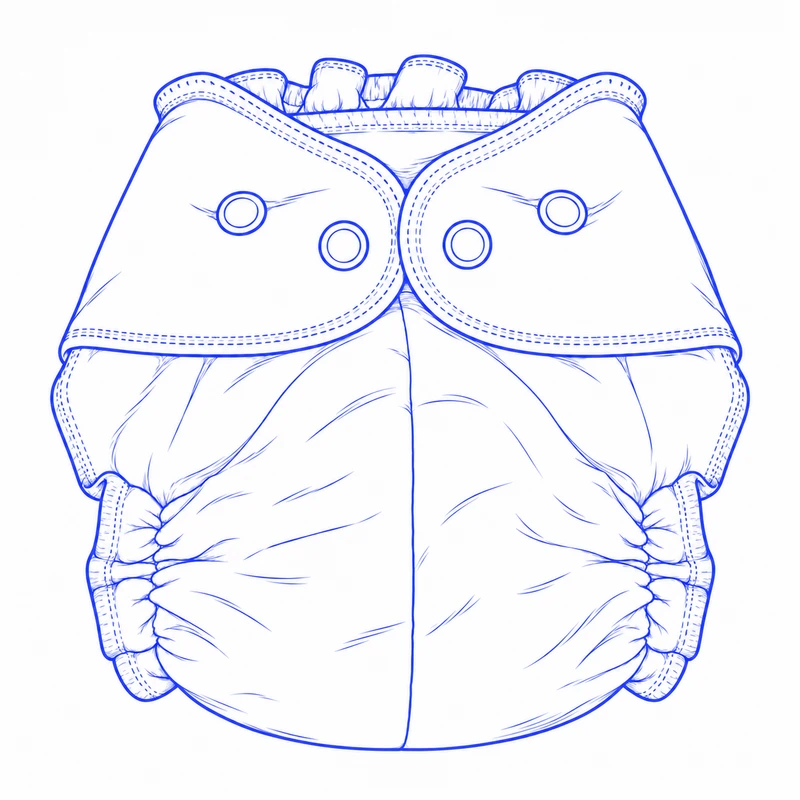
Newborn Fitted Diaper

Newborn Fitted Diaper — Developed Around a True Newborn Fit

Developing a True Newborn Fit

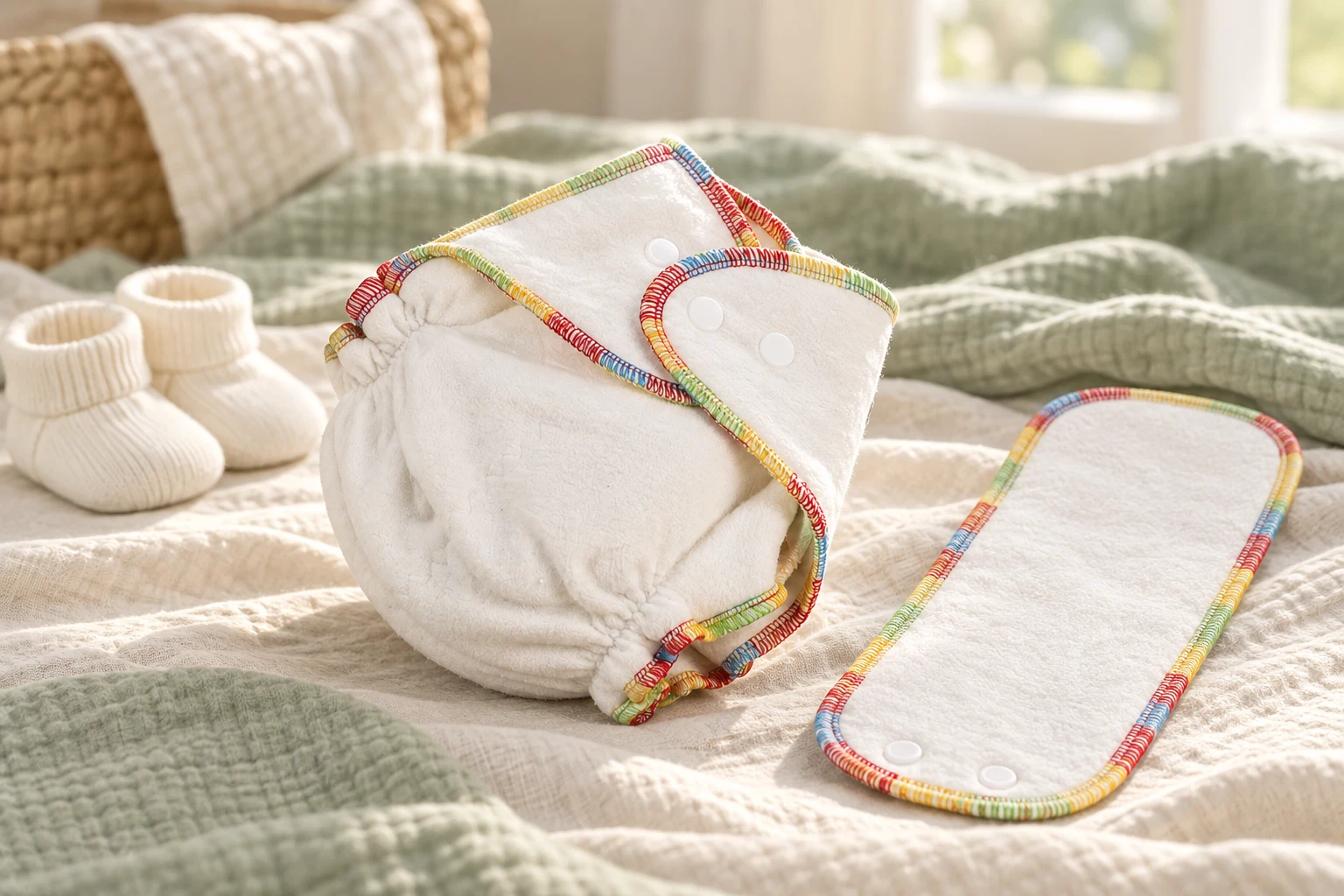
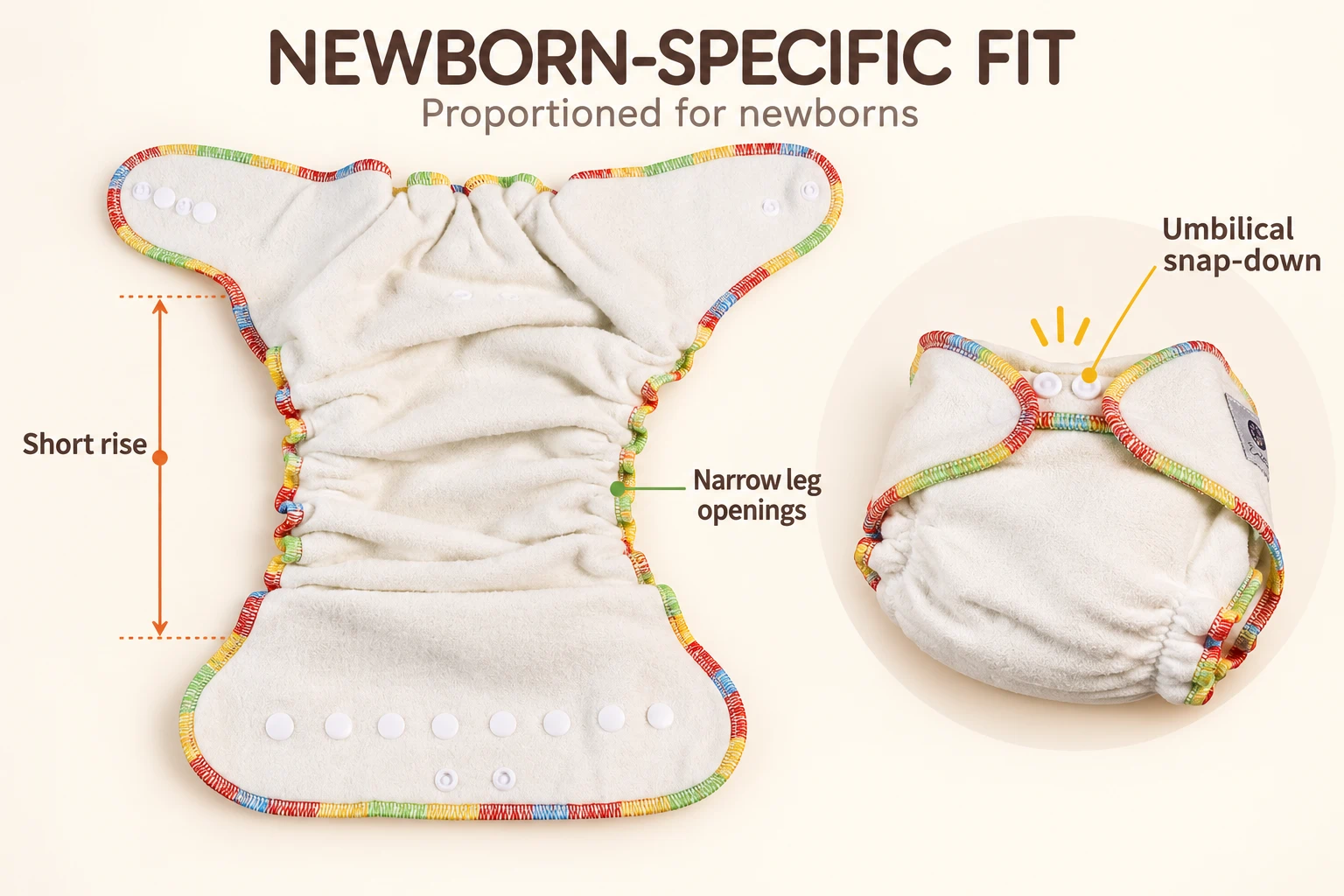
A newborn is not a small toddler, and a diaper that simply scales a standard pattern down does not fit one. Newborn proportions are different: a shorter rise, narrower hips, and the need to sit below a healing umbilical area in the first weeks. A fitted diaper that ignores these gaps at the legs and waist, which on a fully absorbent diaper means leaks the cover cannot fully fix.

This product is developed from a newborn pattern rather than a resized one. The rise, leg elastic, and waist are shaped for a newborn body, and an umbilical snap-down keeps the diaper clear of the cord stump. For a brand, a genuine newborn fit is what earns trust in the most cautious weeks of parenting, and it is harder for a competitor to copy than a print.

Best fit for:

  • Newborn and baby care brands
  • Cloth diaper brands adding a newborn size
  • Starter-set and baby gift brands

Material & Construction

  • Body:60/30/10 bamboo/organic cotton/polyester fleece, absorbent and soft
  • Wicking layer:100% organic cotton jersey against the skin
  • No waterproof layer:worn under a cover

The bamboo-led blend keeps the body soft and absorbent without excessive bulk, which matters on a newborn whose small frame is easily overwhelmed by a thick diaper. The small amount of polyester adds durability through frequent newborn-stage washing.

Customization Options

  • Sizing— true newborn fit; umbilical snap-down option
  • Closure— snaps, hook-and-loop, or snap-free
  • Softness— fabric and elastic tuned gentle for newborn skin
  • Labels— main, wash, batch labels to spec

Softness for Newborn Skin

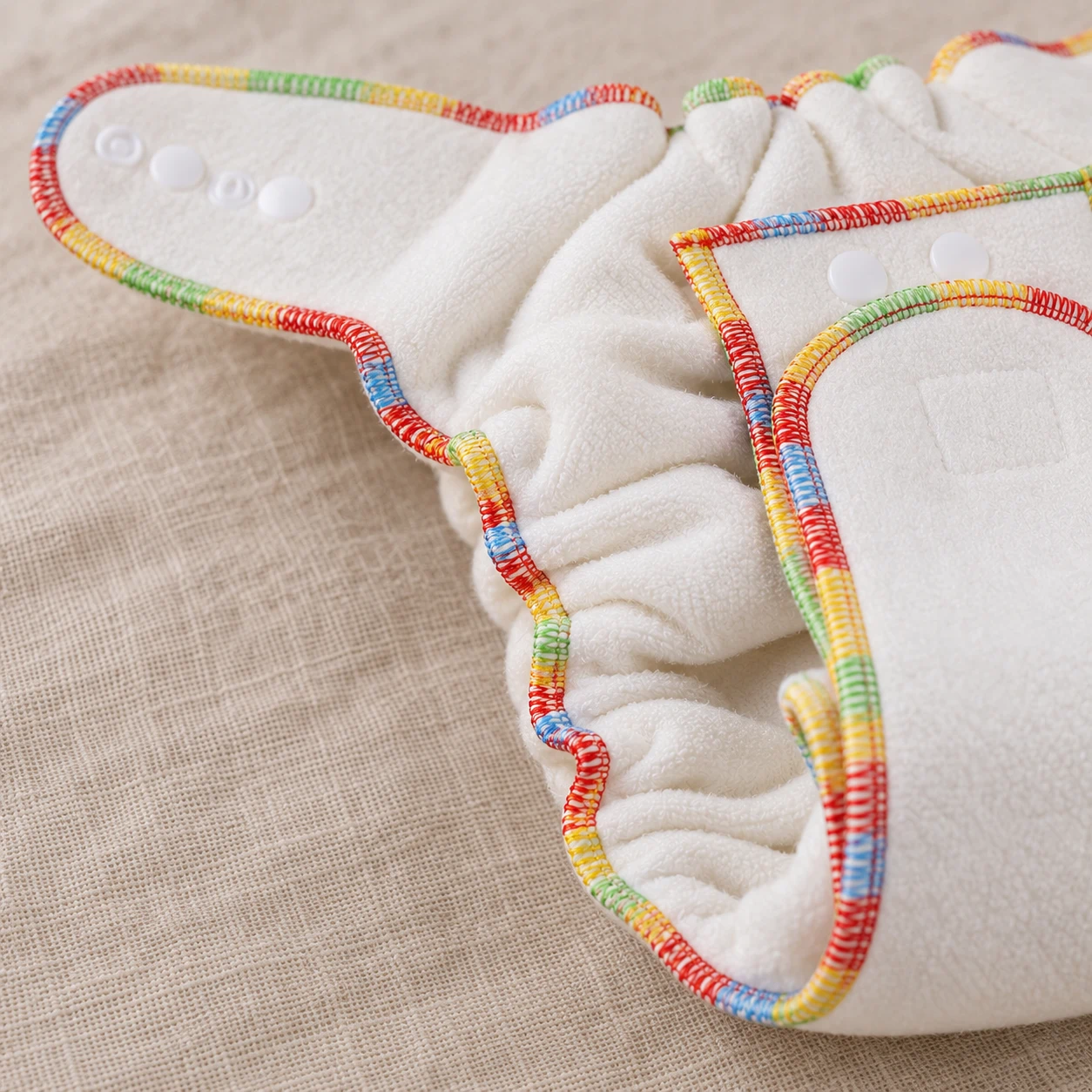
Newborn skin is more delicate than at any later stage, so the surface against it has to be soft and the fit gentle. A bamboo-blend body with an organic cotton jersey lining gives a smooth, low-irritation surface, while the newborn-shaped elastic contains without pressing red marks into soft skin.

These two things work together: the fit keeps the diaper where it should be, and the fabric keeps it kind to the skin. We tune the leg and waist elastic to be secure but gentle, since a newborn’s thighs are too small for standard tension, and we keep the body soft rather than stiff. For a brand, getting both right is what turns a cautious first-time parent into a repeat customer through the newborn weeks and into the next size.

Fitted Cloth Diaper

Fitted Cloth Diaper — The Highest-Absorbency Cloth Option, Paired With a Cover

What a Fitted Diaper Is (and Why It Needs a Cover)

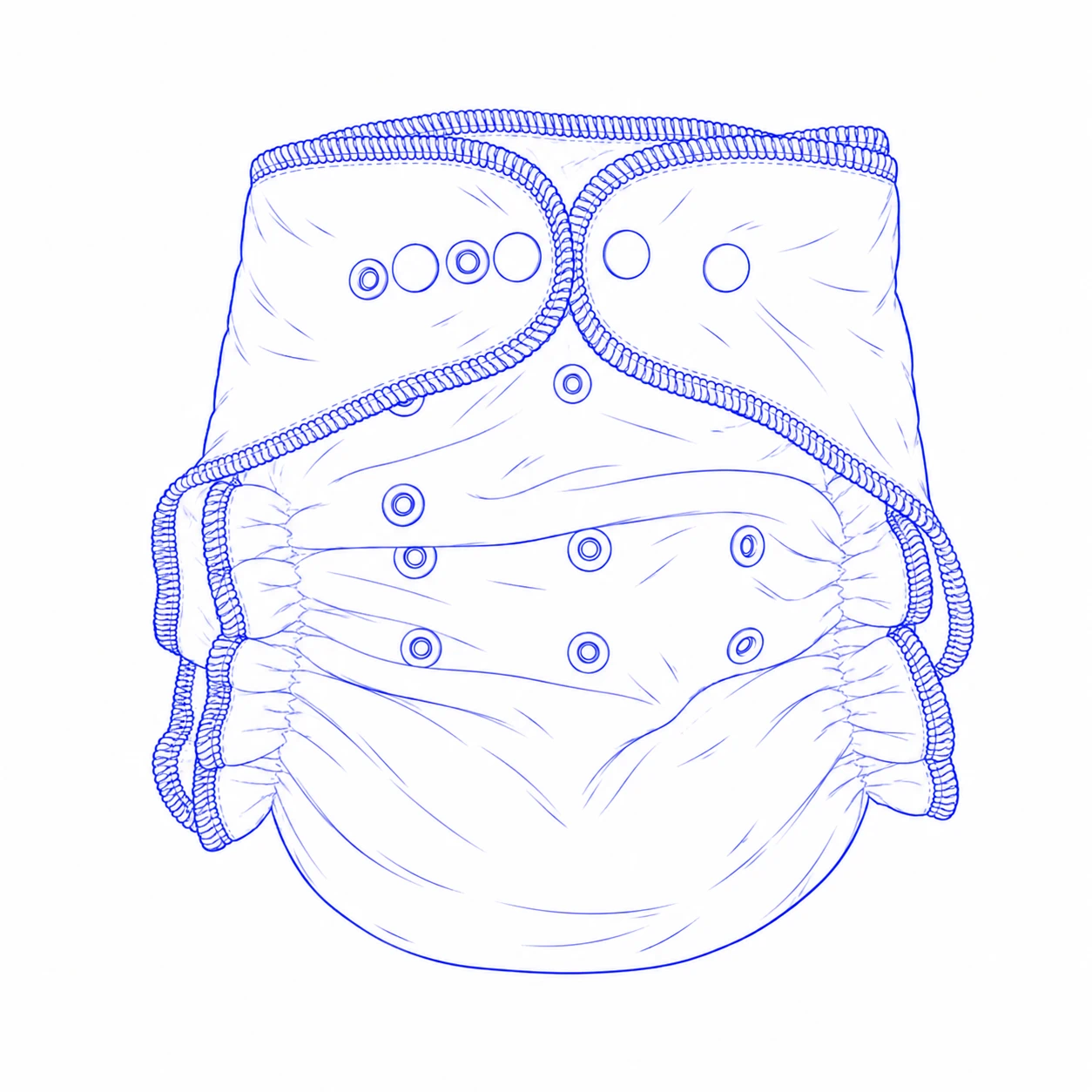
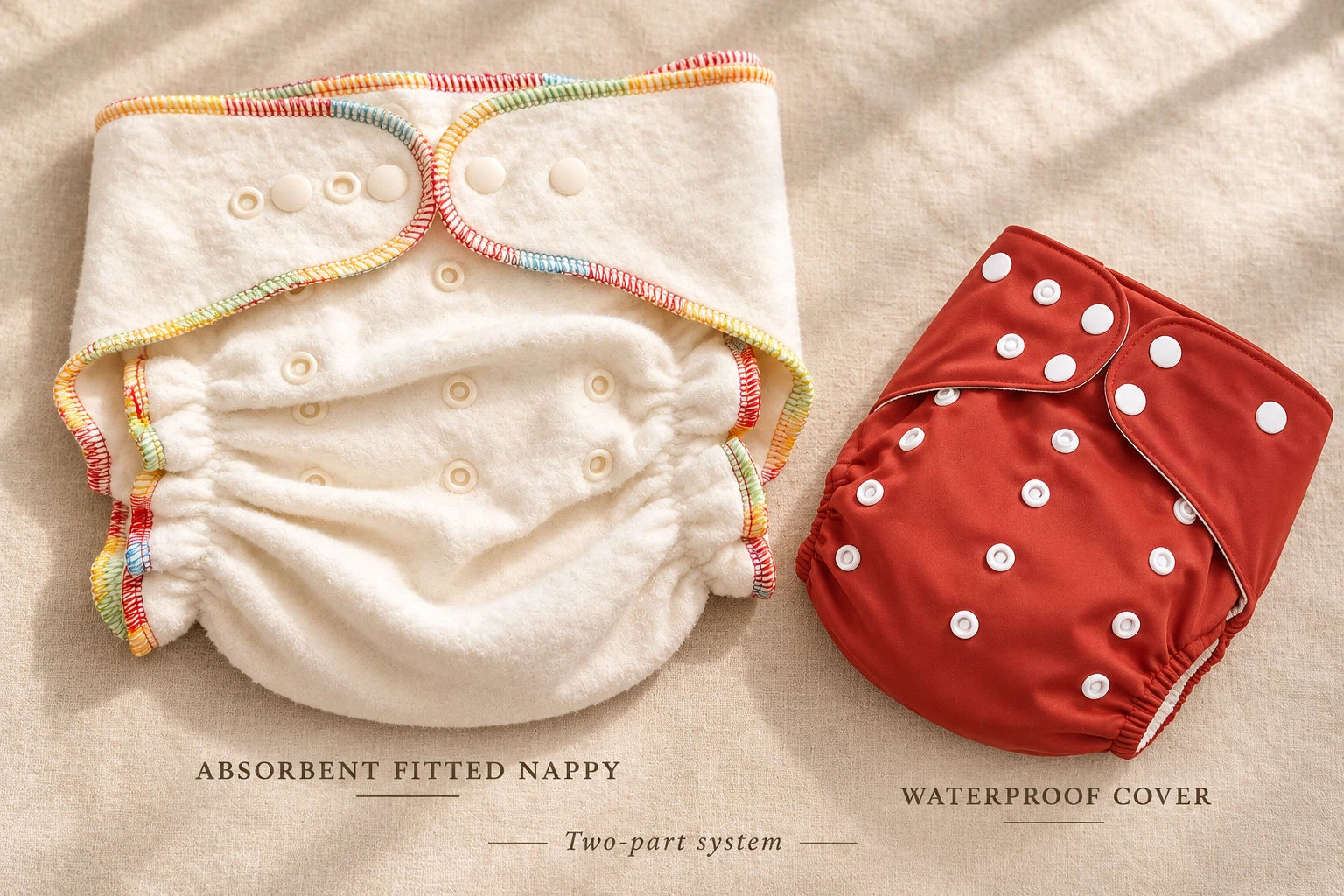
The single thing every buyer must understand about a fitted diaper is that it has no waterproof layer. Unlike an all-in-one or a pocket diaper, the entire garment absorbs, including its outer surface. That is not a flaw; it is the design.

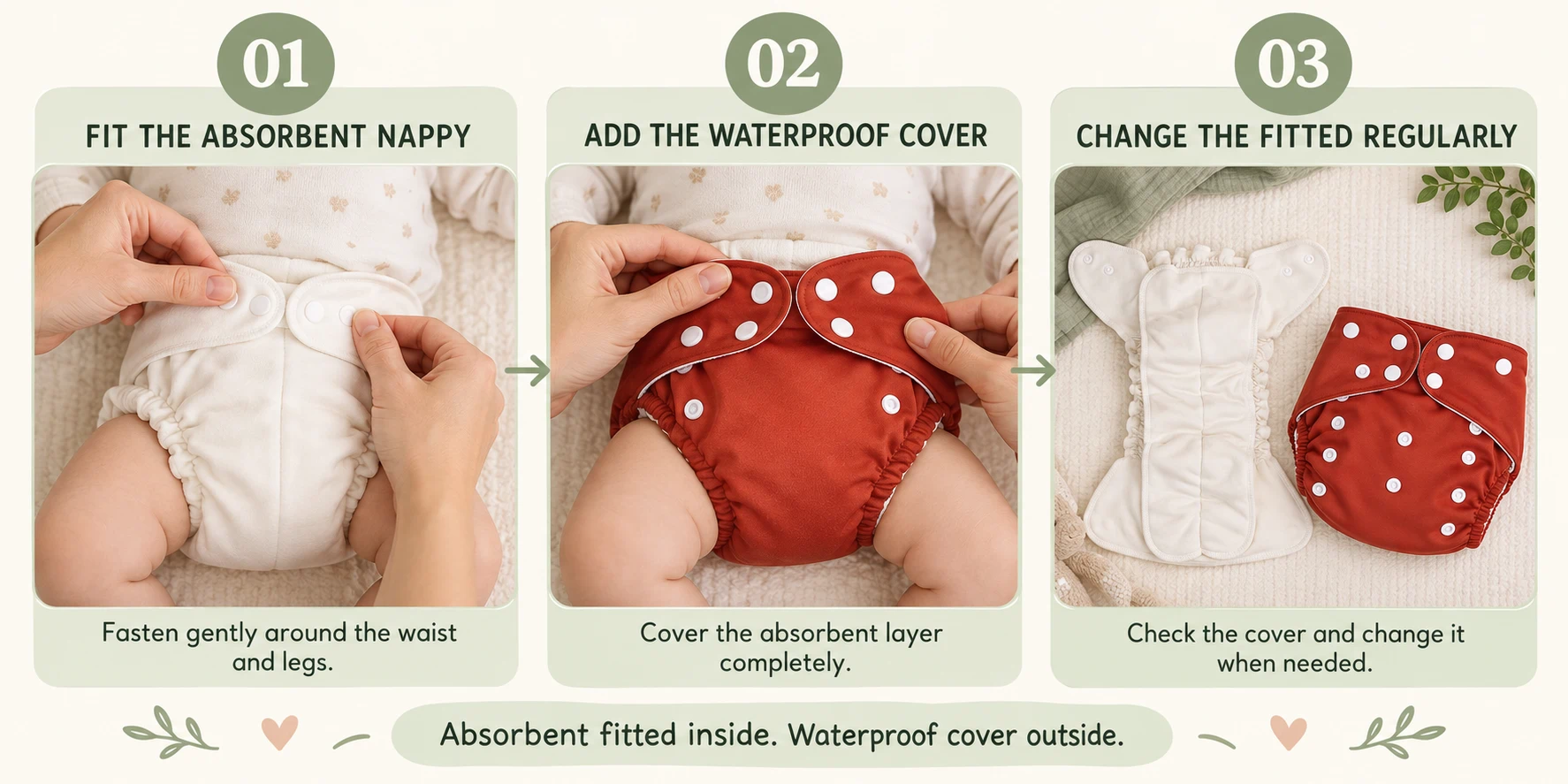
Because the whole diaper soaks up moisture, it must be worn under a separate waterproof cover to stay leak-free. The payoff for that extra piece is absorbency no single-piece diaper can match, since none of the garment is given over to a non-absorbent barrier. For a brand, the job on the product page is to explain this clearly, because a customer who understands the fitted-plus-cover system buys confidently, and one who does not expects waterproofing the product was never meant to have.

Best fit for:

  • Natural and mid-to-high-end cloth diaper brands
  • Brands building a night or heavy-wetter line
  • Brands selling a fitted-plus-cover system

Material & Construction

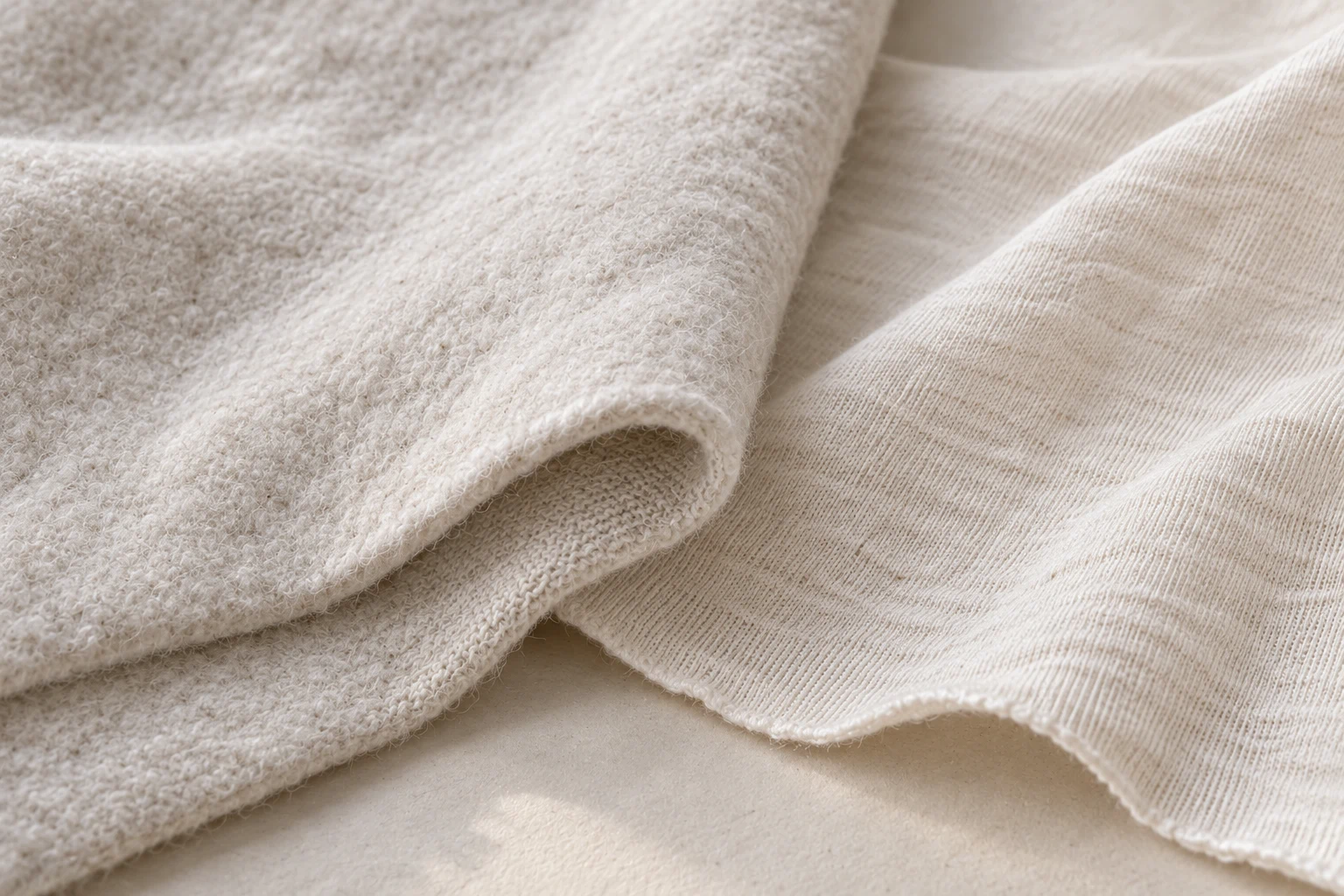
  • Body:55/45 hemp/organic cotton fleece, absorbent throughout
  • Wicking layer:100% organic cotton jersey against the skin
  • No waterproof layer: worn under a separate cover

Hemp is the key fiber here: it holds more moisture per layer than cotton alone and resists odor, which makes the hemp-organic cotton body ideal for the high-absorbency role this diaper is built for.

Customization Options

  • Absorbency— layer count and fiber tuned for night or heavy-wetter targets
  • Closure— snaps, hook-and-loop, or snap-free; snap color to match
  • Sizing— one-size or a sized range
  • System— develop a matching cover to sell as a set
  • Labels— main, wash, and batch labels to spec

Built for Night and Heavy Wetters

The concern brands raise about fitted diapers is that they are thicker and slower to dry than other types. Both are true, and both are the trade-off that makes them work. A fitted diaper is thick because it is all absorbency, which is exactly what an overnight stretch or a heavy wetter needs.

That makes thickness a selling point rather than a drawback when the product is positioned correctly. Sold as a night or heavy-wetter solution, a fitted diaper answers the single hardest problem in cloth diapering: making it through a long stretch without a leak. We help a brand position it for that role rather than as an all-day, everyday diaper, and we can advise on drying time and layering so the product page sets accurate expectations.

Cloth Nappy Covers

Cloth Nappy Covers — Reusable Wraps for the Nappy Market

Speaking the Nappy Market’s Language

In the UK, Australia, and New Zealand, the product is a “nappy cover” or “wrap,” not a “diaper cover,” and buyers there search those terms. Using the local language is how a brand matches its customers’ searches and reads as native to the market rather than an import. It also signals fluency in a region with a deep, informed reusable-nappy culture.

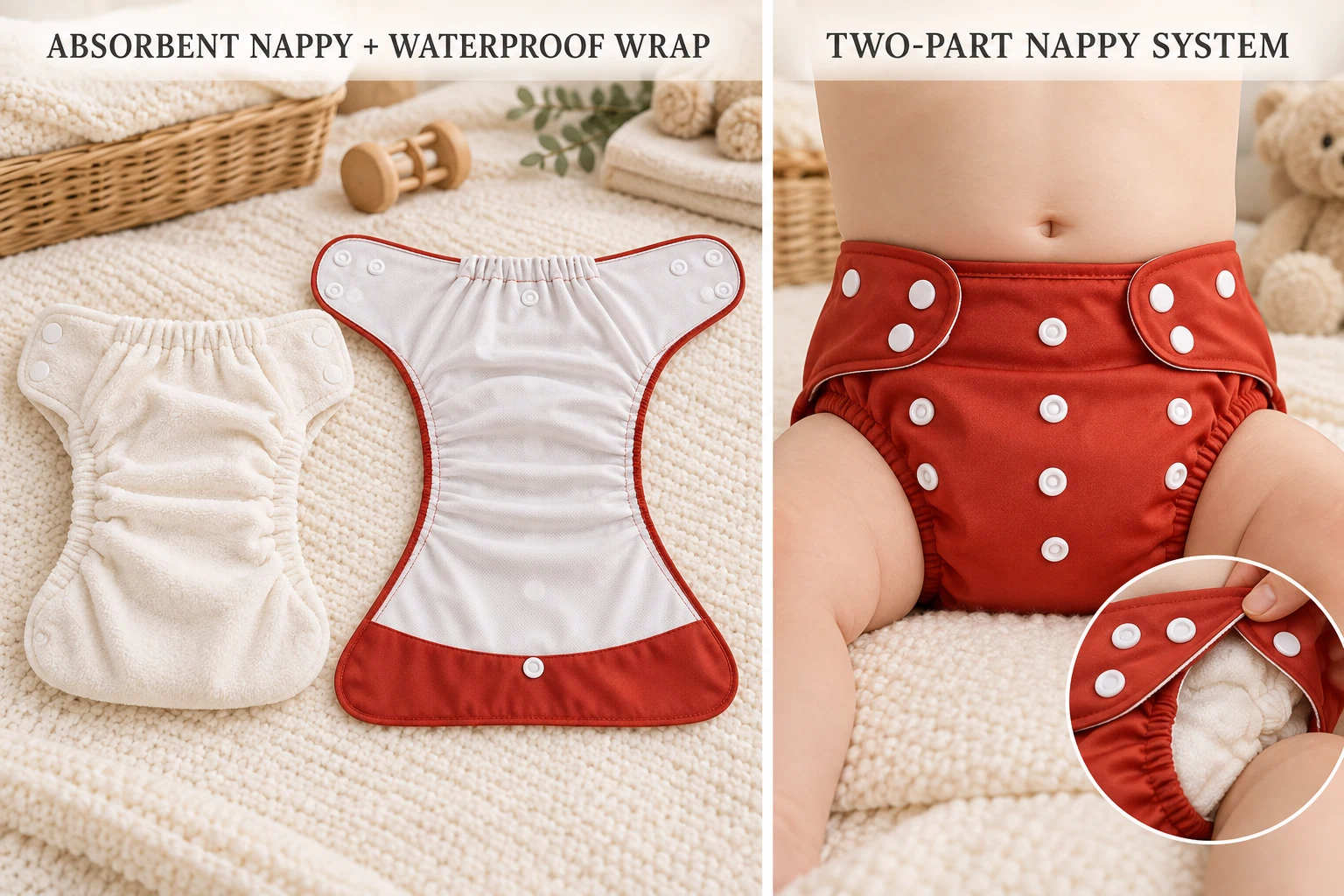
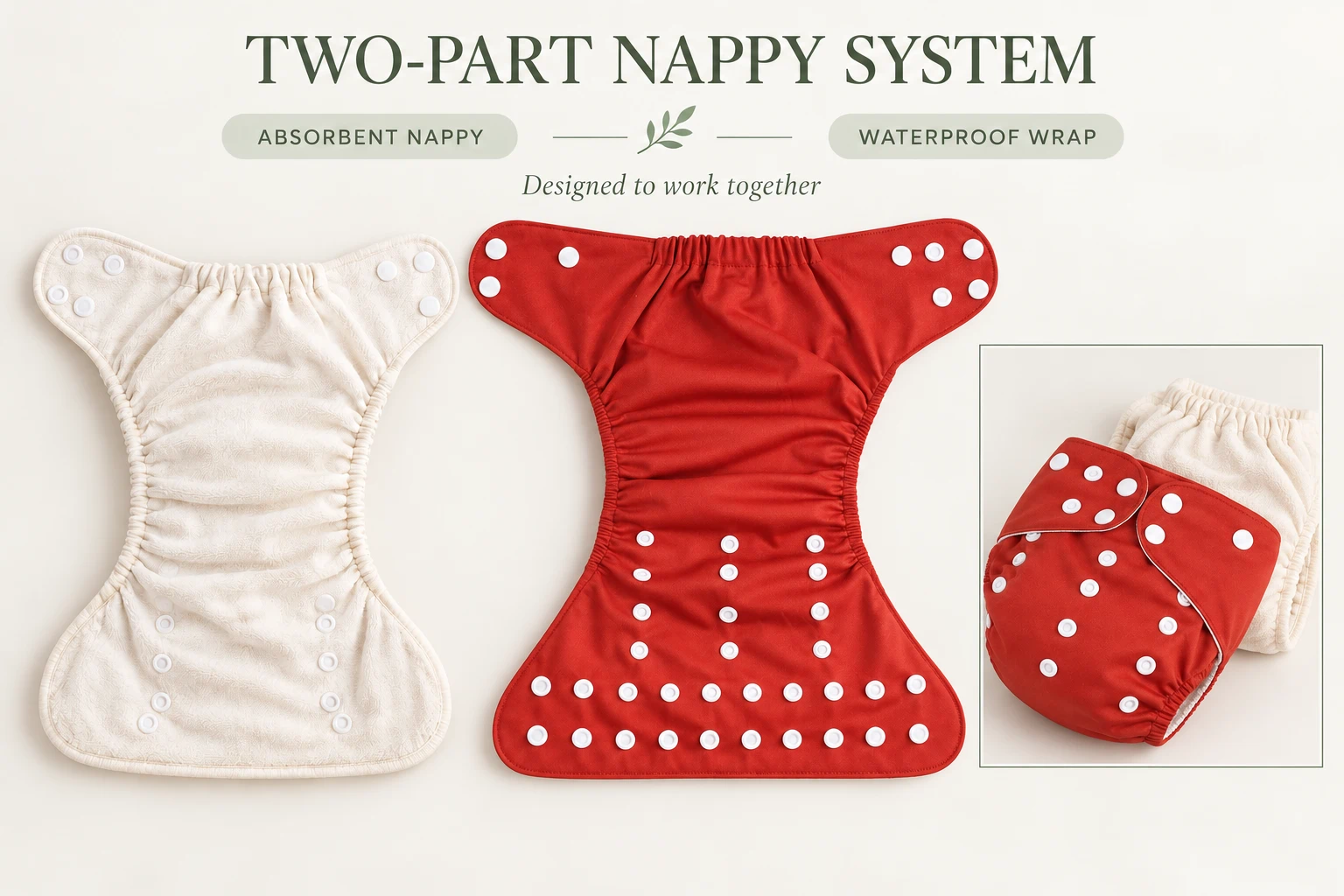
Those markets understand two-part systems well: a nappy or prefold for absorbency under a separate waterproof wrap. Parents there know about wraps, fit, and reusing a wrap across changes. A supplier serving them has to match that knowledge. We develop nappy covers that fit the systems common in these markets and use the right terminology across the product and packaging, so a Commonwealth brand presents a range that belongs to its market. The washable, reusable wrap is exactly what these eco-minded, cloth-committed customers expect.

Best fit for:

  • UK, Australian, and New Zealand nappy brands
  • Nappy importers and distributors
  • Brands serving an informed reusable-nappy audience

Material & Construction

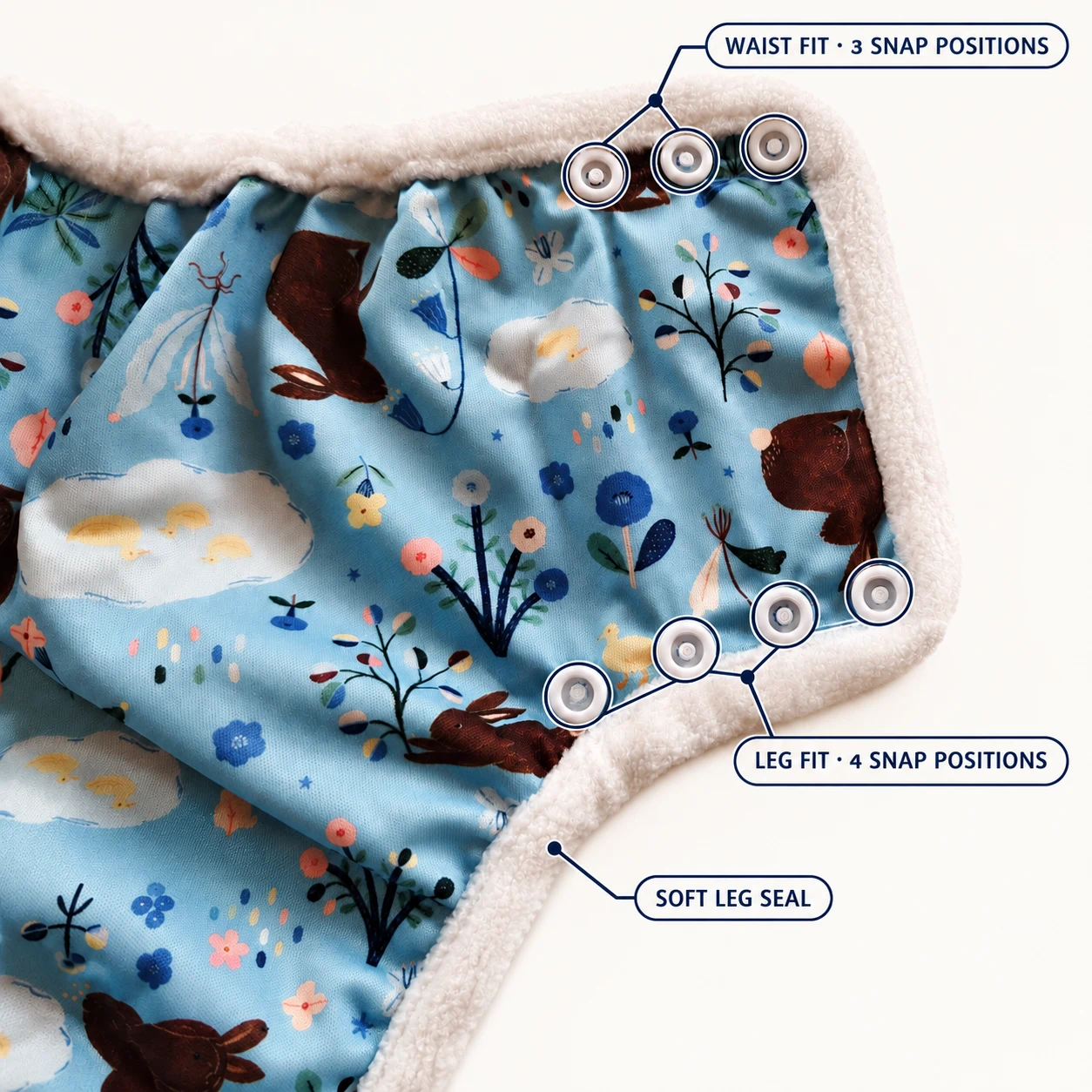
  • Outer:100% printed polyester interlock with TPU (waterproof)
  • Inner:AWJ layer for a breathable feel
  • Closure:snap or hook-and-loop; adjustable

The TPU-backed printed outer is the waterproof wrap, and an AWJ inner layer adds a breathable, comfortable feel against the nappy. The wrap adjusts at the waist and legs to fit the nappy systems these markets use.

Customization Options

  • Print— seasonal, signature, on-trend nappy prints
  • Size— graded or one-size adjustable
  • Closure— snap or hook-and-loop; snap color
  • Labels & packaging— main, wash, batch labels; set packaging

Washable, Reusable, Custom-Printed

A nappy wrap’s reusability is central to why these markets choose cloth, and it shapes how the product sells. A wrap is not changed every time the nappy is; if it stays clean, a parent wipes it and reuses it across several changes, so a household needs only a few wraps in rotation. That economy is a key selling point, and a brand should make it clear.

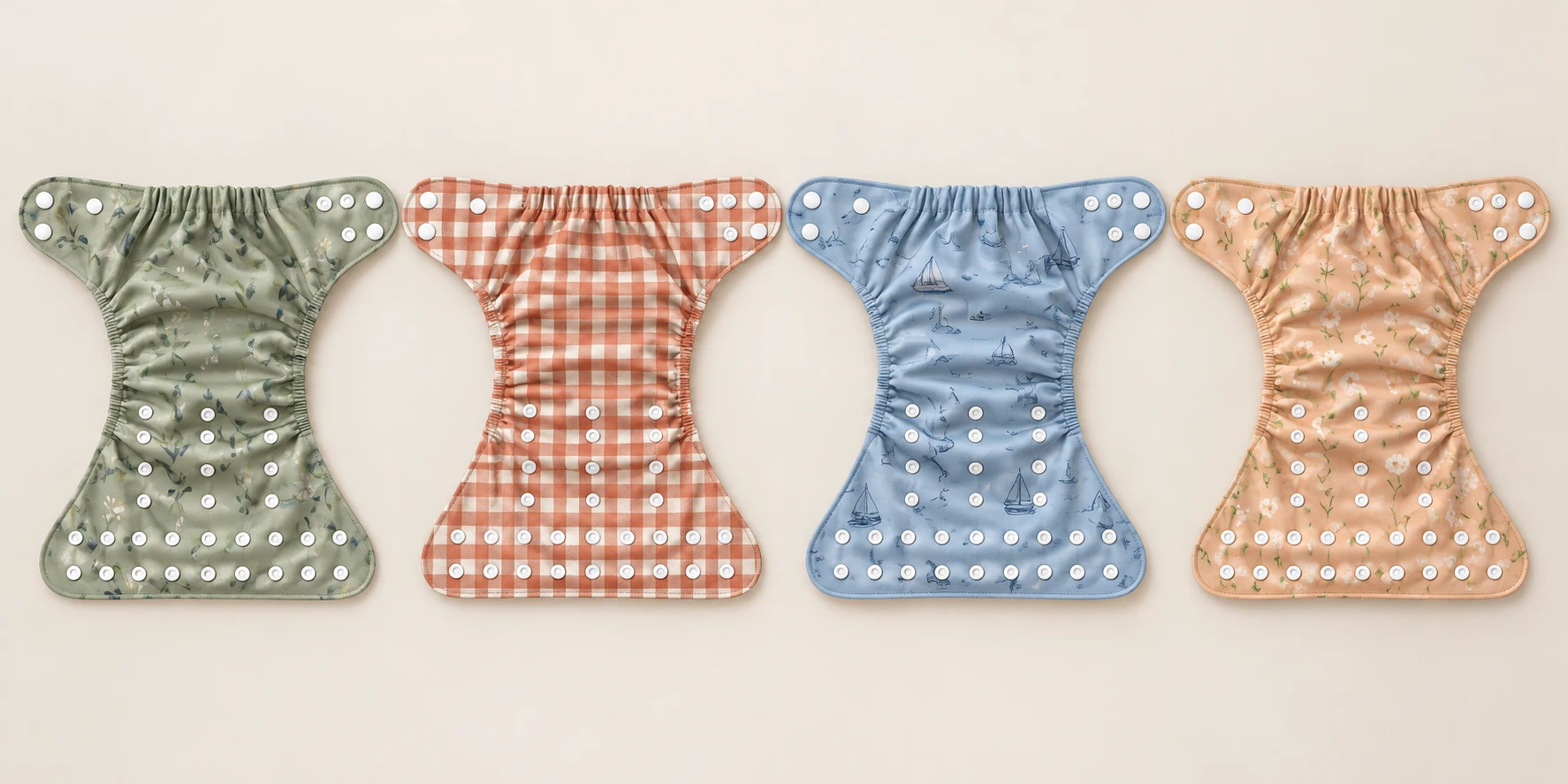
Custom print is the other half. Nappy wraps are one of the most visible, collectible parts of a cloth system in these design-aware markets, where parents happily build a set of prints. Digital printing makes a varied, on-trend range affordable with no plate cost per design, so a brand can run seasonal and signature prints and refresh them often, each counted against the standard minimum. We develop the wrap to be genuinely washable and reusable and coordinate prints across a brand’s nappy range, so a Commonwealth brand offers both the practical economy and the collectible look its market wants.

Cloth Diaper Covers for Prefold

Cloth Diaper Covers for Prefold — Shaped to Wrap and Contain a Prefold

Why a Prefold Needs the Right Cover

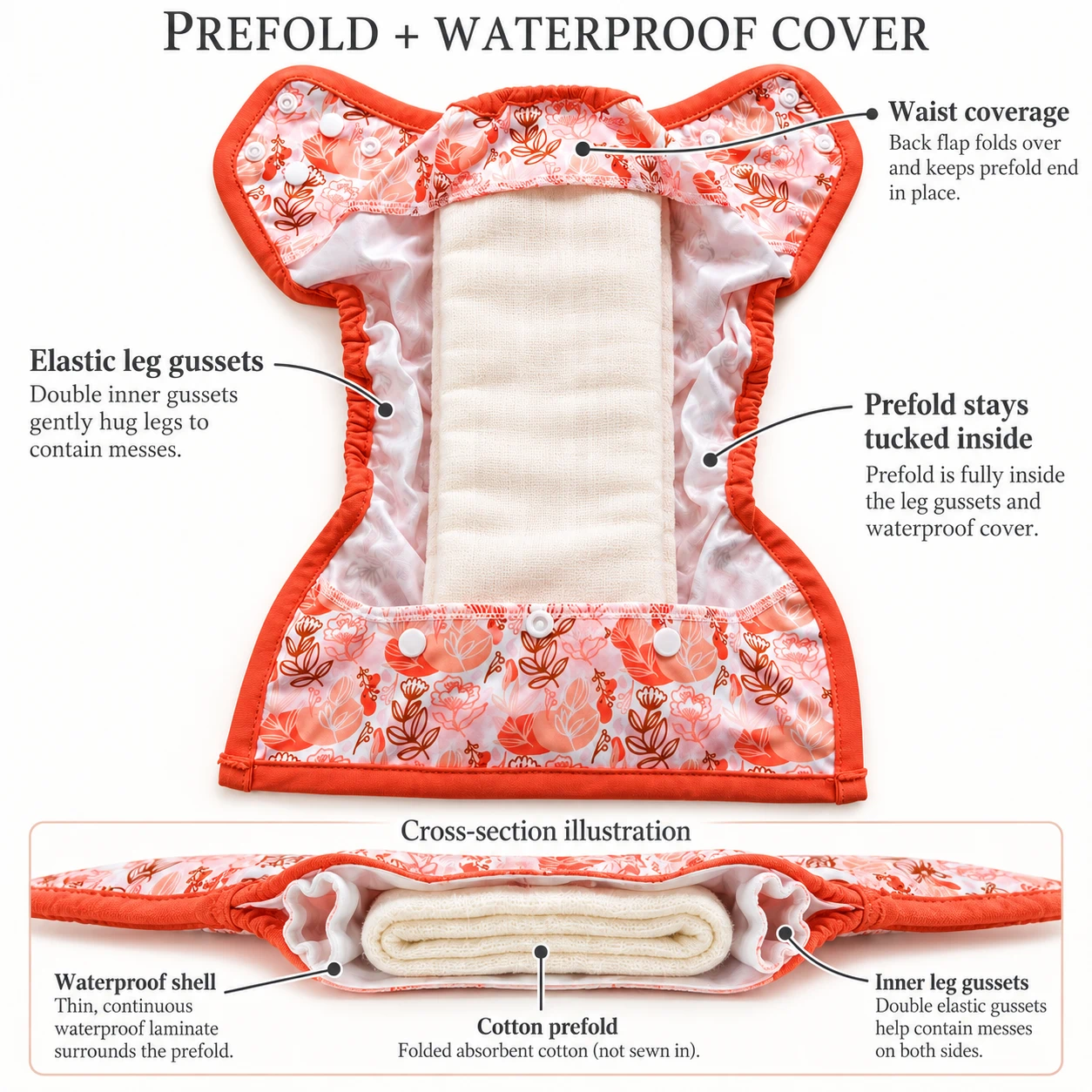
A prefold is one of the oldest, most economical cloth diaper layers: a rectangular absorbent cloth that is folded onto the baby and held by the cover. That puts more demand on the cover than a shaped insert does, because the cover has to both contain leaks and keep a folded prefold in place without it shifting or peeking out.

So a prefold cover is designed around containment and coverage. The shell has to fully enclose the folded prefold, with leg openings and a waist that hold the bulk of a folded cloth securely, and a snug fit that stops a corner of prefold escaping the cover, which is the classic prefold leak. We develop the cut and the elastic to wrap a prefold cleanly, so the economical prefold system actually stays contained. For a brand serving the traditional or budget cloth market, a cover that handles prefolds properly is what makes the system work for its customers.

Best fit for:

  • Prefold and traditional cloth diaper brands
  • Economical cloth-system and eco baby brands
  • Wholesalers serving the prefold market

Material & Construction

  • Fabric:100% printed polyester interlock with TPU
  • Build:cut to enclose a folded prefold; snug leg and waist
  • Closure:snap or hook-and-loop

The TPU-backed shell contains leaks, and the cut is shaped to wrap the bulk of a folded prefold with snug leg openings and waist so nothing escapes. The closure adjusts the fit over different prefold folds and sizes.

Customization Options

  • Size— graded or one-size adjustable for prefold stages
  • Leg & waist— elastic and gusset tuned to contain a prefold
  • Closure— snap or hook-and-loop; snap color
  • Print & labels— digital print; main, wash, batch labels

Waist and Leg Adjustment That Holds

With a prefold, the adjustment at the waist and legs does more work than with a shaped diaper, because it is what holds a folded rectangle in place. Get it right and the system is reliable and cheap; get it wrong and the prefold shifts and leaks, which is what frustrates parents new to prefolds.

We build the adjustment to contain a prefold securely. The leg openings have elastic and a gusset edge tuned to seal around the leg without gaping, which is where a shifting prefold leaks first. The waist closure adjusts across sizes and over the bulk of the fold, holding firmly without digging in. We can grade sizes or build a one-size adjustable cover with rise snaps to span the prefold stages. For a brand, an adjustment system that genuinely holds a prefold is the difference between a system customers stick with and one they abandon for something pricier. We tune it on a sample with real prefolds before bulk.

Diaper Covers for Cloth Diapers

Diaper Covers for Cloth Diapers — The Waterproof Outer Shell of the System

A Cover Is Not a Pocket or an AIO

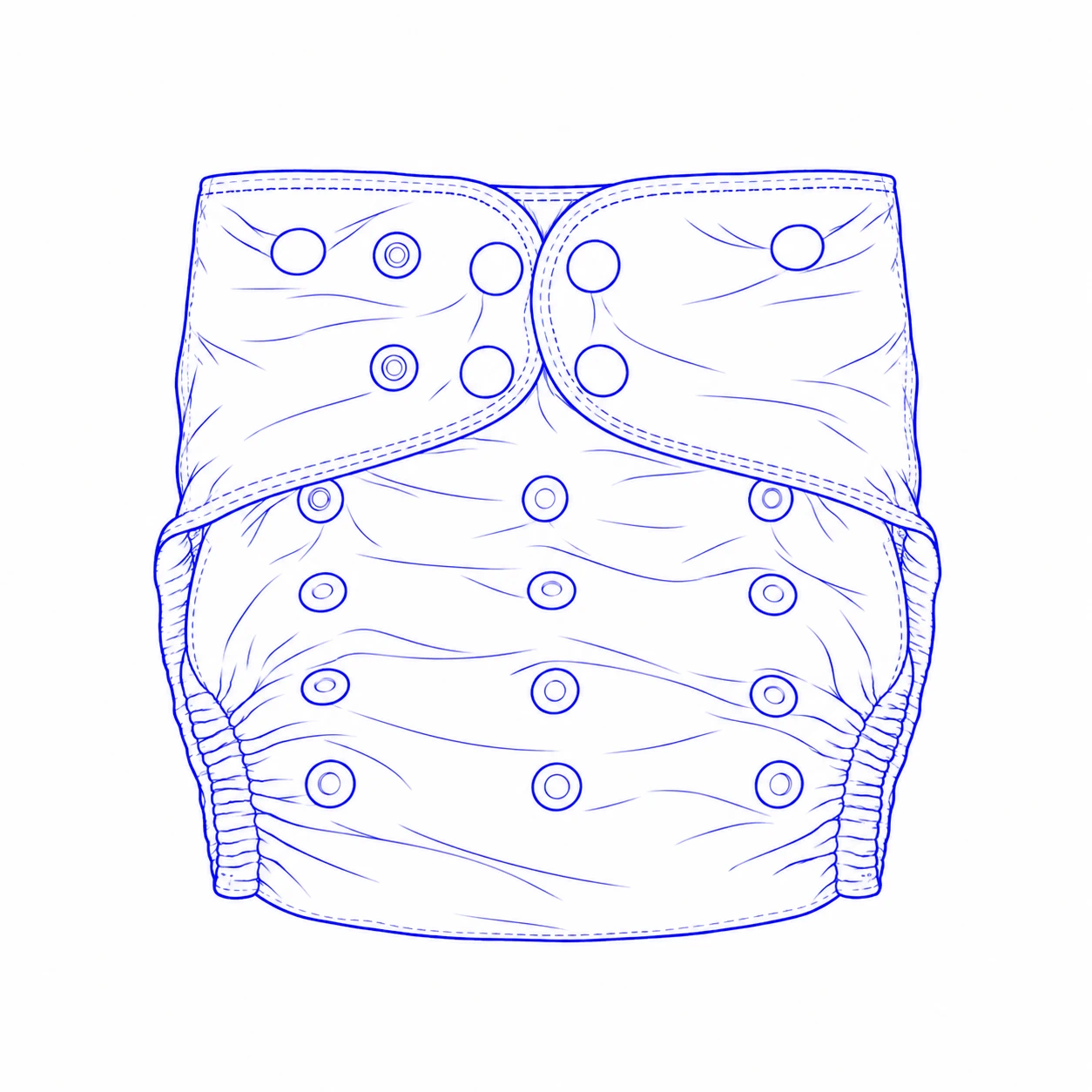
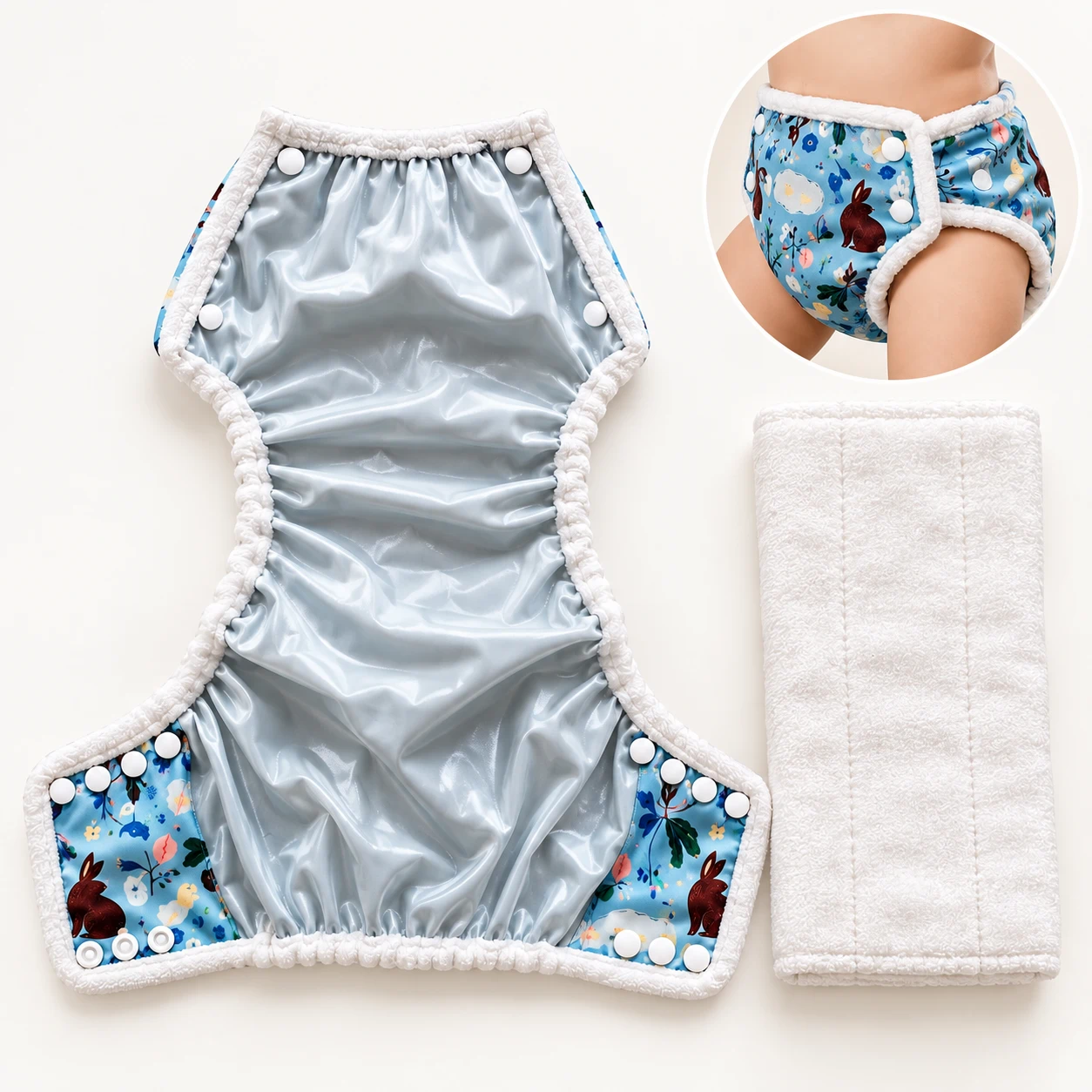
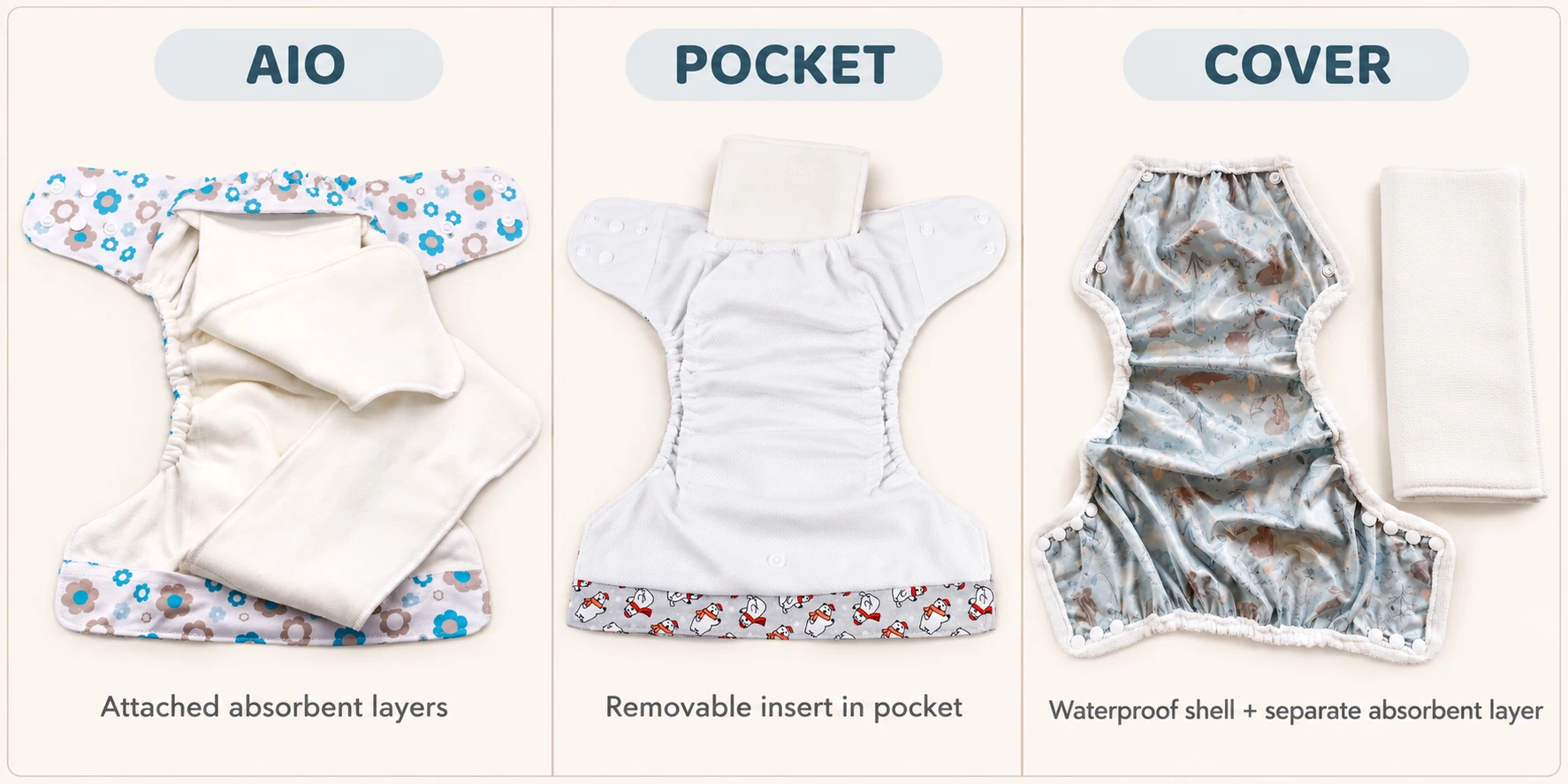
The most common confusion a cover brand faces is how it differs from a pocket diaper or an all-in-one, and clearing it up is the first job of the page. All three are the waterproof outer of a cloth diaper, but they handle absorbency differently. An all-in-one has the absorbent layers sewn in permanently, so it works as one piece but dries slowly. A pocket diaper has a sewn-in pocket you stuff an insert into. A cover has neither: it is just the waterproof shell, used over a completely separate absorbent layer.

That separation is the cover’s whole advantage. Because the absorbent part is independent, a parent can pair the cover with a fitted diaper for a heavy night, a prefold for the day, or an insert for a quick change, and reuse the same cover across several changes if it stays clean. For a brand, a cover anchors a flexible, economical two-part system rather than a fixed one. We help a brand position the cover clearly as the shell, so customers understand what they are buying and how to use it.

Best fit for:

  • Cloth diaper and two-part system brands
  • Eco baby and mother-care brands
  • Private-label and e-commerce sellers

Material & Construction

  • Fabric:100% printed polyester interlock with TPU
  • Build:waterproof shell with adjustable waist and leg openings
  • Closure:snap or hook-and-loop

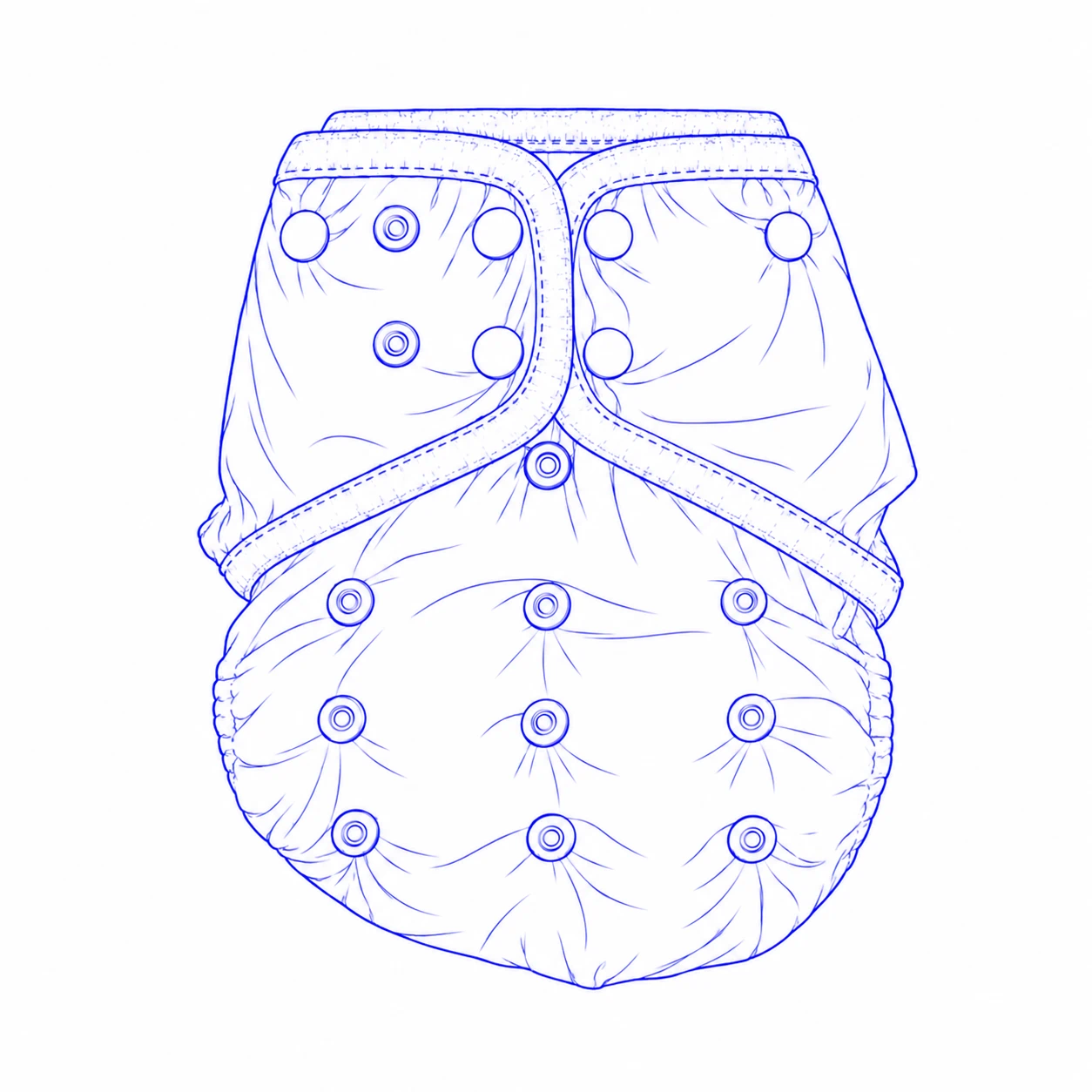
The printed polyester interlock with a TPU layer makes the shell waterproof, keeping leaks off clothing while the absorbent layer underneath does the soaking up. Adjustable waist and leg openings and a snap or hook-and-loop closure fit the cover over different absorbent layers.

Customization Options

  • Size— graded sizes or one-size adjustable with rise snaps
  • Closure— snap or hook-and-loop; snap color
  • Print— digital print to your artwork
  • Labels & packaging— main, wash, batch labels; set packaging

OEM/ODM for a Diapering System

A cover is rarely sold alone; it is the piece a brand builds a diapering system around, and developing it as an OEM/ODM product is how that system comes together. The cover sets the fit, the closure style, and the look, and the absorbent layers a brand pairs with it follow from there.

We develop the cover to the system a brand wants. Sizing can be graded (newborn, small, medium, large) or built as a one-size adjustable cover with rise snaps. The closure can be snaps for durability or hook-and-loop for speed, to a brand’s market preference. The waterproof shell, leg gussets, and print are all specified to the brand. Because we also make the inserts, fitted diapers, and prefolds that pair with it, a brand can develop a coordinated two-part system from one supplier rather than matching parts from several. We treat the cover as the foundation of that system and build it to anchor a coherent, well-fitting range.

Washable Wipes

Washable Wipes — Built to Survive Constant Laundering

Built to Survive Constant Washing

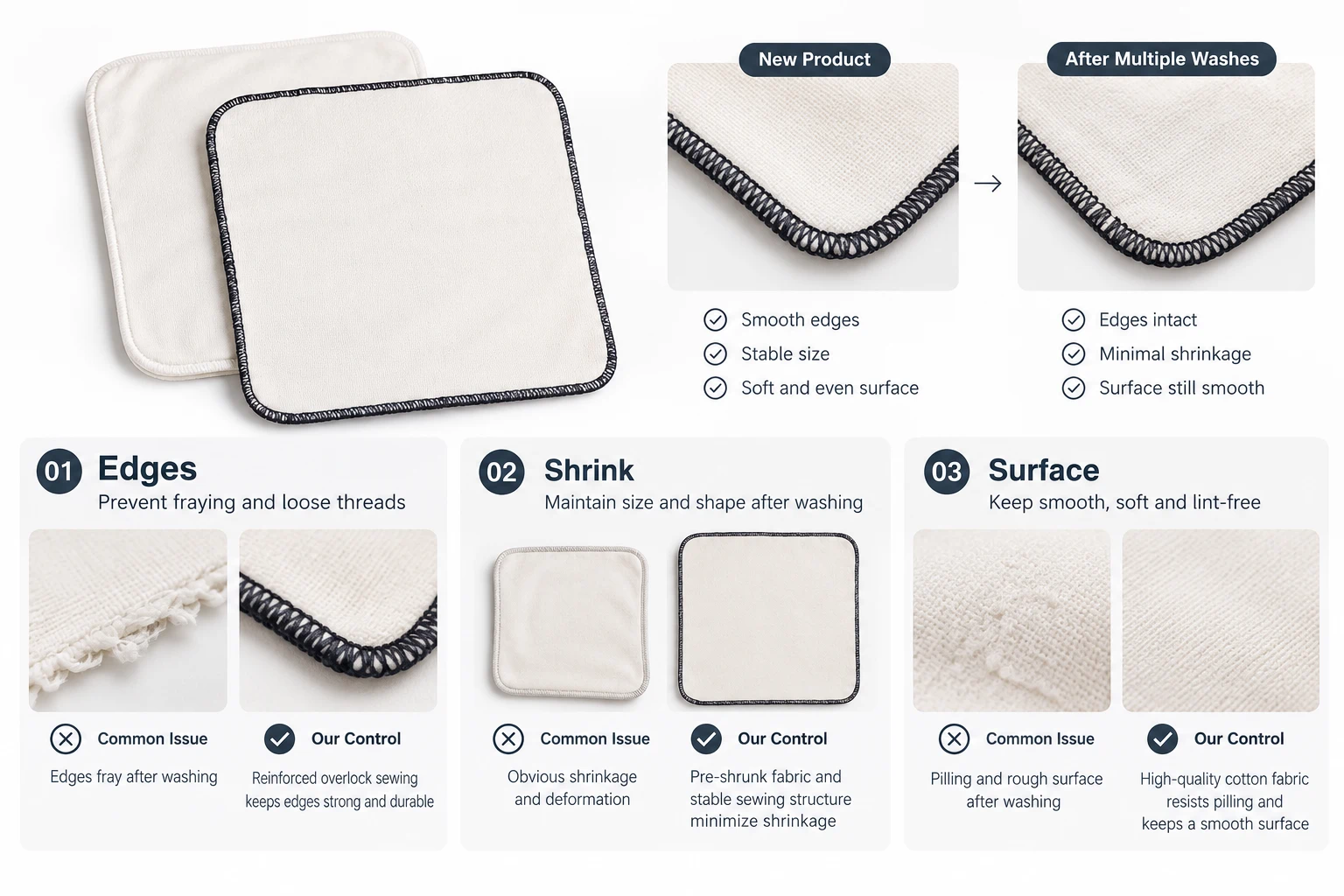
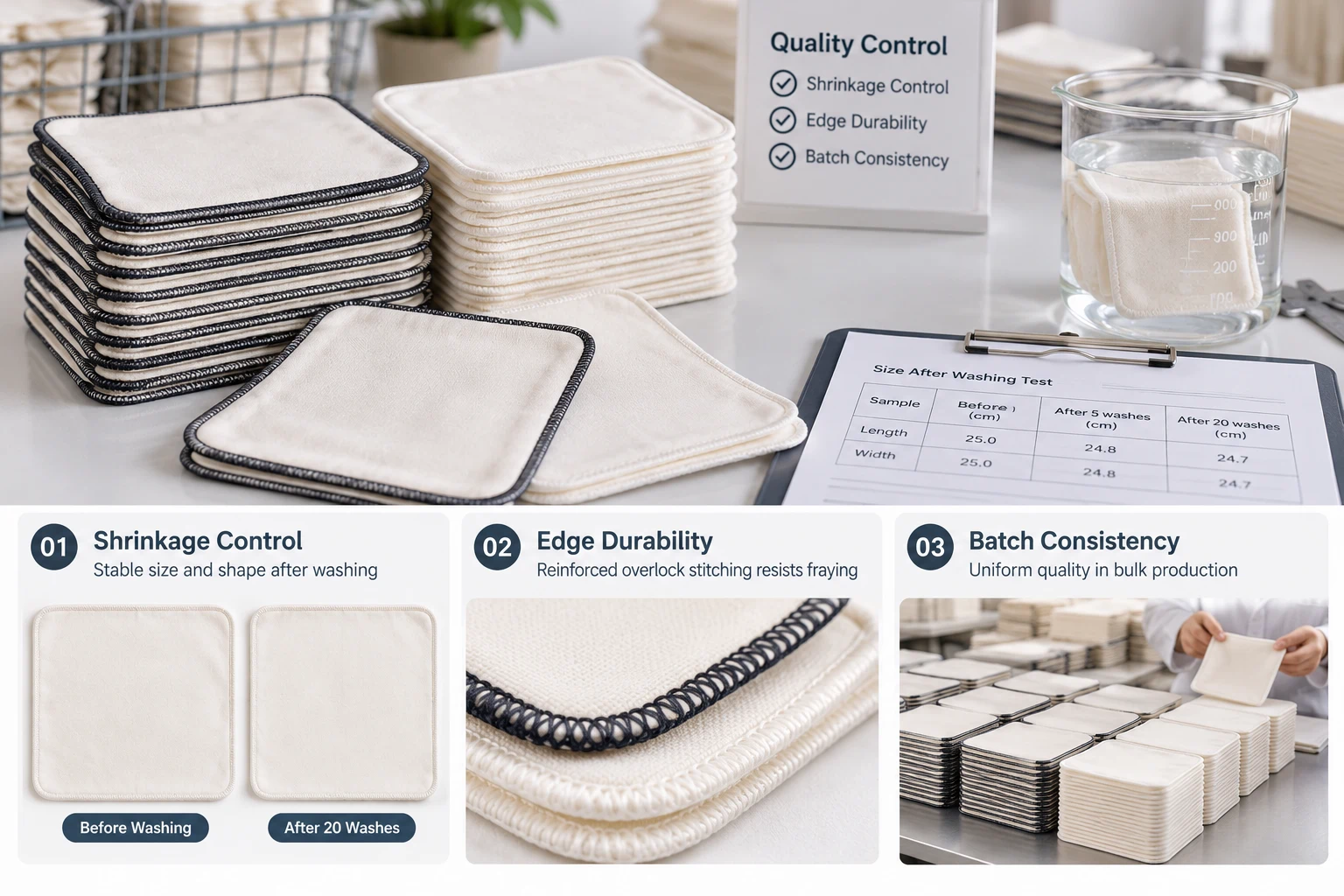
A wipe is one of the most heavily laundered items a household owns, washed almost daily, often hot, for years. That constant laundering is exactly where a poorly made wipe fails: the edges fray, the cloth shrinks or distorts, and the surface stiffens or pills. A wipe that looked fine in the pack but degrades in a month is the source of the bad reviews that sink a listing.

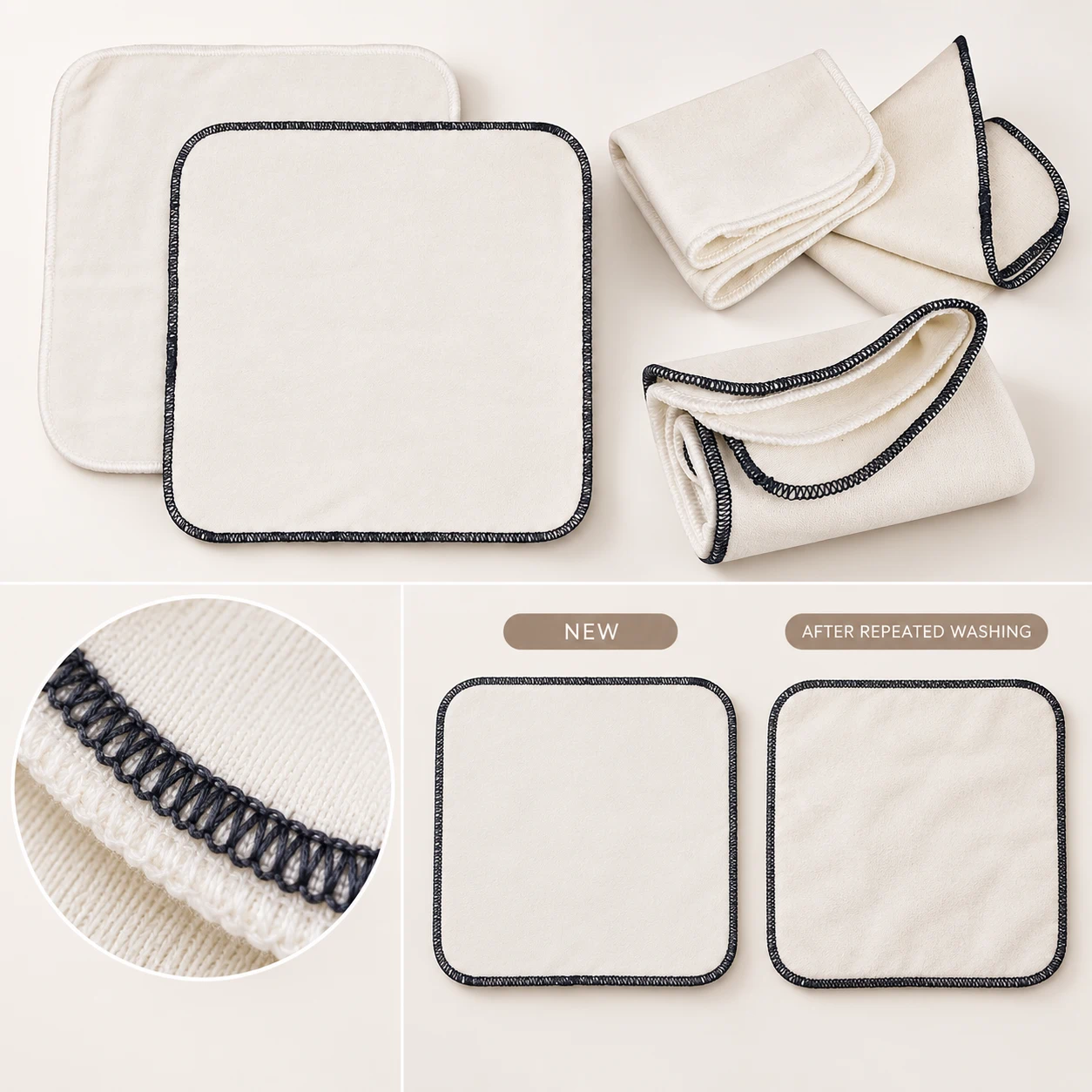
This wipe is built against those failure modes. The edges are stitched to resist fraying through repeated hot washing, shrinkage is controlled through proper finishing so the wipe keeps its size and shape, and the fabric is chosen to stay soft rather than stiffen over time. We recommend a brand wash-test a sample through several cycles before bulk, since durability only proves out after laundering. For a brand whose reviews depend on the product lasting, a wipe that still looks and works like new after months of washing is what turns first-time buyers into repeat customers.

Best fit for:

  • Wholesalers and volume buyers
  • Eco and family care brands judged on reviews
  • Amazon and independent-site sellers

Material & Construction

  • Fabric:seacell (a cellulosic fibre incorporating seaweed)
  • Build:wipe with reinforced, wash-resistant edges
  • Focus:shrink control and lasting softness

Seacell is a cellulosic fibre that incorporates seaweed, valued for a soft, smooth hand. We describe it accurately as a soft cellulosic fabric without making health claims for it. Here it is built into a wipe with reinforced edges and finished for shrink control, so the softness and the size both last through heavy washing.

Customization Options

  • Construction— reinforced edges for wash life
  • Fabric— seacell standard; alternatives on request
  • Size— to your channel
  • Packaging & labels— bulk or retail; main, wash, batch labels

Batch Consistency at Volume

For a buyer ordering wipes in volume, the product is only as good as the worst piece in the carton, because one fraying or shrunken wipe becomes a complaint. So consistency across a batch matters as much as the design, and it is what a serious buyer is really evaluating.

We treat the durability features as quality-controlled, not just claimed. The edge construction is held consistent unit to unit, the finishing that controls shrinkage is applied to the same standard across the run, and the fabric is sourced consistently so every wipe feels the same. We lock the construction to the approved sample and hold it across reorders, so a buyer’s tenth order performs like the first, with material reports available where a market requires them and tiered pricing as quantity rises. For a wholesaler staking its reputation on the product, that batch-to-batch reliability is what makes the wipe dependable to sell at scale rather than a gamble per carton.

Reusable Wipes

Reusable Wipes — Washable Cleaning Cloths Beyond the Nursery

Not Just for Babies

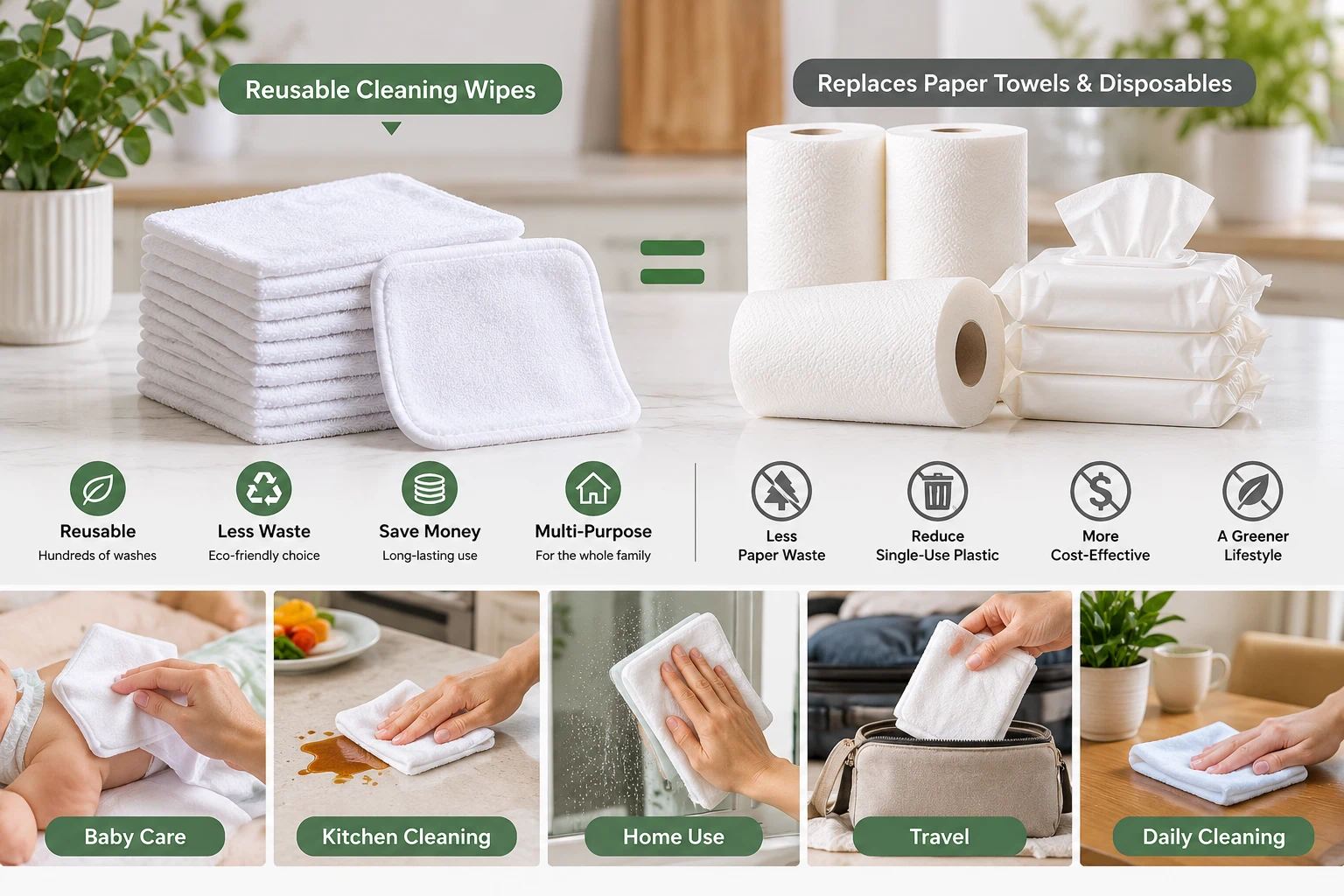
A reusable wipe solves a problem that exists all over a home, not only at the changing table. The same washable cloth that cleans a baby cleans hands and faces at the table, wipes down a kitchen counter, handles spills, and travels for cleaning on the go. Framing the wipe only as a baby product leaves most of its market untouched.

For a brand, that breadth is an opportunity. An eco living or zero-waste brand can position reusable wipes as a household staple that replaces paper towels and disposable wipes across the home, appealing to a much wider audience than parents alone. The product is the same dependable washable cloth; the positioning opens it to family, kitchen, and general cleaning use. We make the wipe durable and absorbent enough for that everyday workload, and help a brand present it for the broad reusable-cleaning market rather than confining it to the nursery.

Best fit for:

  • Zero-waste and eco living brands
  • Family and household cleaning brands
  • General reusable-goods retailers

Material & Construction

  • Fabric:100% cotton terry
  • Build:absorbent terry cloth with finished edges
  • Properties:soft, highly absorbent, durable for heavy use

The 100% cotton terry is chosen for absorbency and durability under everyday household cleaning, with a looped terry surface that soaks up spills and wipes down surfaces well. It is conventional cotton terry, not organic, and we describe it accurately; the value here is durable, absorbent everyday performance.

Customization Options

  • Size & color— coordinate across a cleaning range
  • Fabric— cotton terry; alternatives on request
  • Print— digital print to your artwork
  • Packaging & labels— set packaging; main, wash, batch labels

Building a Zero-Waste Cleaning Line

A reusable wipe is a natural anchor for a zero-waste cleaning range, because the customers who buy one tend to want the same across their household. It pairs with other reusable cleaning goods — unpaper towels, washable kitchen cloths, or a coordinated set in one colorway — so a brand can build a line rather than sell a single item.

That line approach suits the eco market’s mindset, where buyers adopt reusable systems rather than one-off swaps, and it raises order value when pieces sell together. We make the wipe in colors and sizes that coordinate across a cleaning range and provide the packaging and material documentation an eco retailer expects. Positioned as the core of a washable cleaning line — replacing paper towels and disposable wipes around the home — the reusable wipe becomes a repeat-purchase staple rather than a novelty, which is where the durable value for a brand lies.

Changing Pad

Changing Pad — The Reusable Care Surface, Built to Your Spec

What a Changing Pad Has to Do

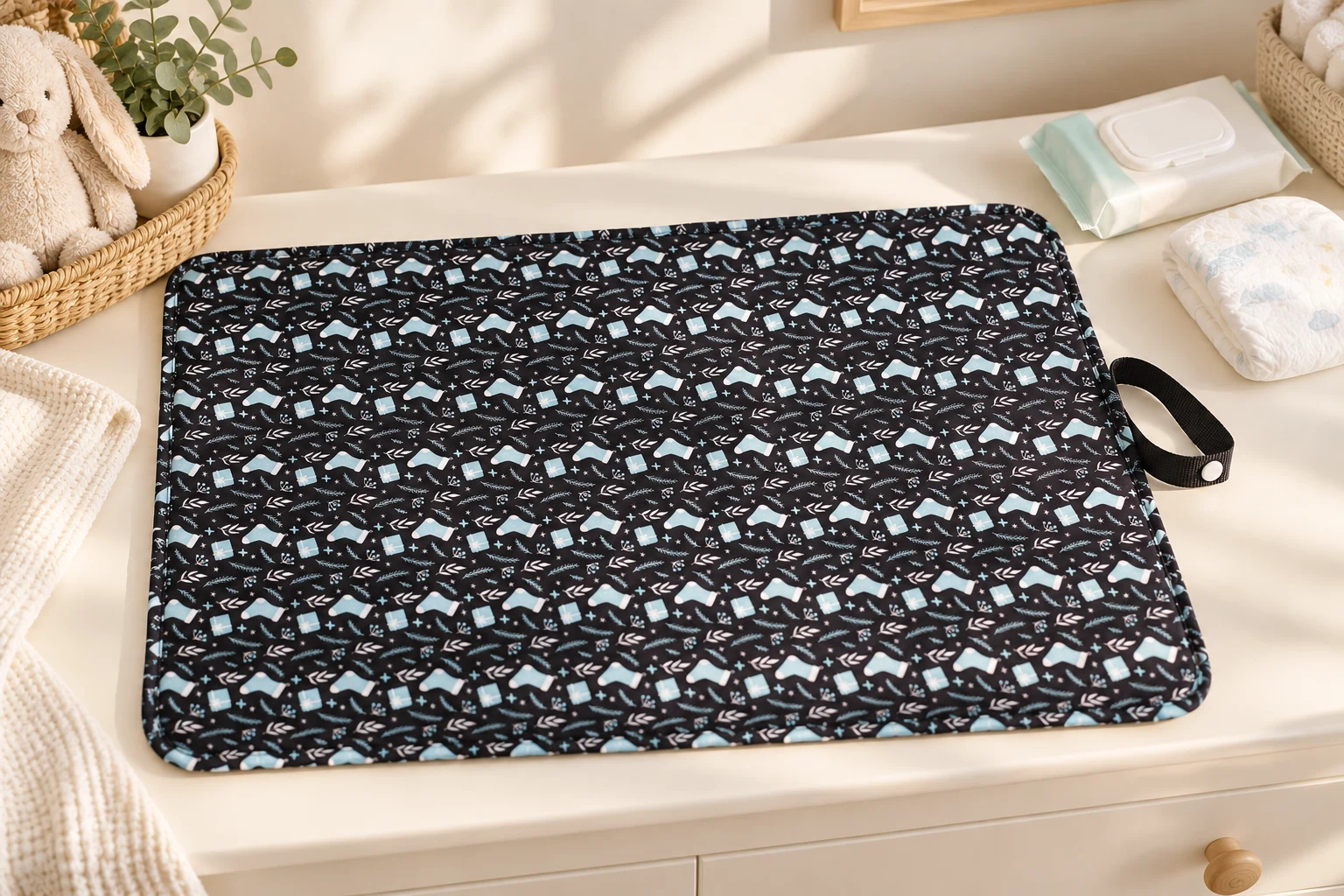
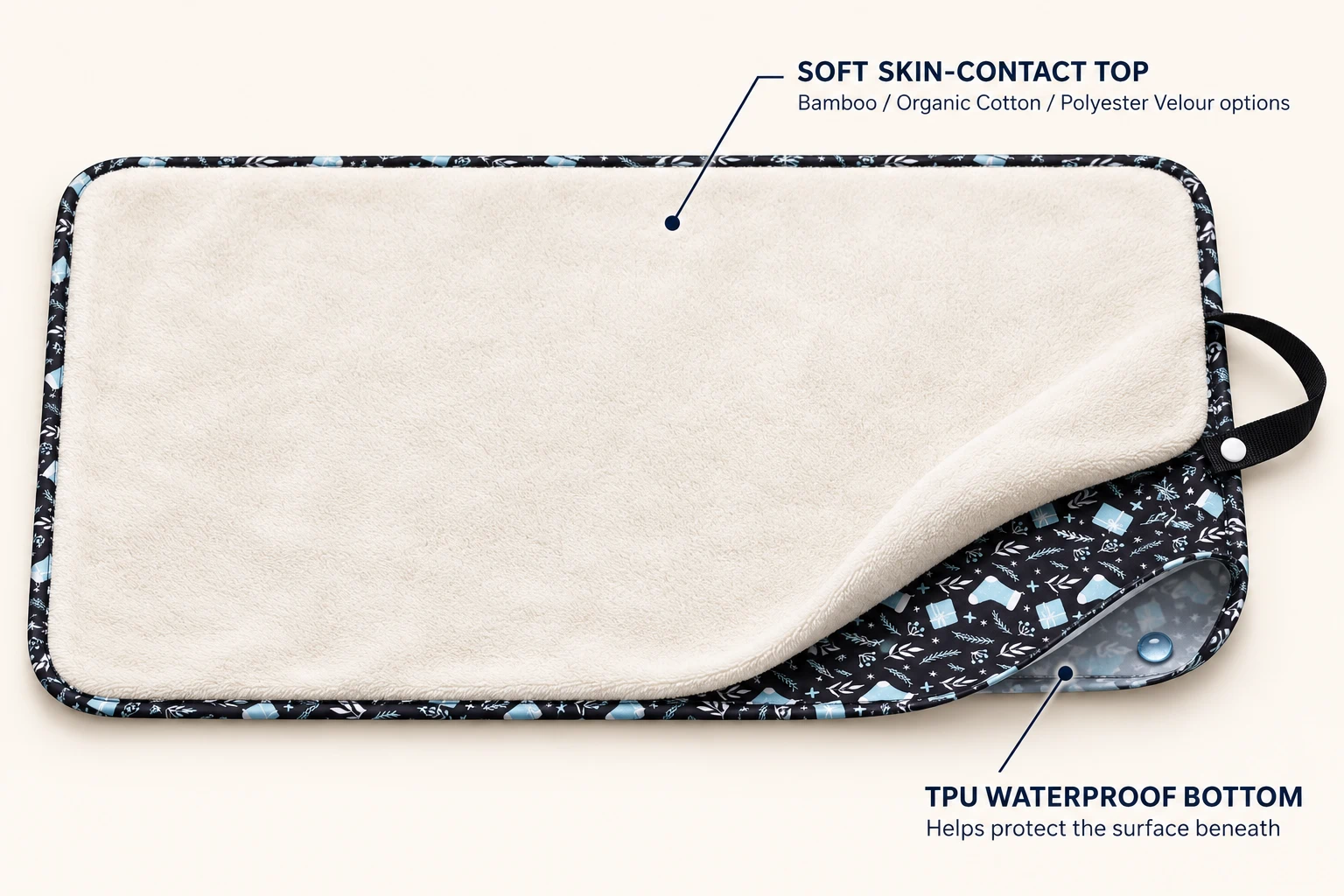
A changing pad does a simpler job than a diaper, but it has to do it well in two directions at once. The top has to be soft and comfortable for a baby laid on it, often a newborn, and the bottom has to be fully waterproof so a change does not soak through to the surface underneath — a bed, a couch, a changing table, or a hotel counter.

That two-sided job defines the build: a soft contact top over a waterproof backing. Unlike a worn diaper, the pad is a flat surface the baby lies on, used at every change, so it earns its place as an everyday item in a baby’s care routine rather than a specialty product. We make this the dependable base changing pad a brand builds around, with the soft top and the leak-proof bottom both done properly, since a pad that is uncomfortable or lets moisture through fails at the one thing it exists to do.

Best fit for:

  • Baby care and cloth diaper brands
  • Baby product wholesalers
  • Private-label and e-commerce sellers.
A reusable changing pad laid flat with a soft printed top surface for diaper changes
Cross-section of a changing pad showing a soft velour top over a waterproof TPU backing

Material & Construction

  • Top:55/25/20 bamboo / organic cotton / polyester velour, soft against the skin
  • Backing:100% printed polyester interlock with TPU (waterproof)
  • Build:flat pad, soft top over leak-proof base

The contact top is a bamboo / organic cotton/polyester velour — a soft, plush surface with organic cotton in the blend — and we describe it accurately as a blend rather than a fully organic fabric. The TPU-backed printed outer keeps the underlying surface dry.

Customization Options

  • Size— compact to nursery-size, cut to your channel
  • Fabric— velour top standard; other contact tops on request
  • Print— digital print to your artwork; closure/snap color
  • Packaging & labels— folded, boxed, or gift-ready; main/wash/batch labels

OEM/ODM Customization Range

The worry that a changing pad is “too basic” only holds if a brand treats it as a commodity. Treated as an OEM/ODM product, it has more levers than it looks, and using them is how a brand turns a plain pad into one that fits its market and stands out.

Size is the first: a compact pad for a diaper bag and a large one for a nursery serve different needs, and we cut to the size a brand’s channel wants. Fabric is the second, from the soft velour here to other contact tops. The waterproof backing can be specified to the protection level needed, and digital print puts the brand’s artwork across the surface with no plate cost. Packaging — folded, rolled, boxed, or gift-ready — completes the presentation. We work through these with a brand so the “basic” pad becomes a considered product with a clear reason to choose it, rather than an interchangeable blank.

Changing pads in multiple sizes and prints showing OEM customization range