
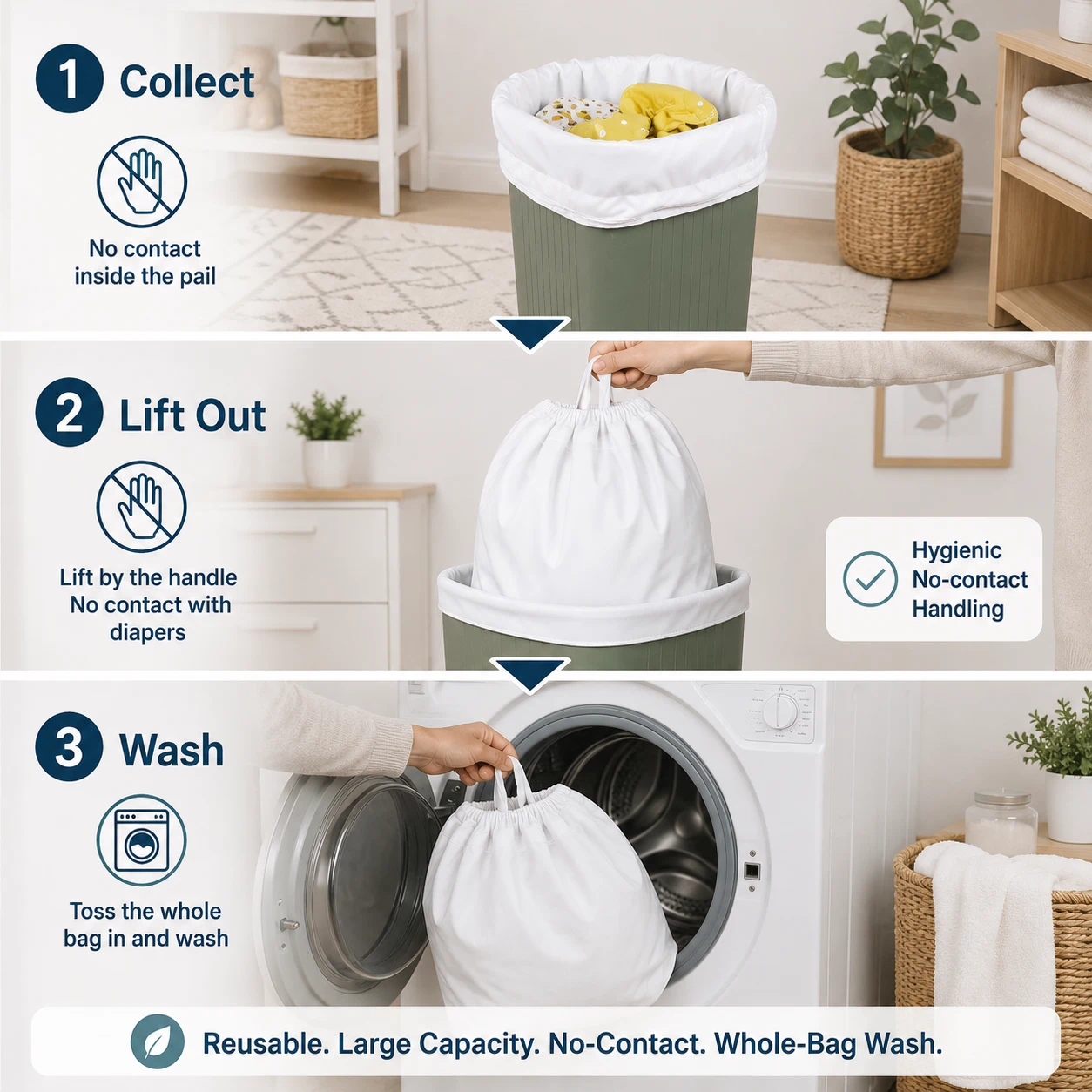

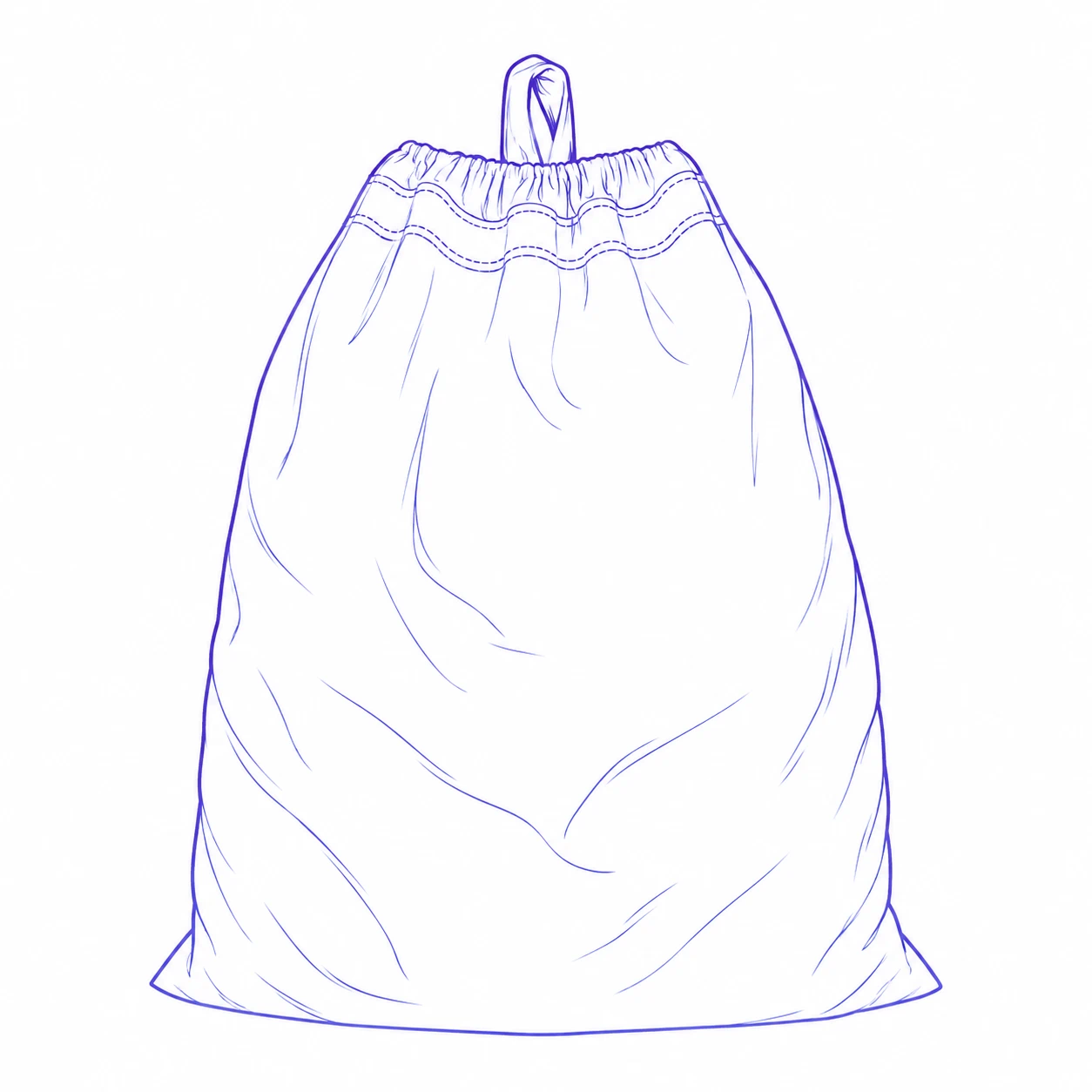
Every other bag in a wet bag range is about carrying things out. This one stays home. It lines the pail where used diapers collect between washes, and on wash day the whole liner goes into the machine, so a parent never has to handle dirty diapers directly.
At 28 × 17.5 × 35 cm, it is built for volume — a day or two of a child’s diapers — rather than for a single outing. For a cloth diaper brand, it completes the home side of the system.
Best fit for:
A cloth diaper brand usually nails the diapers and the carry bag but leaves the home storage to a third party. Filling that gap matters:
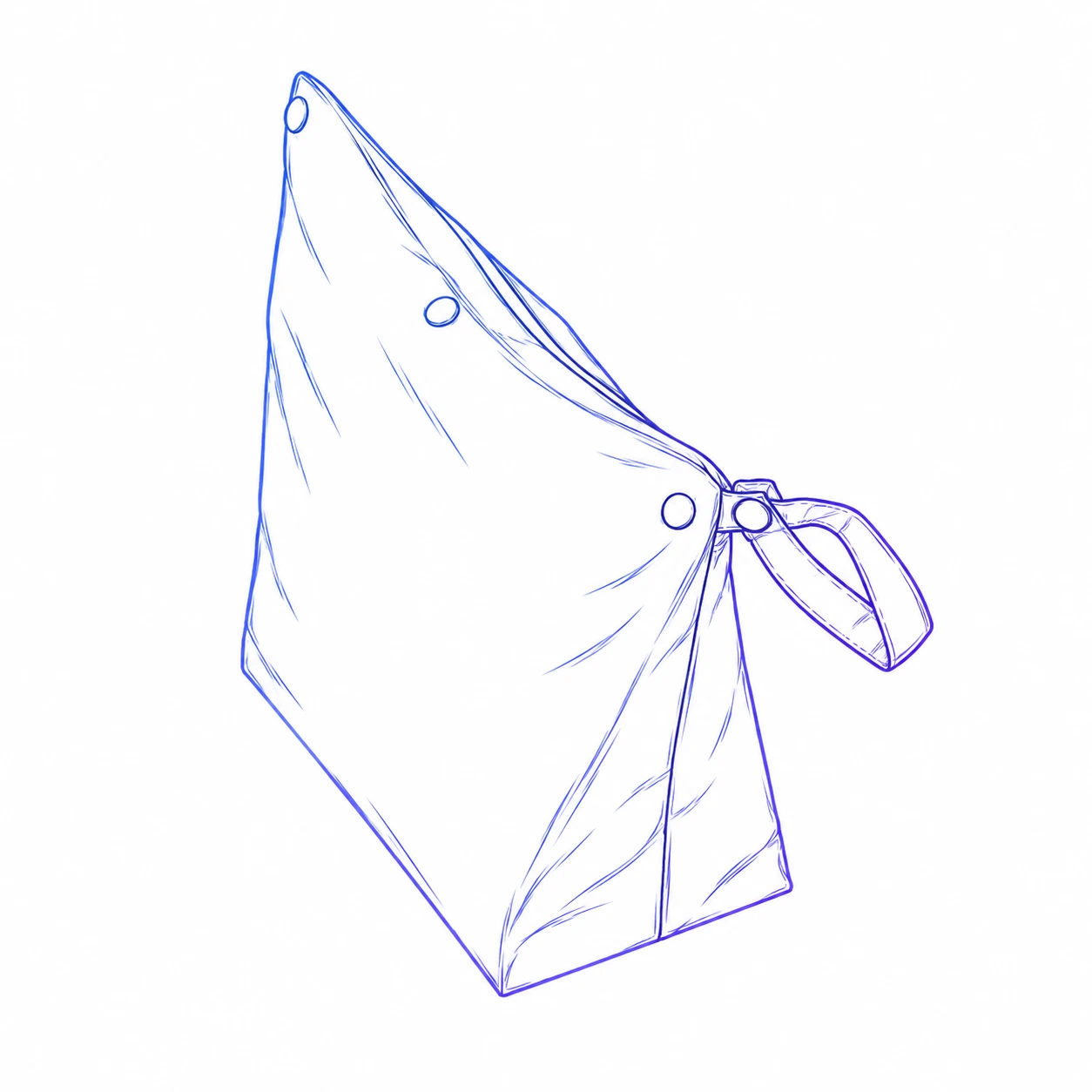
Sourcing for the UK, Australian, or New Zealand market is not the same as sourcing for the US. The product is similar; the language and expectations are not.
We build this product with those differences in mind, at a practical 26 × 13.5 × 26 cm size that suits everyday nappy carrying.
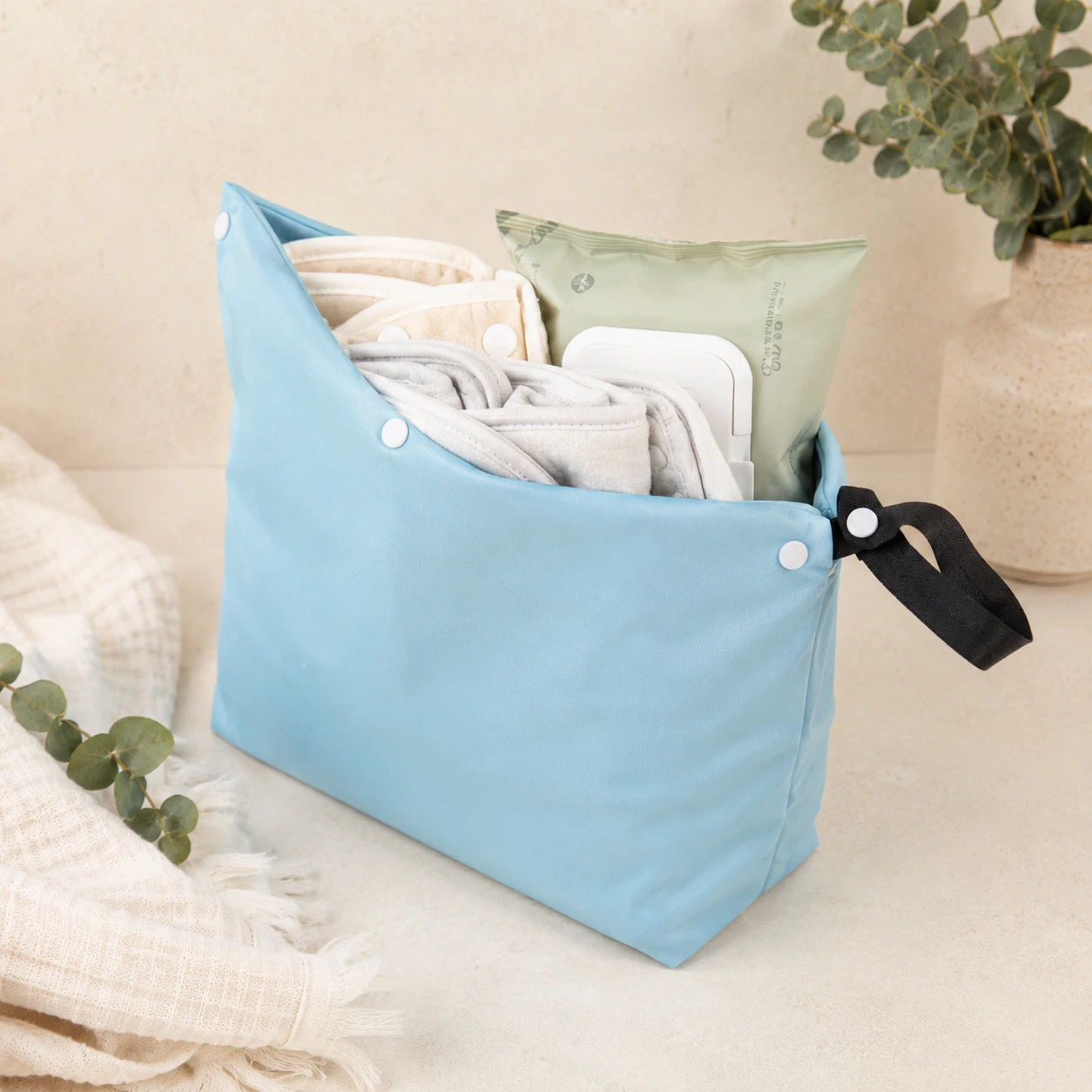
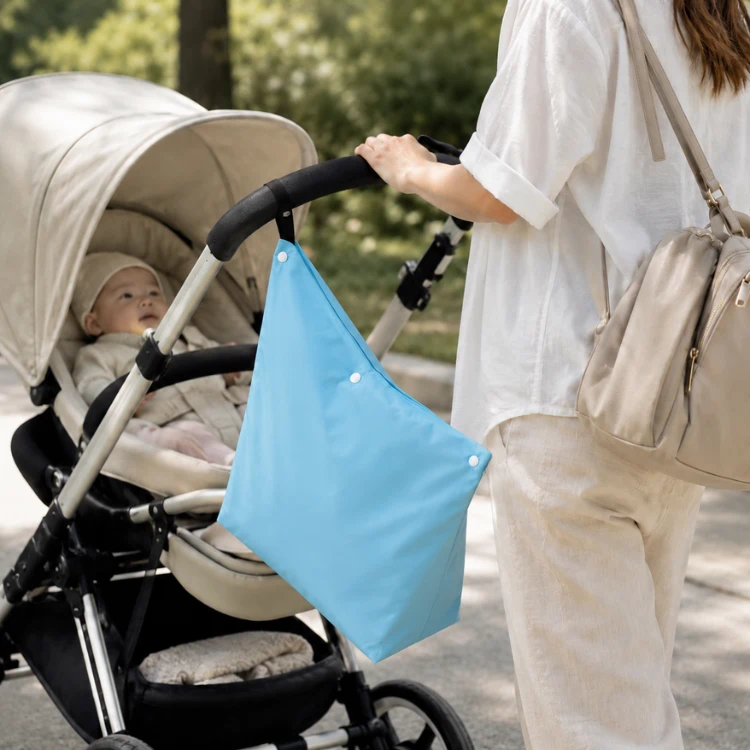
Getting the regional details right protects your listing and your reputation:


A unisex training pant is a compromise, and for boys the compromise usually shows up in the wrong place: absorbency spread evenly when boys tend to wet toward the front. A pant that concentrates absorbency where it is actually needed performs better and leaks less for a boy.
There is a fit dimension too. Boys’ proportions and the way they move differ enough that a pant cut with them in mind sits better through active play. For a brand, a dedicated boys’ product is a way to segment the range, capture parents specifically shopping for boys, and offer a fit and absorbency story a unisex competitor cannot match.
Best fit for:
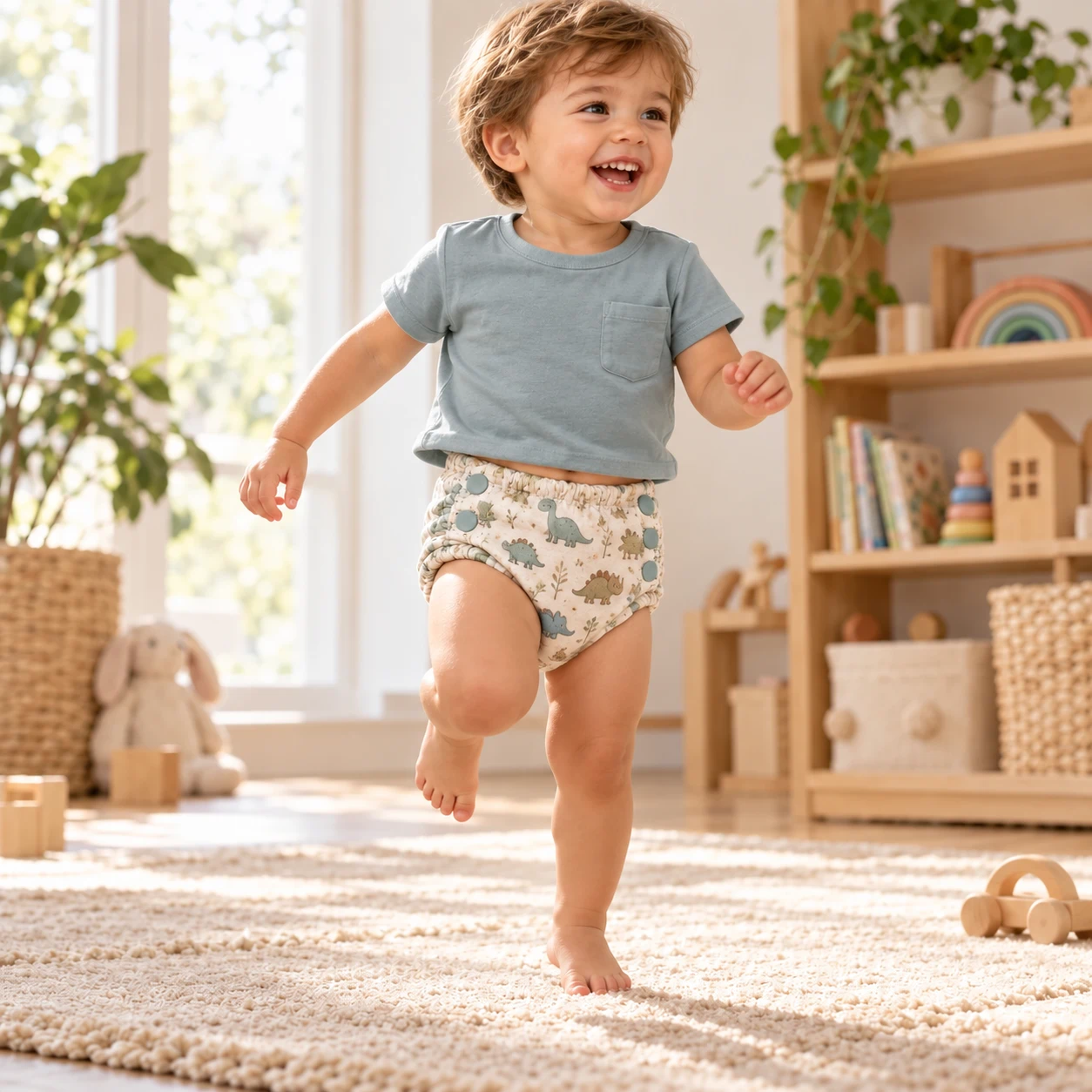
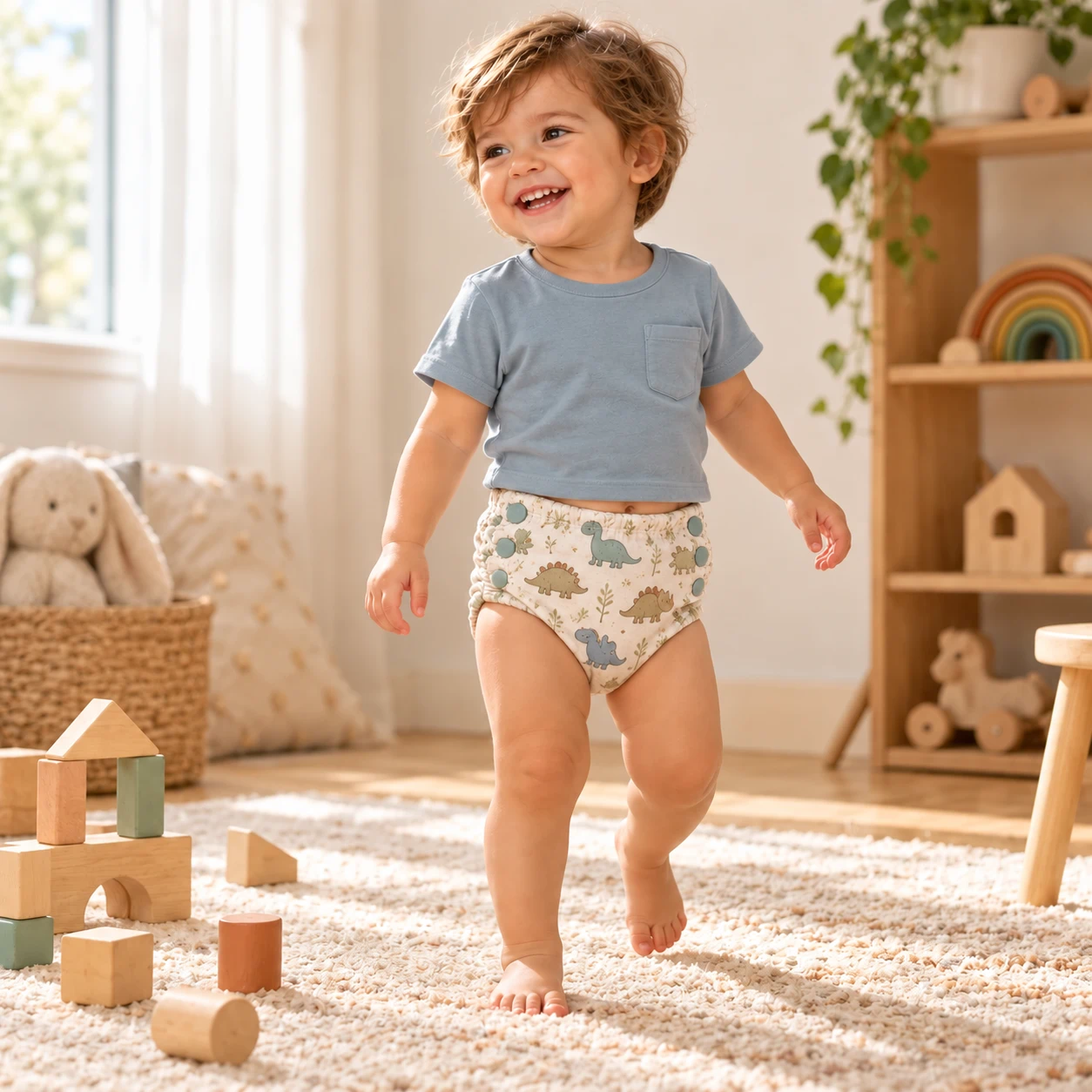
This build is more structured than a plain cotton pant. The hemp-cotton wicking holds more where it is concentrated, the AWJ inner breathes, and the stretch jersey side panels let the pant move with an active boy while staying secure.
Placing absorbency is as important as how much there is, and for boys the front is where it earns its keep. A boy lying down or sitting tends to direct flow forward, and a pant with even absorbency can let that escape at the front waist while the bulk of the material sits unused elsewhere.
We concentrate the hemp-cotton wicking toward the front for boys, which catches more where it matters and reduces the most common boy-specific leak. Hemp is chosen because it absorbs more per layer than cotton alone, so the zone can hold a real accident without becoming bulky. We can tune both the placement and the amount to a brand’s target age and use, and recommend confirming the zone on a sample, since front placement is exactly the detail a unisex competitor gets wrong.

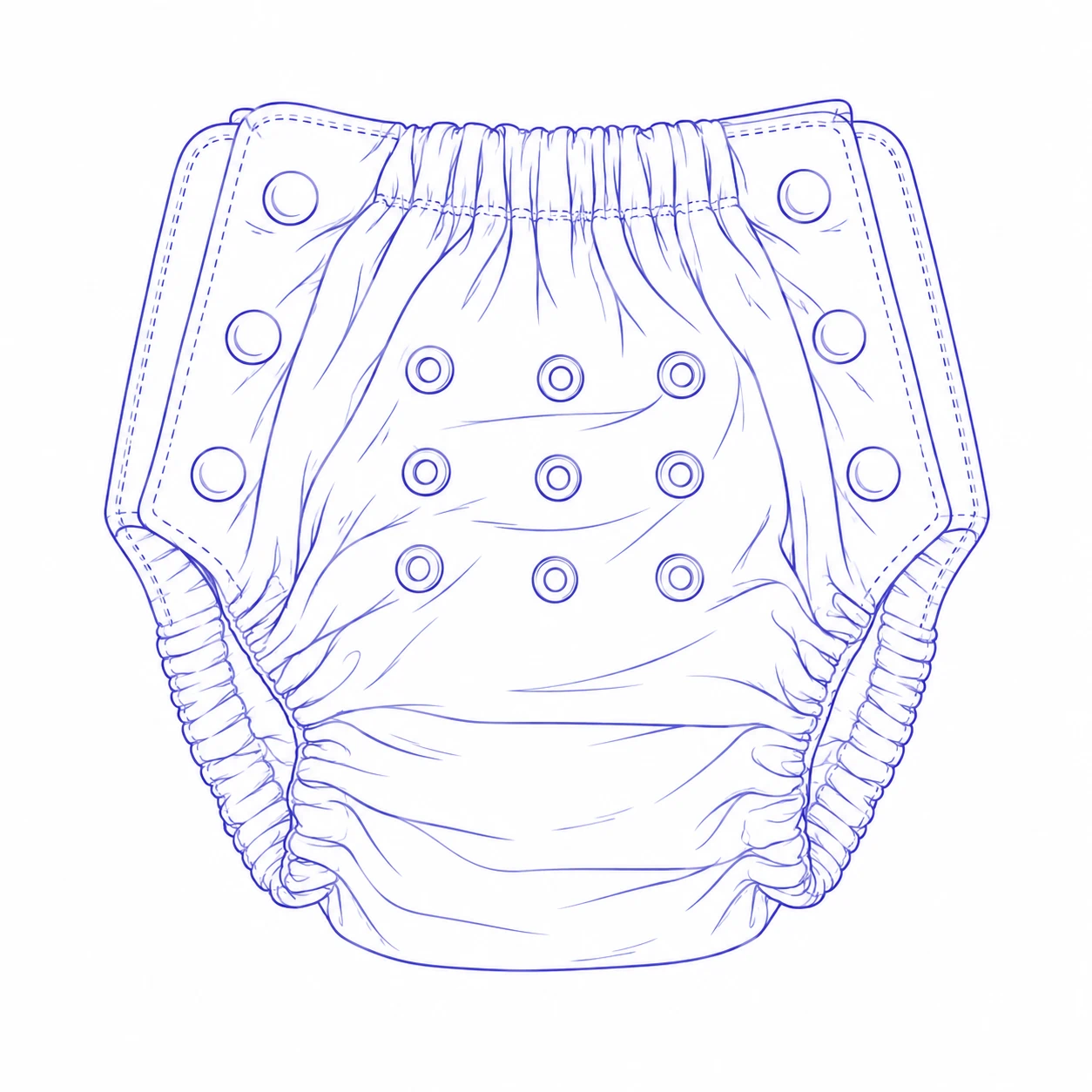
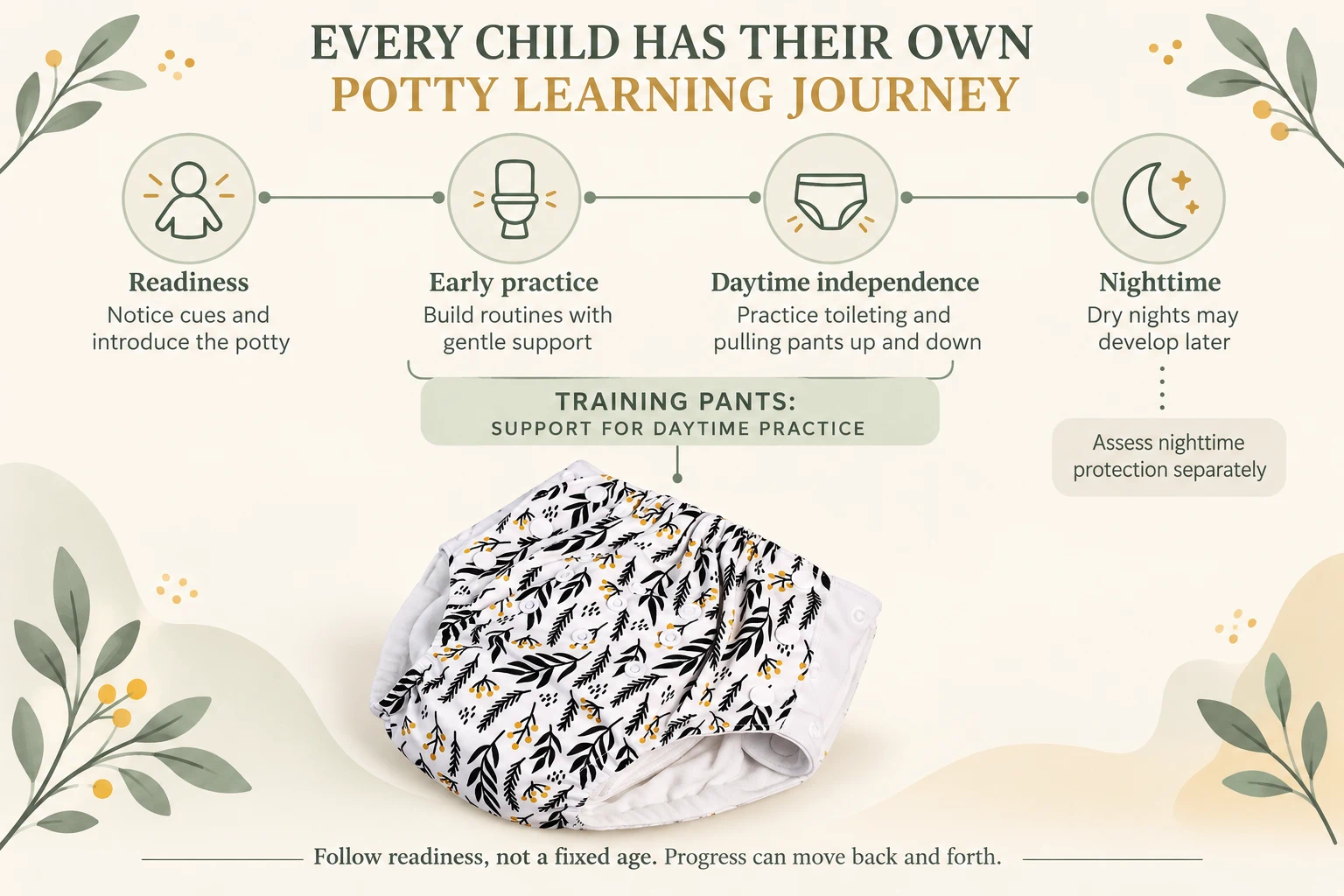
Parents approaching potty training are often unsure what to buy and when. That uncertainty is an opportunity: a brand that explains the journey clearly earns trust and the sale, because the parent feels guided rather than sold to. Education is the marketing.
A diaper training pant sits at a specific point in that journey, after full diapers and before regular underwear, and a brand that says so plainly helps a parent place it correctly. This page is designed to support that knowledge-led approach, giving a brand the framing to position the product as part of a learning process rather than a standalone item. Brands that teach the transition tend to keep the customer through the whole stage.
Best fit for:

The recycled outer and organic cotton inner suit an education-led brand that customers expect to be thoughtful about materials, and the light wicking layer keeps the product in its training role rather than tipping it back toward a diaper.
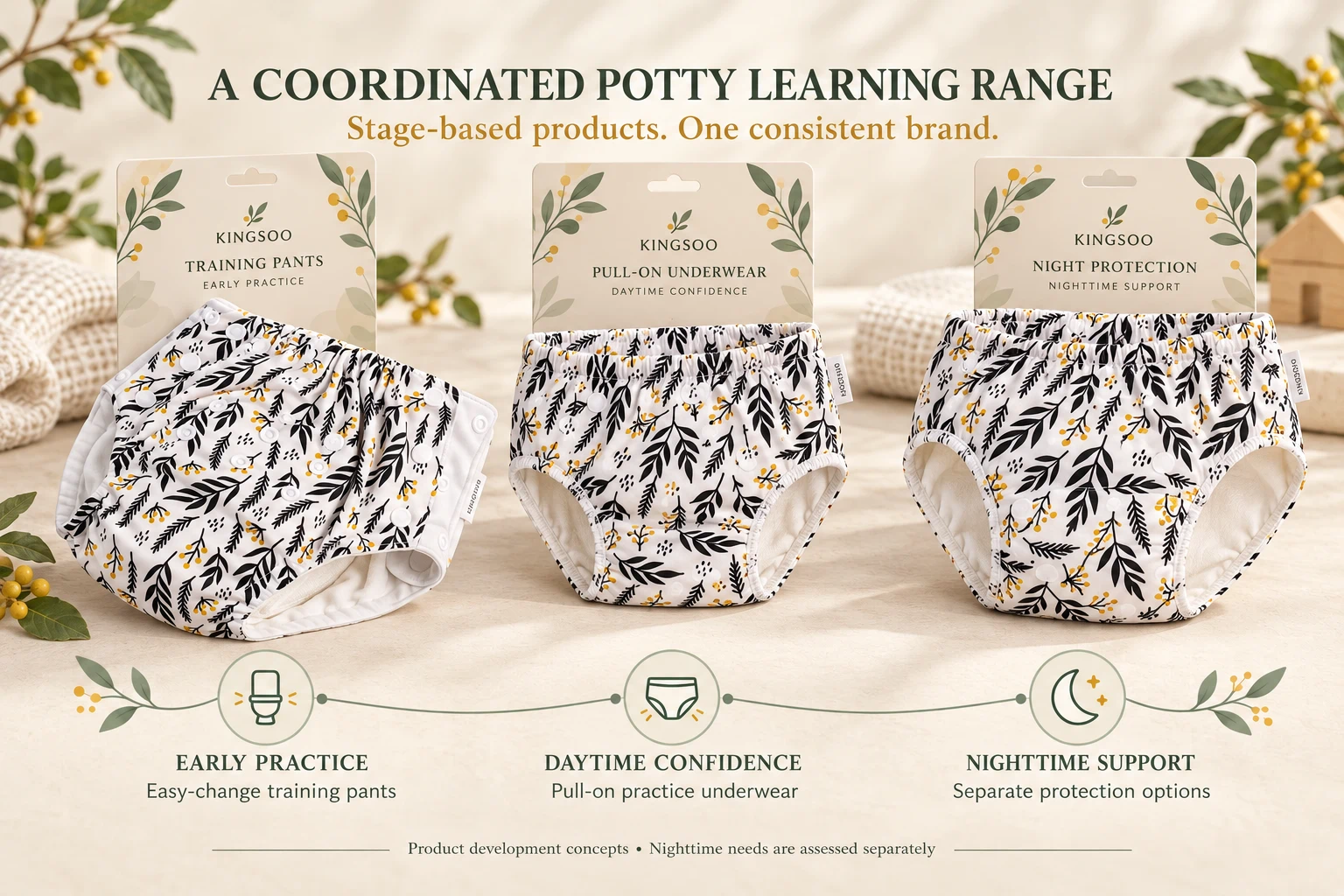
A brand that maps the potty-learning journey can sell more than one product across it, and being explicit about stages is what makes that range make sense to a parent. The journey runs roughly from readiness, through early daytime training, to confident daytime use, and finally night dryness.
This product belongs to the early-to-mid daytime stage, where a child needs light protection while learning. Naming that clearly helps a parent buy the right thing at the right time and come back for the next stage, whether that is a lighter underwear-like pant later or a higher-absorbency option for outings. For the brand, an explicit journey turns a single purchase into a sequence, and we support it by coordinating prints and fits across the stage-specific products so the range reads as one guided system.
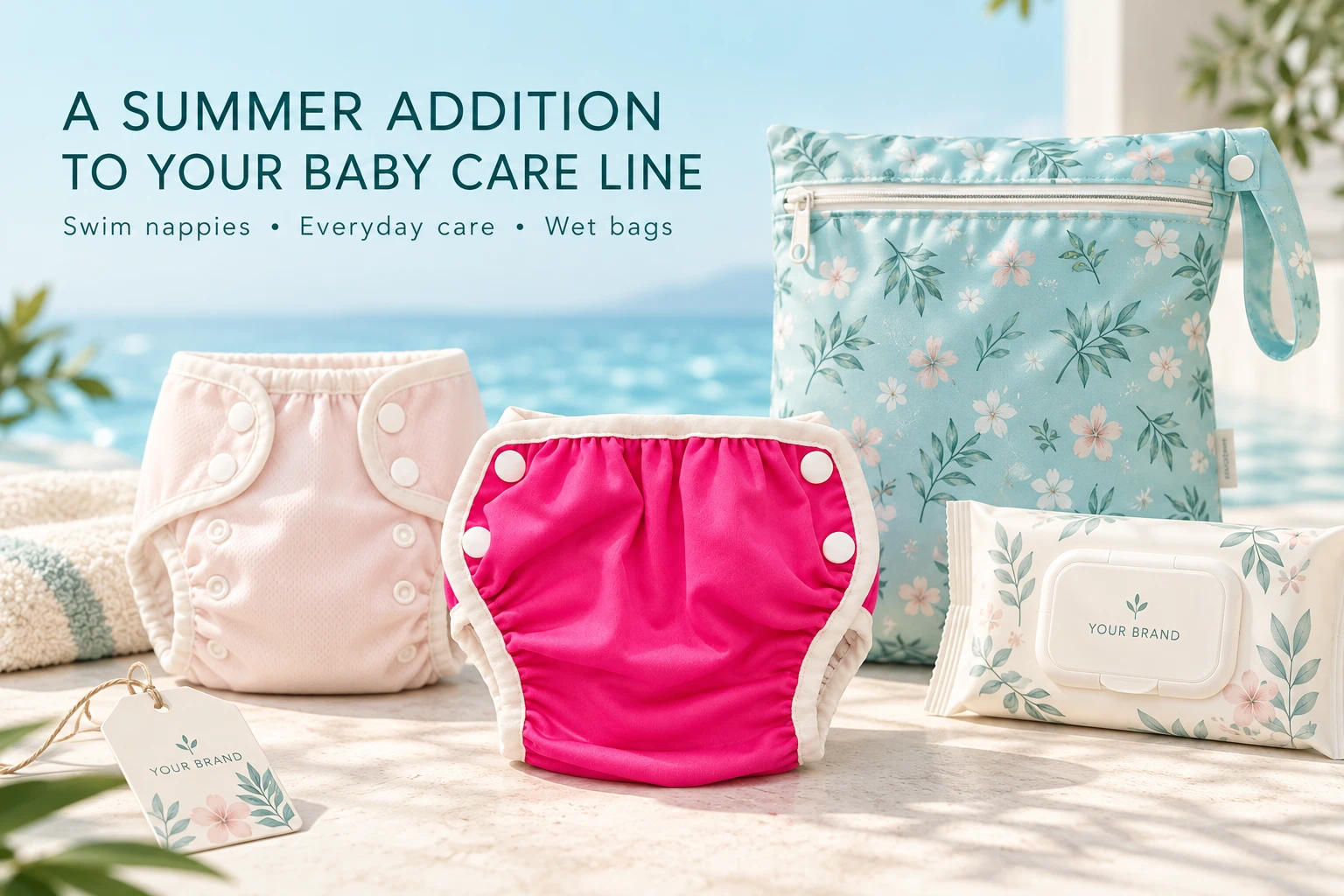
Swimming makes the case for reusables especially easy, because the usage pattern is so visible. A family that swims even twice a week through summer gets through a steady stack of disposable swim diapers, each used once for an hour in the pool and then thrown away.
A single reusable replaces that whole stack. Spread the upfront cost across a season of swims and the cost per use drops well below disposable, while the waste sent to landfill falls to near zero. For a brand, that is a concrete, checkable story to put on the page: one reusable diaper, one season, far less cost and waste. This page is built to give a brand that math, backed by a product made to last the season it promises.
Best fit for:
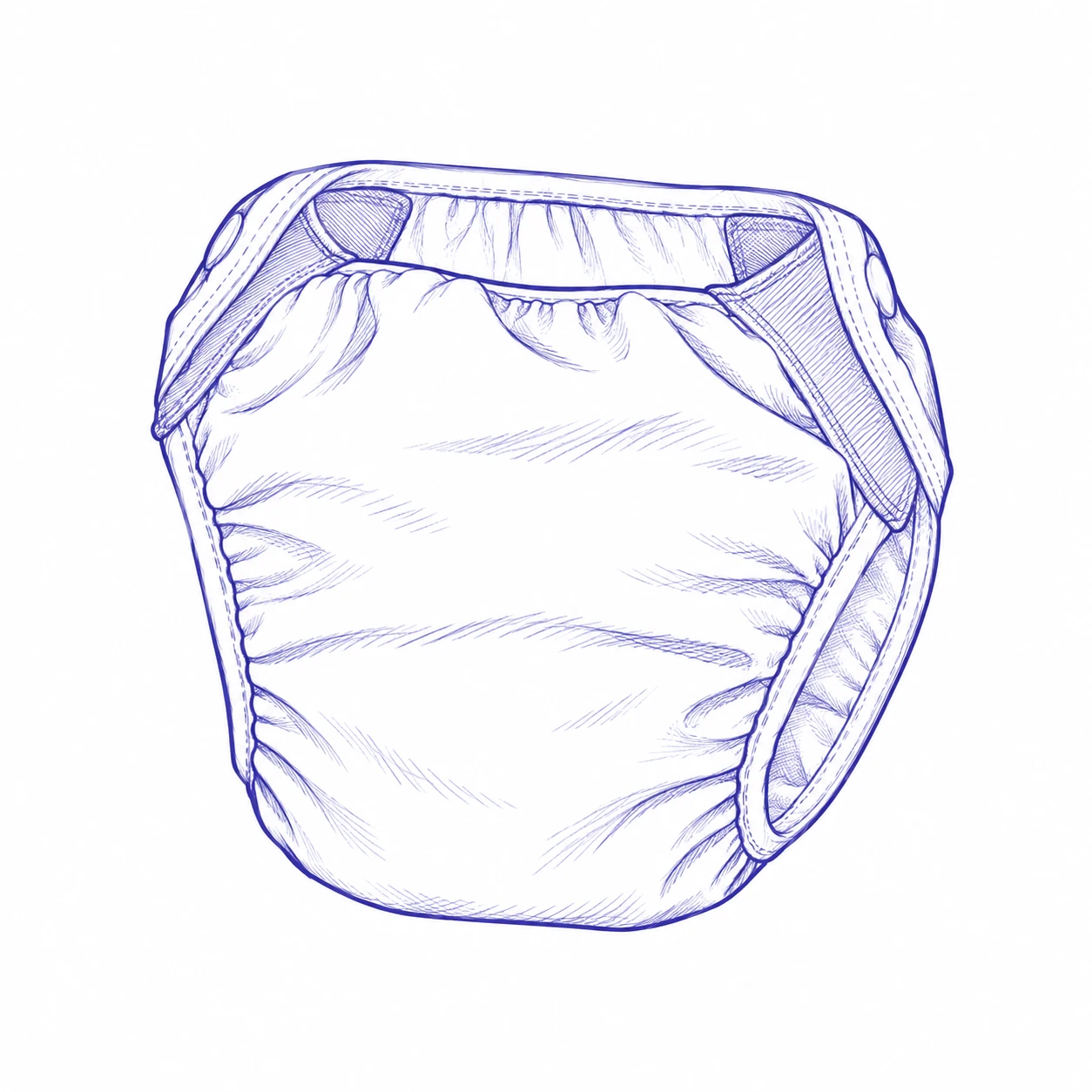
The AWJ inner is the detail that supports reuse. Its open 3D structure dries fast and breathes, so the diaper is ready for the next swim sooner and does not stay damp in a bag, which matters for a product used repeatedly through a season.
The reusable claim only holds if the diaper survives a season of pool water and washing, so durability is part of the value, not a separate feature. Chlorine and salt are harder on fabric and prints than fresh water, and a swim diaper that fades or loses its elastic after a few weeks undercuts the very saving it was sold on.
We build the elastic and seams to take repeated wet use and recommend advising customers on rinsing after chlorine to extend the life. For brands selling on the cost-and-waste story, we can provide material documentation to back up the claim, and we suggest washing and wear-testing a sample before bulk so the season-long promise is one the product can actually keep.

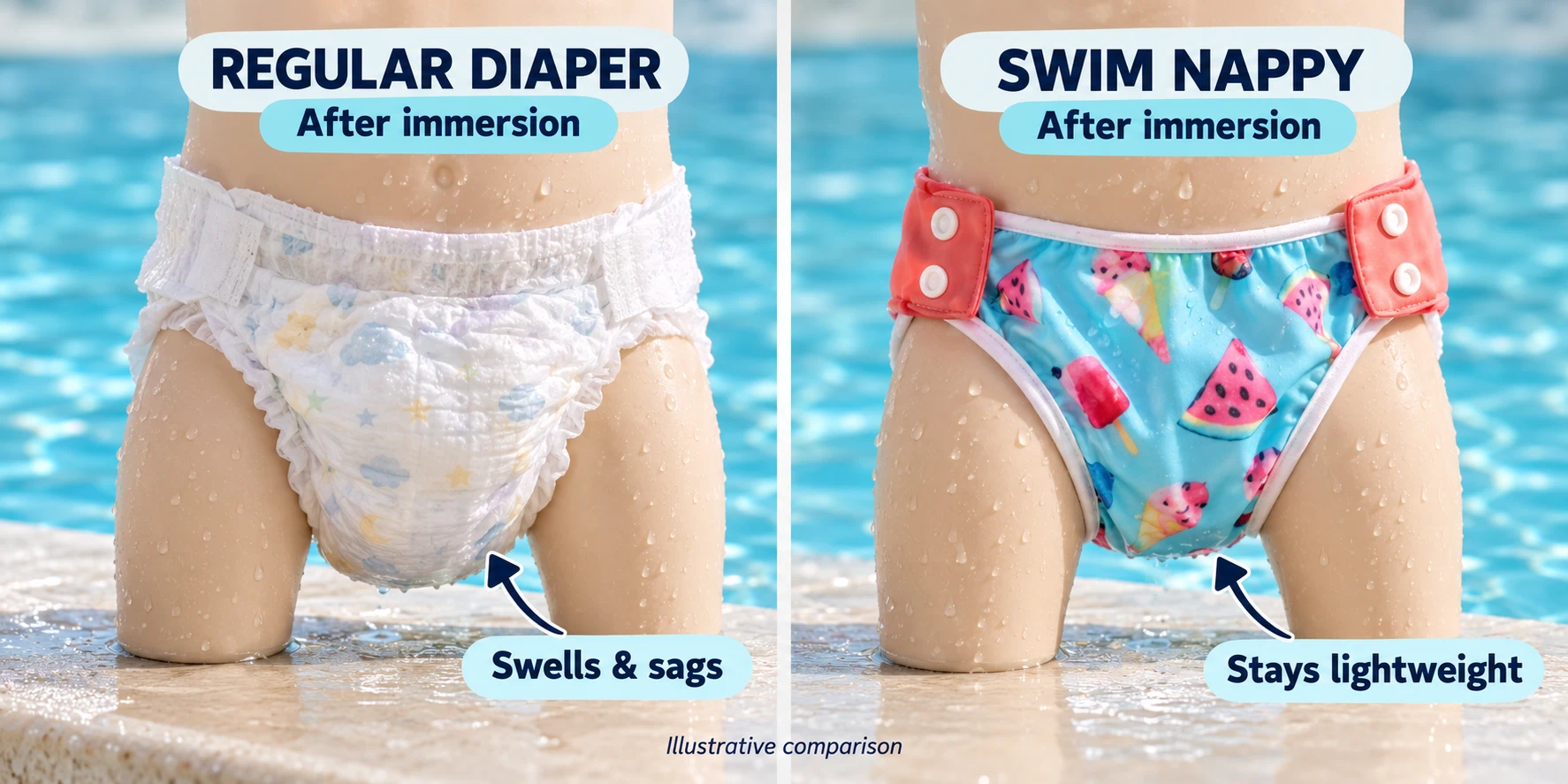
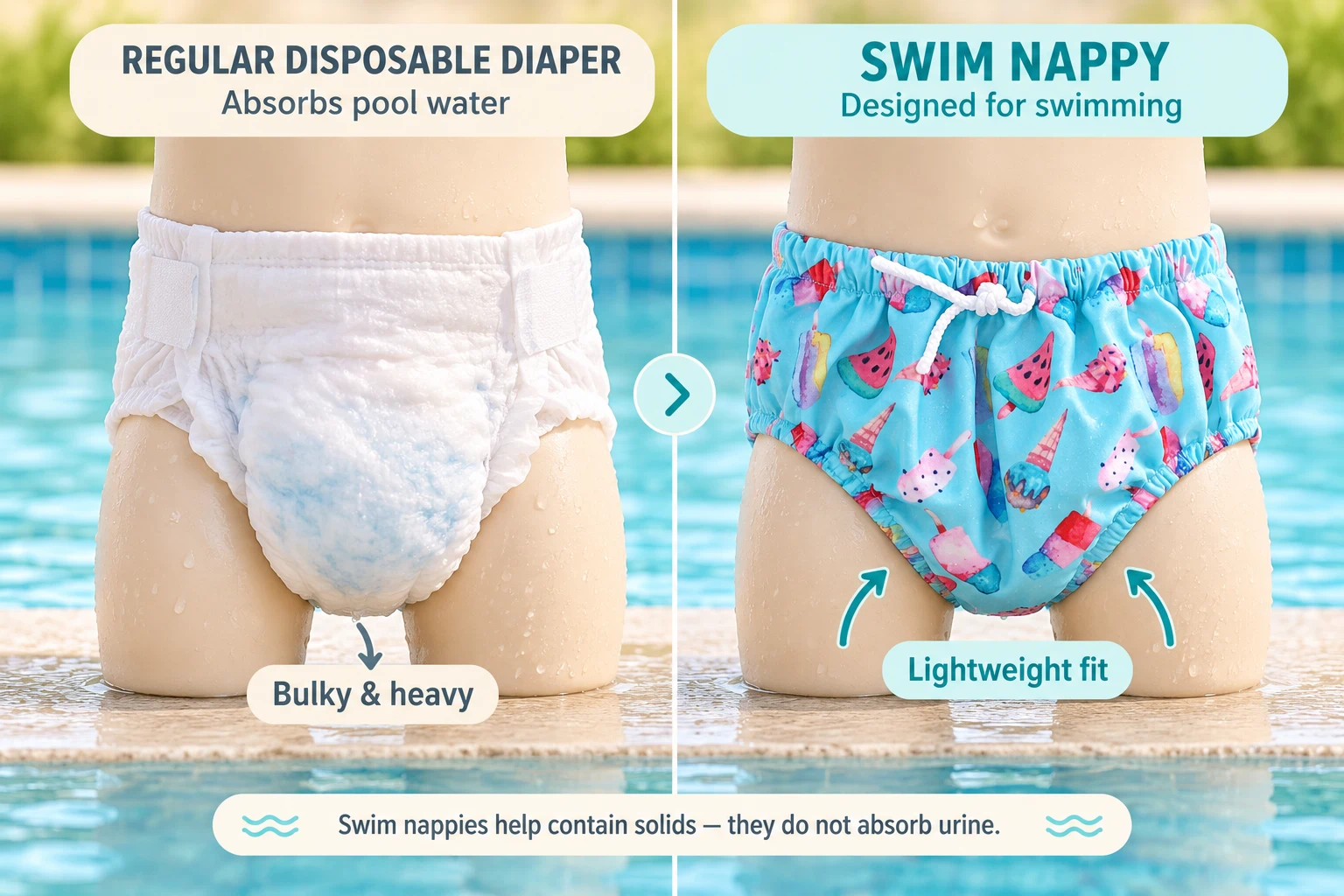
Put an ordinary absorbent diaper in a pool and it fails within seconds. Its absorbent core is designed to pull in liquid, so it soaks up pool water until it is swollen, heavy, and sagging. It loses its shape, pulls at the waist, and can release its swollen core into the water.
That is not a minor inconvenience; it is why most public pools ban regular diapers outright. The very feature that makes a diaper good on land, absorbency, makes it useless and unhygienic in water. A swim diaper exists precisely because the two jobs are opposites.
Best fit for:
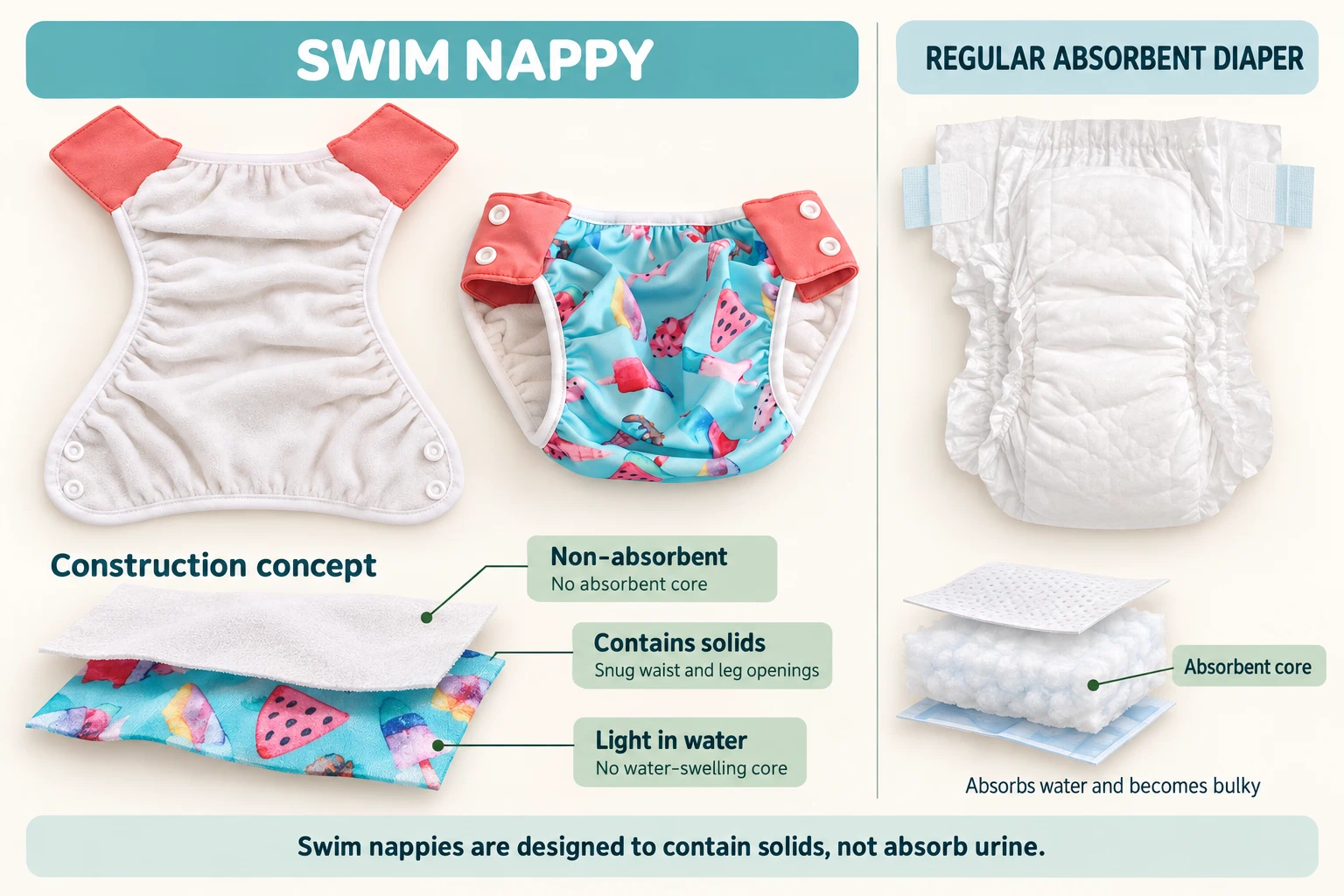
The interlock-and-TPU outer gives a structured, printable shell, while the bamboo-blend inner keeps the surface soft. Neither layer is built to absorb, which is the point.
Buyers in the swim category have a specific worry: a supplier who does not understand swim diapers will describe them wrongly or build them like absorbent diapers, and the brand pays for it in returns and complaints. Getting the basics right is how a manufacturer earns trust.
That shows up in concrete ways. The product copy should never claim absorbency, because a swim diaper that “holds liquid” is a red flag to an informed buyer. The construction should be genuinely non-absorbent and snug at the legs, not a repurposed cloth diaper. And the guidance should be honest: a swim diaper is changed promptly after a solid, not relied on like a daytime diaper. We build and describe the product to those standards, so a brand can list it accurately and avoid the misinformation that triggers complaints.
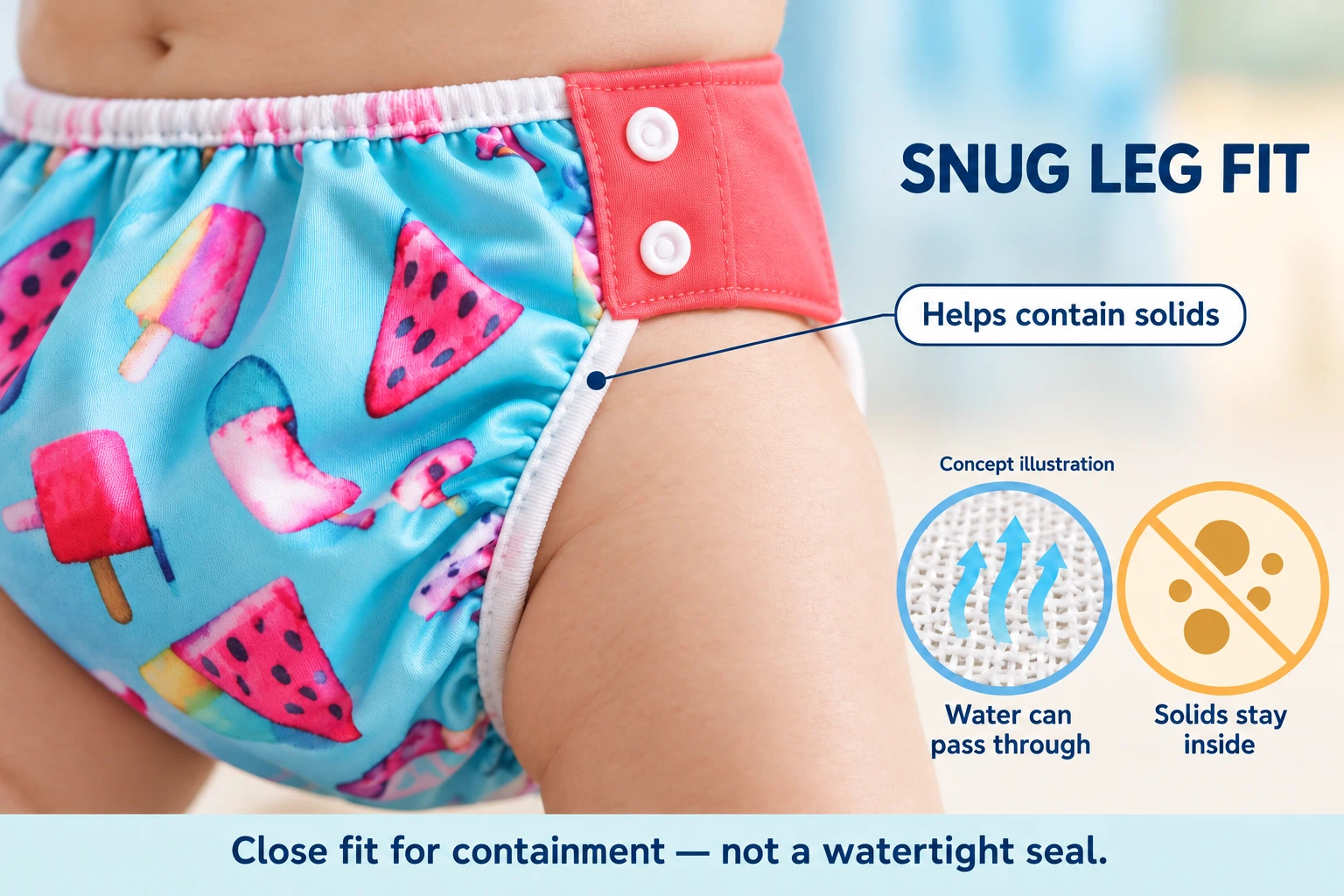
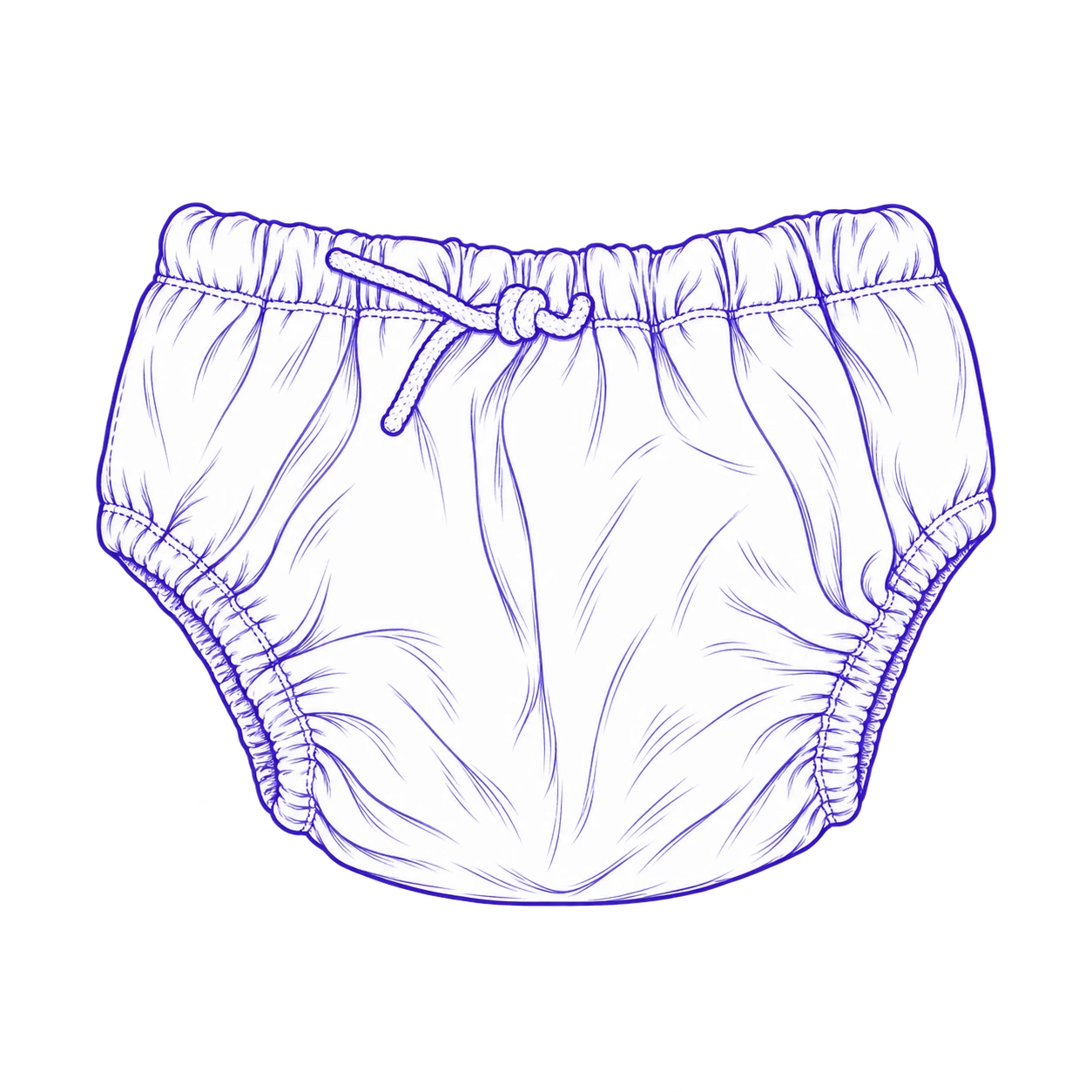
The most important thing to understand about a swim diaper is what it is not. It is not an absorbent diaper that happens to be worn in water. A diaper built to soak up urine would swell, sag, and turn heavy the moment it hit the pool, which is exactly the opposite of what a swimmer needs.
A swim diaper has one job: contain solid waste so it does not escape into the water. It stays light and trim wet or dry, fits snugly at the legs and waist, and lets a child move freely. Selling it correctly starts with getting that distinction right on the page.
Best fit for:

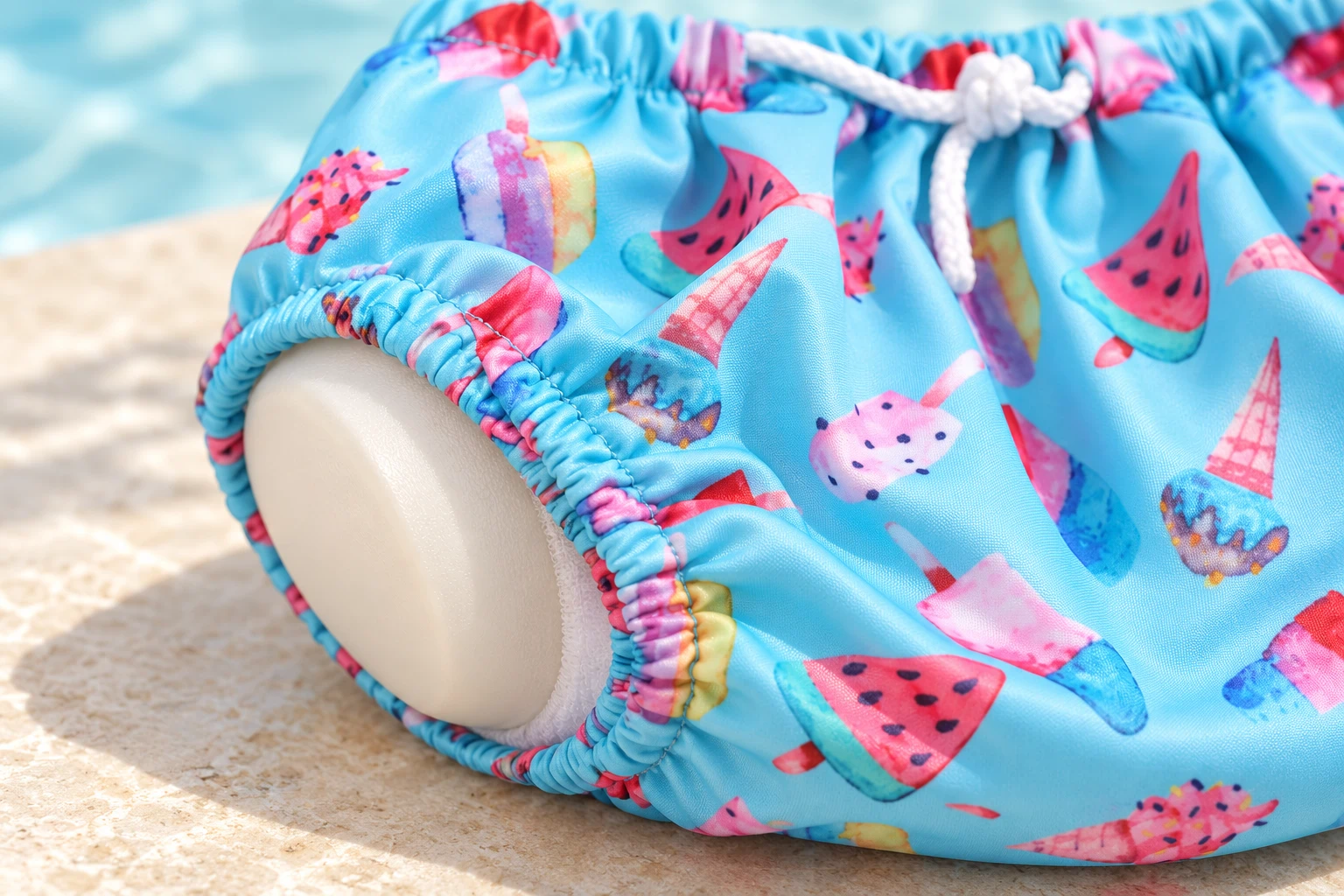
The lycra-blend outer is what makes this feel like swimwear rather than a diaper. It stretches to fit, stays trim in the water, and dries fast, which is exactly the behavior a swim product needs.
For a swim product, weight and drying speed are not minor specs; they shape the whole experience:
These are the qualities a parent notices in the water, and the reasons a brand chooses the right fabric. A diaper that stays light and dries quickly also travels better, since a damp swim diaper packed home from the pool is far easier to manage when it is thin and fast-drying than when it is heavy and waterlogged.
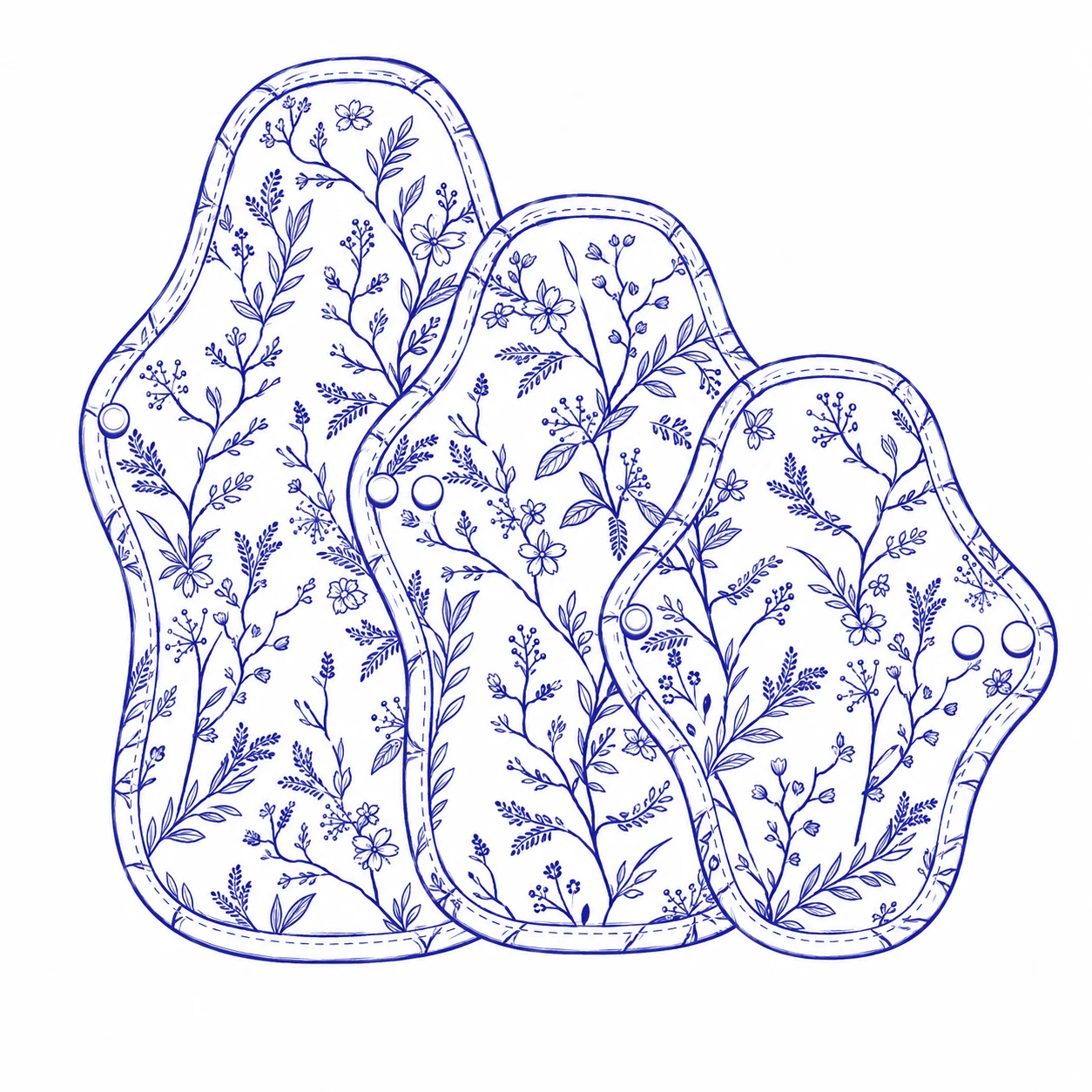
A cloth pad is a sewn textile product, and the things that decide whether it is good are textile things: how the fabric feels and wears, how the layers are combined, and how cleanly it is stitched. A supplier that treats it as a generic commodity gets these wrong; a textile specialist gets them right.
That is our home ground. We develop fabrics for hand-feel and durability rather than picking the cheapest, combine the top, core, and backing so the layers work together, and construct the pad so the stitching stays flat and the shape holds through washing. For a brand that wants a cloth pad to feel considered rather than basic, working with a maker who understands cloth is the difference between a product that wears well and one that pills, twists, or comes apart at the seams.
Best fit for:
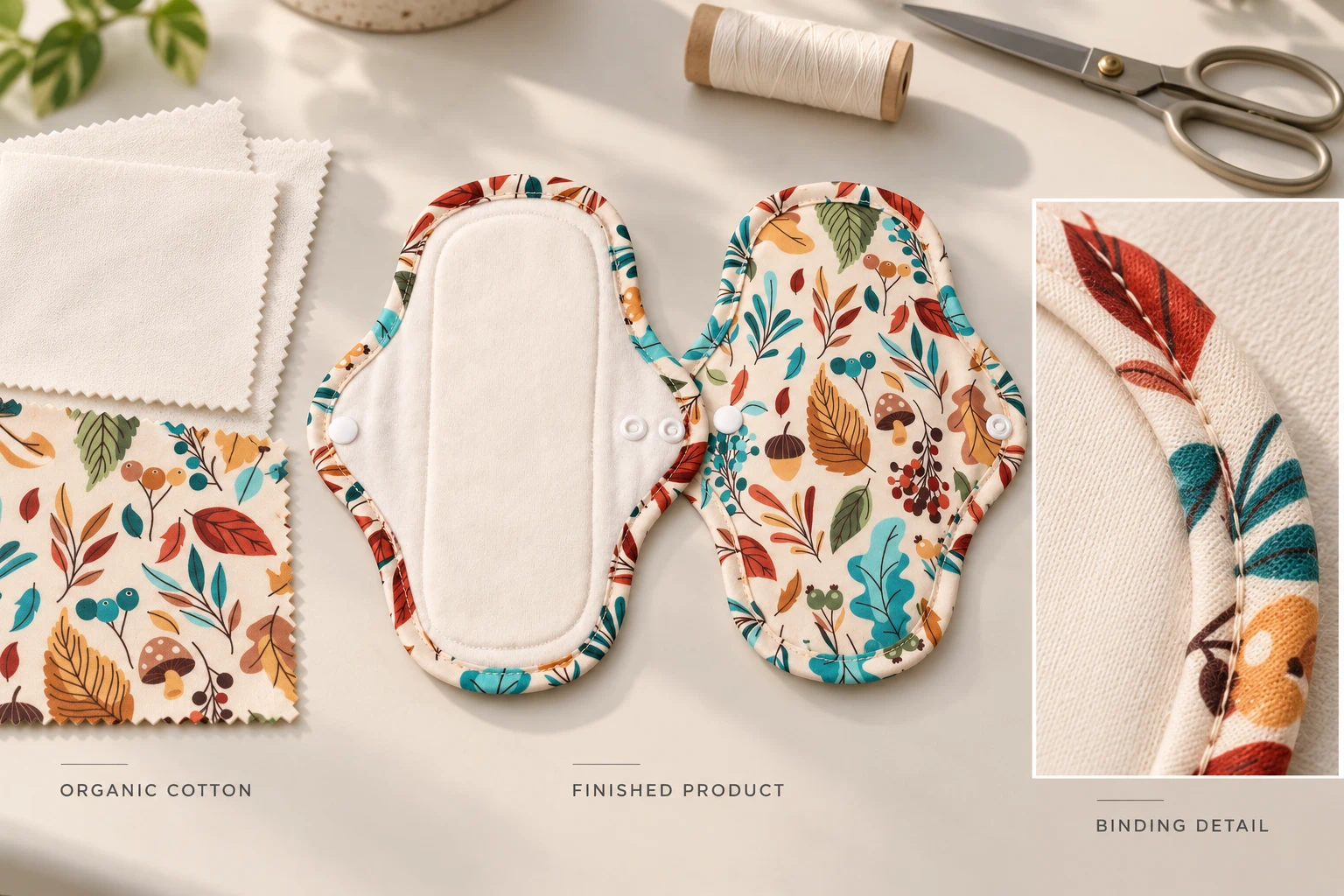

This particular build pairs an organic cotton top with a microfleece layer, but the point of the page is that the combination is developable: we select and combine fabrics to a brand’s goals rather than offering one fixed stack.
What a brand really gets from a cloth factory is development capability, not just a catalog item. A brand can come with a goal — softer against the skin, trimmer, more absorbent, more natural — and we develop the fabric and layer construction to hit it, then confirm it on a sample.
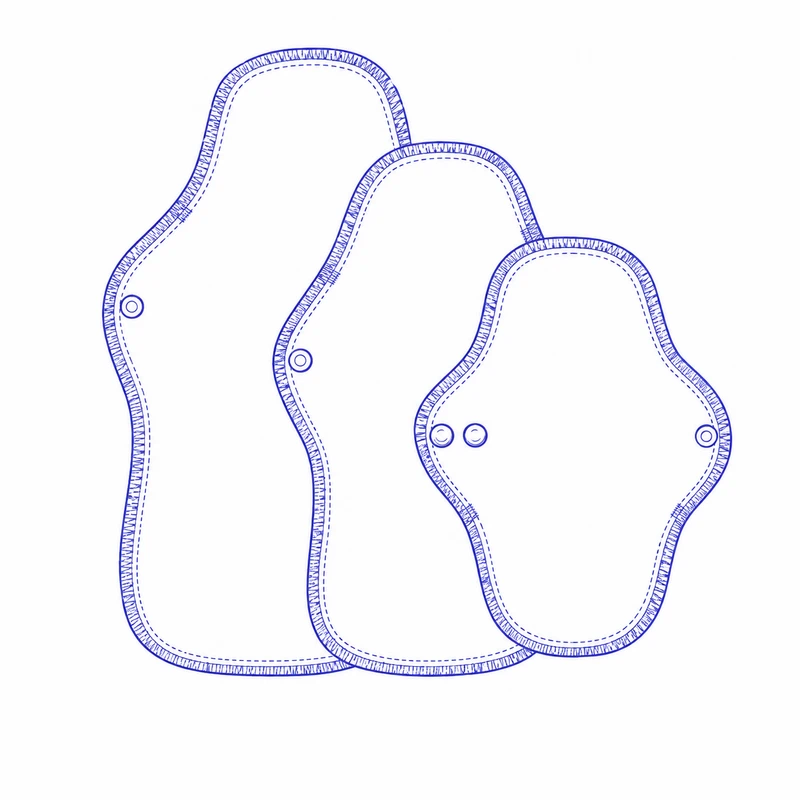
That means choosing the top fabric for the feel a brand wants, selecting and layering the absorbent material for the target absorbency, and combining them with a backing and stitching that hold up. We can swap the microfleece for an all-cotton core for a fully natural build, add or reduce layers to change the absorbency level, and adjust the shape and wing placement. The stitching is constructed to keep the layers aligned and flat through repeated washing, since a cloth pad that twists or puckers after laundering reads as cheaply made. For a brand, this development capability is what turns a generic cloth pad into one that feels like its own considered product.

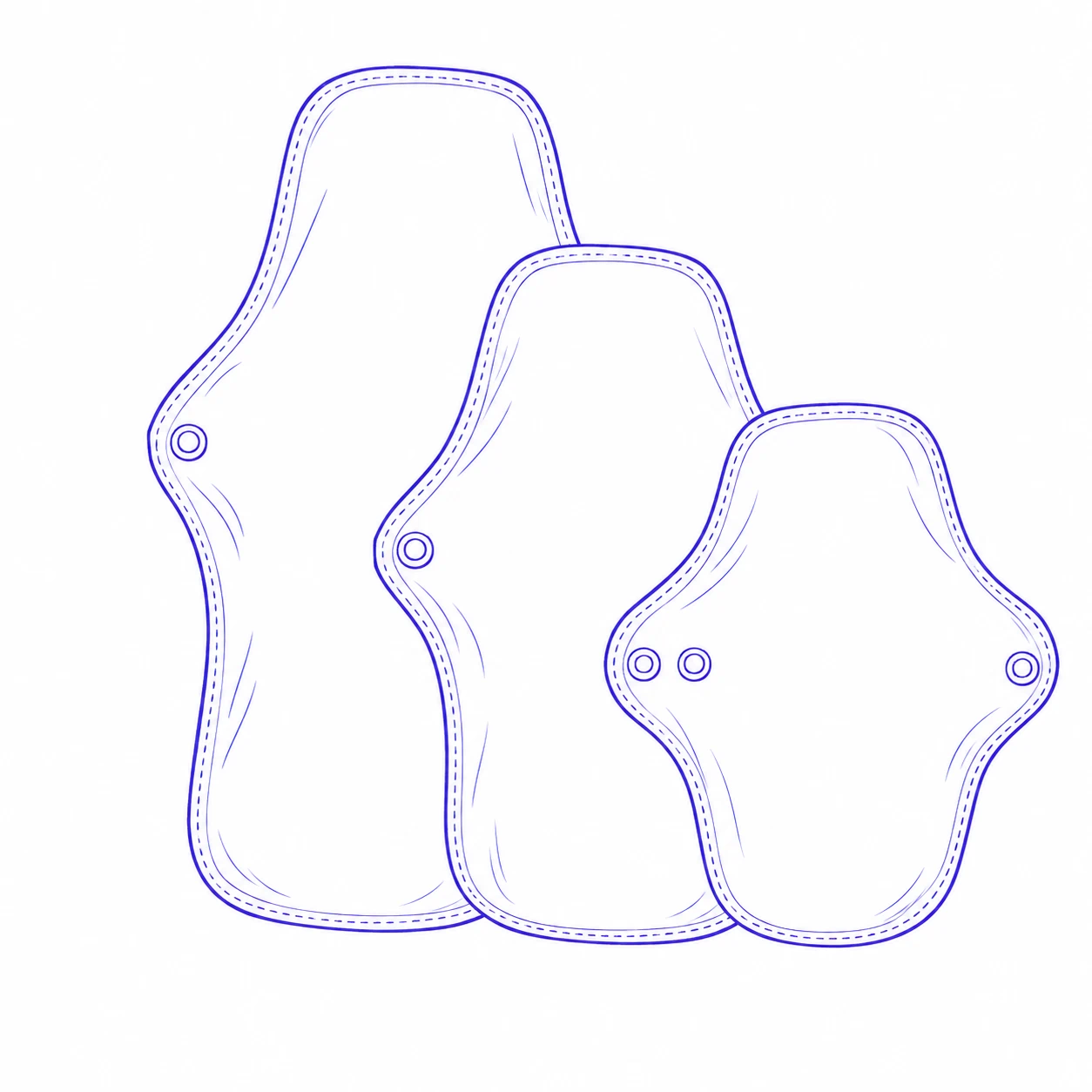
Period care has long been hidden in plain, clinical packaging, and a growing set of brands win by doing the opposite: making products beautiful enough to leave on a shelf and to give as a gift. For these brands, design is not decoration; it is the differentiator that earns the click and the share.
This product leans fully into that. The organic cotton pad performs reliably, but the emphasis is the look: considered prints, a coordinated palette, and packaging that feels like a wellness gift rather than a hygiene necessity. For a design-led feminine brand, this is what separates it from the functional reusables that dominate the category and lets it command attention and price on aesthetics, the way premium personal-care products do.
Best fit for:

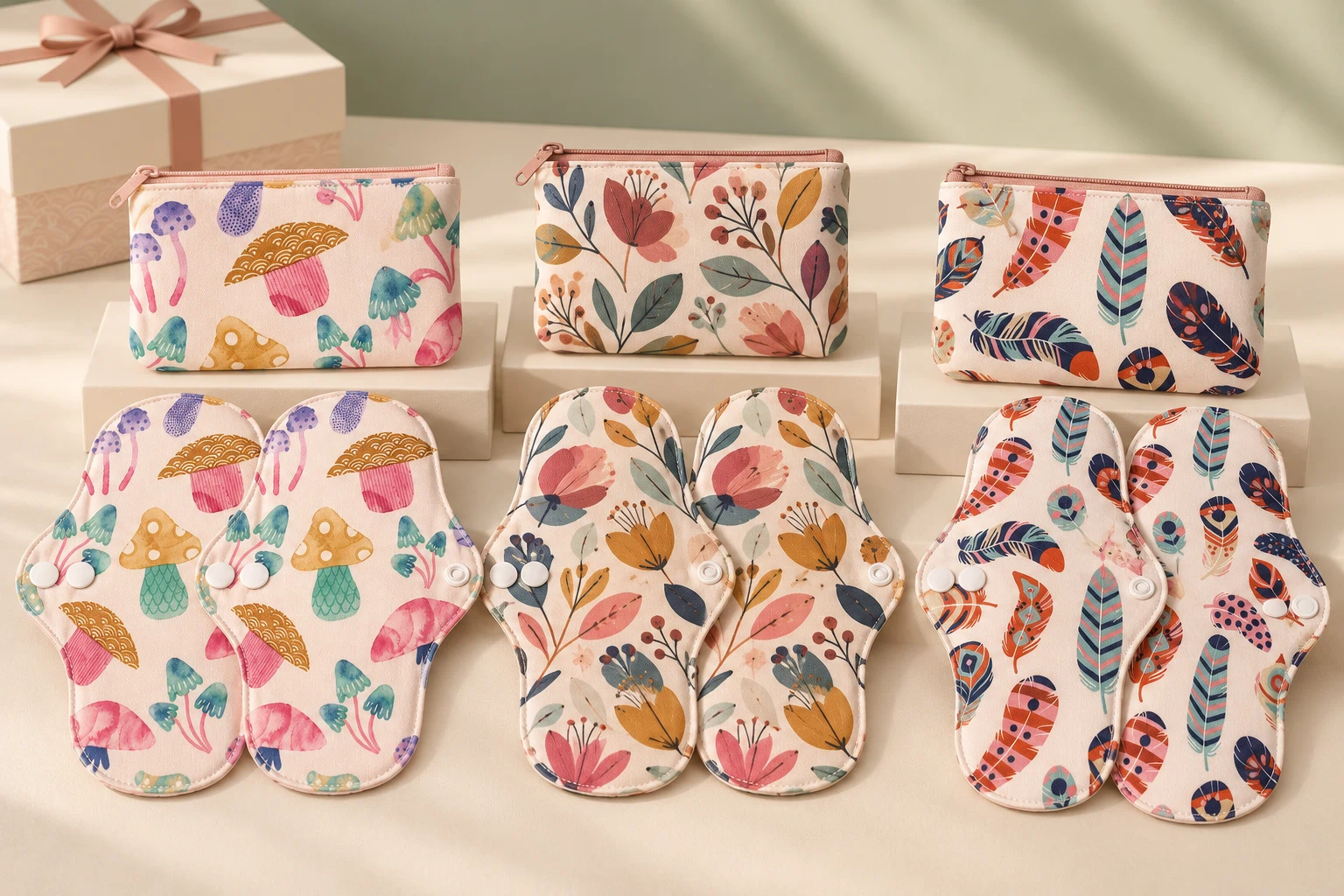
The organic cotton top keeps the product genuinely natural under the design, while the printed PUL backing is where the aesthetic lives — digital printing makes the considered, coordinated prints a design-led brand needs both possible and affordable.
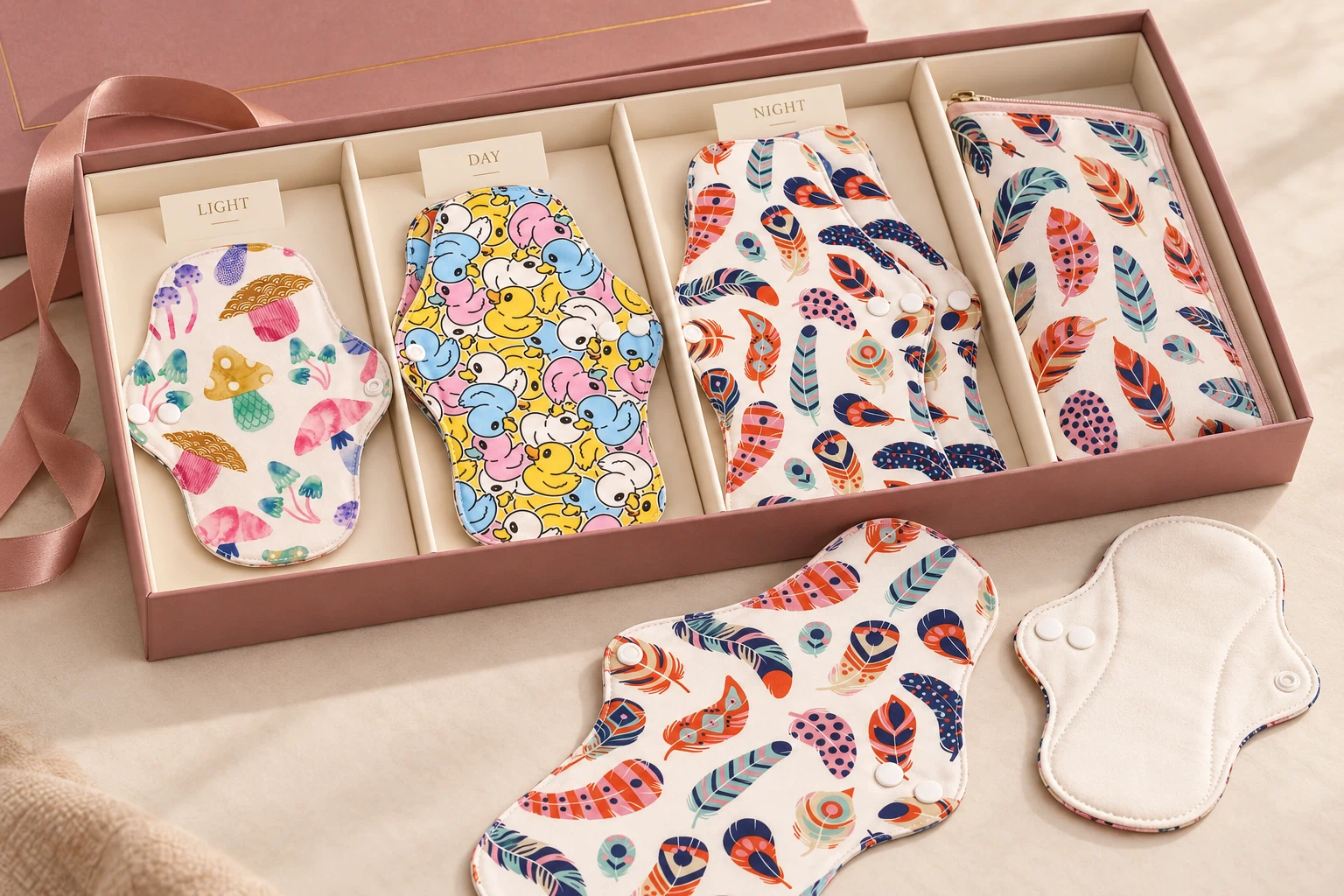
A single pad is a commodity; a coordinated kit is a gift, and that reframing is where a design-led brand lifts both order value and appeal. A set that pairs several absorbency levels in matching prints, with a wash bag and discreet packaging, becomes a starter kit a customer buys for herself or gives to someone making the switch to reusables.
We help a brand build that kit. The prints coordinate across liner, regular, heavy, and overnight pads, a matching carry or wash pouch can be added, and the packaging is designed to present as a wellness gift. Each component counts against the standard minimum, so a kit stays within reach to launch. For a brand, a giftable set raises the average order above a single pad, suits subscription and wellness-box channels, and gives the product a reason to be shared, which extends reach with every gift. The design sells the first unit; the kit sells several at once.
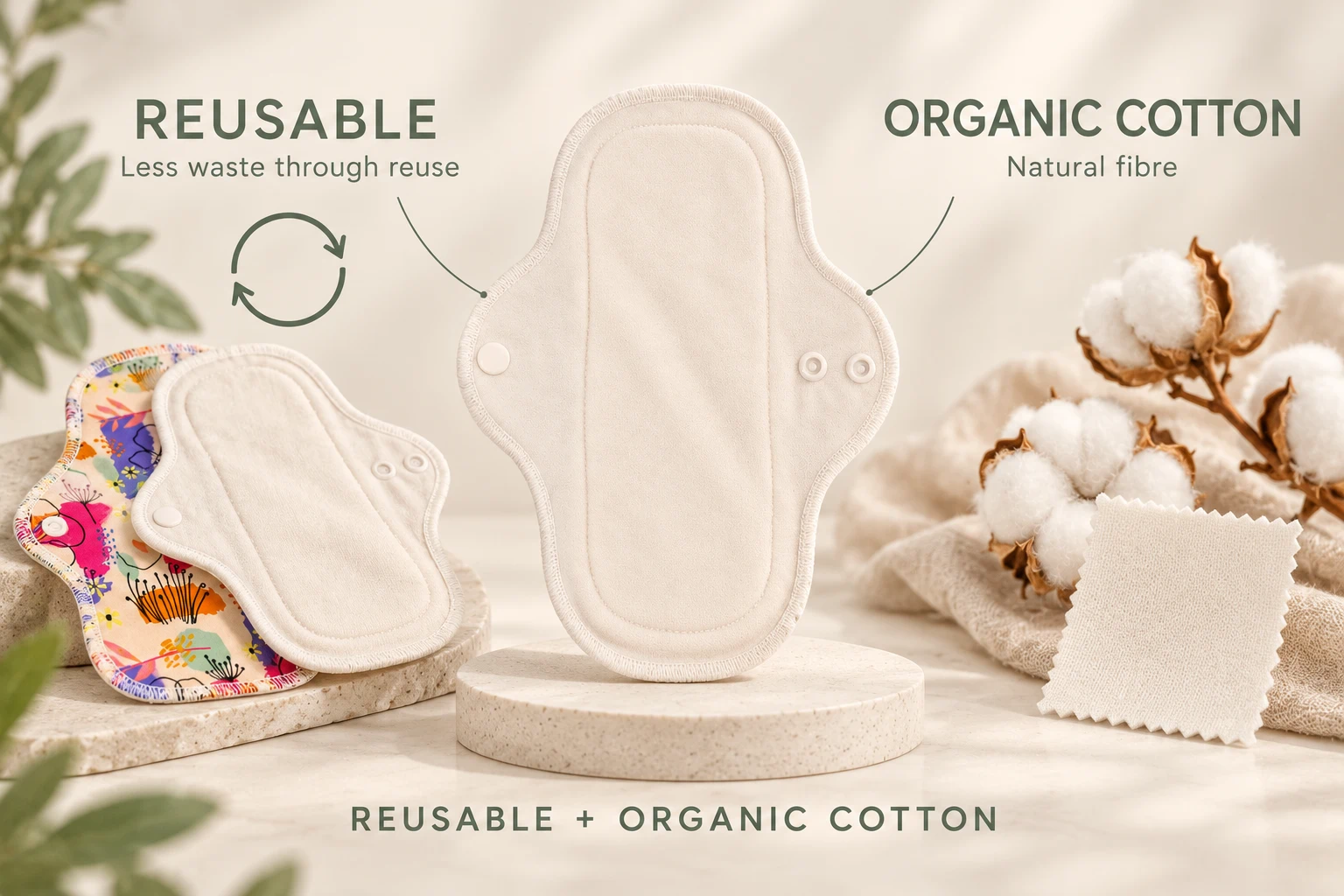
Reusable and organic are two distinct sustainability claims, and most pads lead with only one. Combining them in a single product is stronger than either alone, because it answers both halves of what a committed eco shopper is weighing: waste (solved by reuse) and materials (solved by organic cotton).
That combination is what lets a brand position at the premium end of sustainable period care rather than competing on price. A shopper who has decided to switch to reusables and cares about natural materials has nowhere better to land than a product that delivers both, and they will pay accordingly. We help a brand make both claims clearly and honestly: the reuse demonstrated by durability and the organic cotton stated against the skin, so the premium position rests on real attributes rather than marketing.
Best fit for:
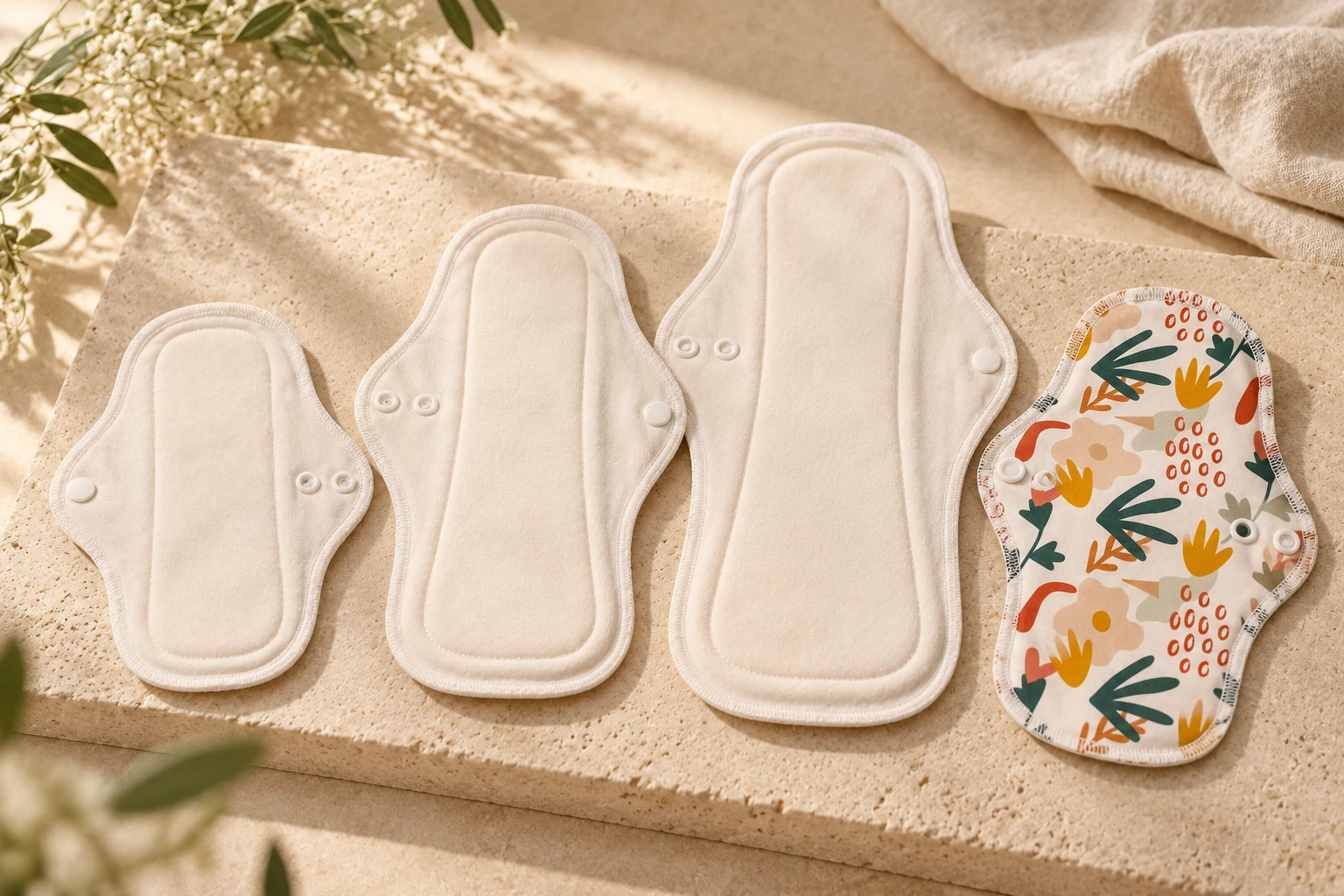
The organic cotton top delivers the natural-material half of the claim, while a single slim PUL backing keeps the pad trim and washable for the reuse half. The all-cotton skin-side build is what justifies the premium organic position.
For a premium sustainable pad, the material the customer touches is the material that justifies the price. An organic cotton interlock top means the surface against the skin is soft, natural, and free of synthetic finishes, which is exactly what a premium eco shopper is paying for and what they will notice in use.
We keep this claim grounded. The top is genuinely organic cotton interlock, certified to OEKO-TEX Standard 100, and organic certification can be added where a market requires documented proof. We do not overstate the rest of the build, the backing is a slim PUL for waterproofing, and we describe it accurately rather than implying the whole pad is something it is not. For a brand, an honest, certified organic top against the skin is the foundation a premium sustainable position can actually stand on, which protects the brand from the greenwashing scrutiny this category increasingly faces.
